Özdemir Ahmet Turan, Barshan Billur
Department of Electrical and Electronics Engineering, Erciyes University, Melikgazi, Kayseri TR-38039, Turkey.
Department of Electrical and Electronics Engineering, Bilkent University, Bilkent, Ankara TR-06800, Turkey.
Sensors (Basel). 2014 Jun 18;14(6):10691-708. doi: 10.3390/s140610691.
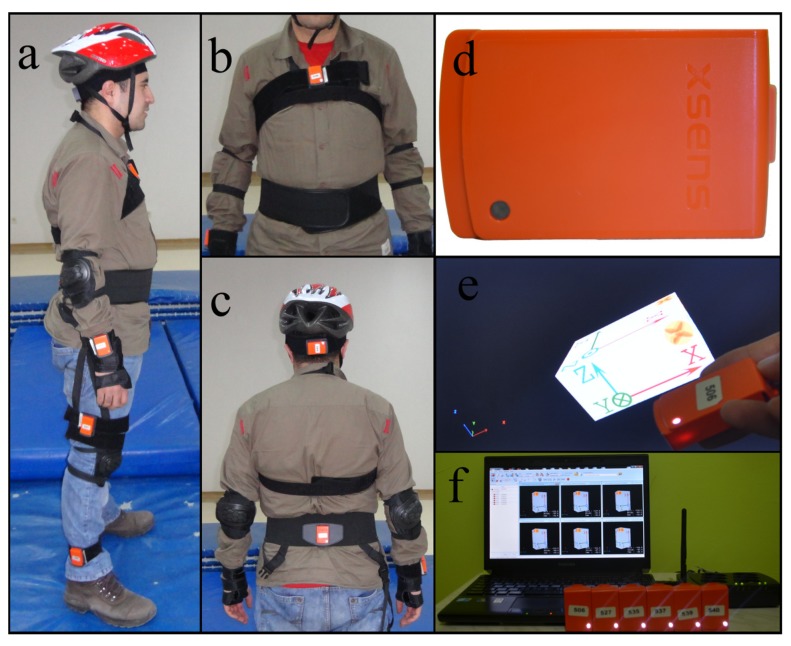
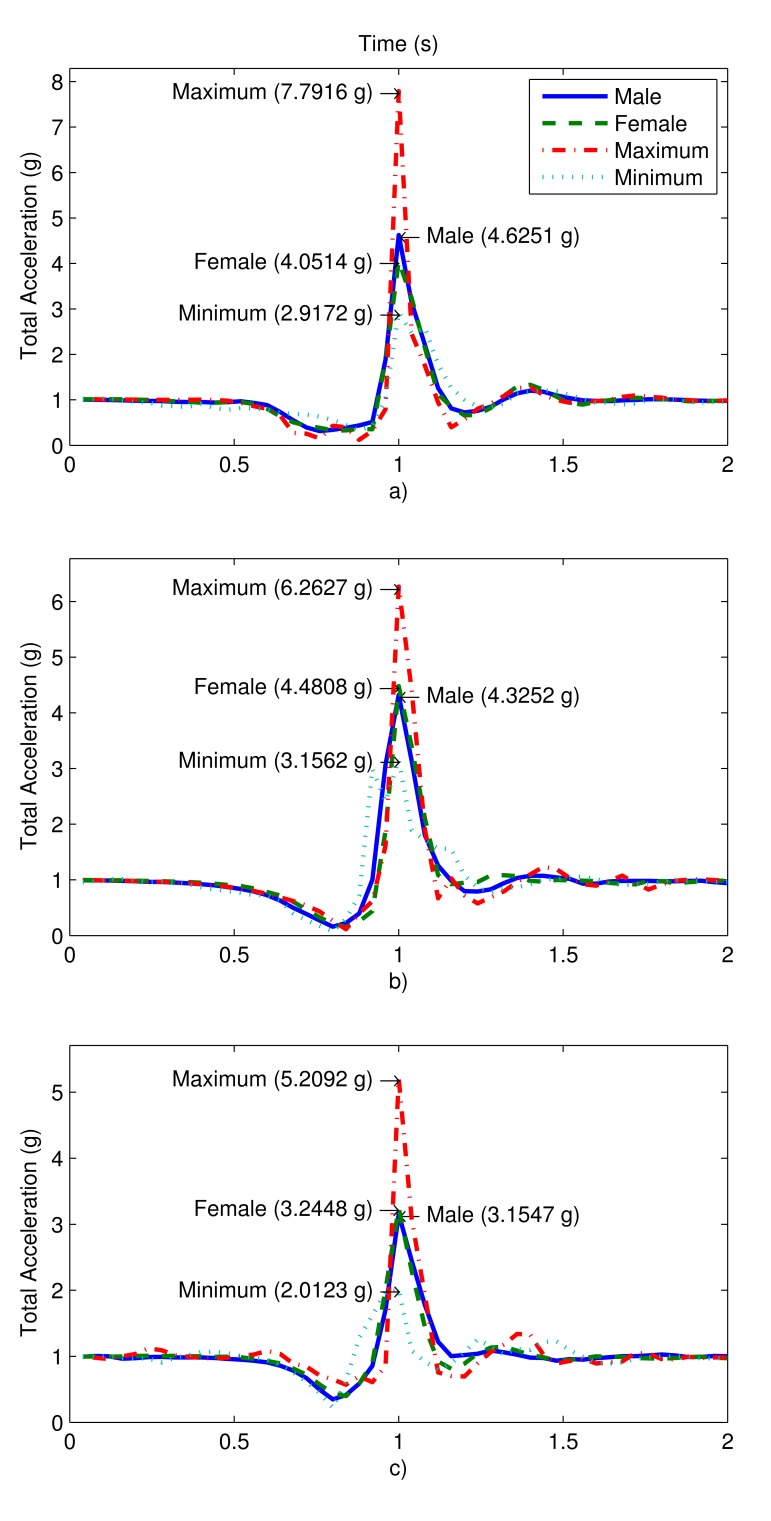
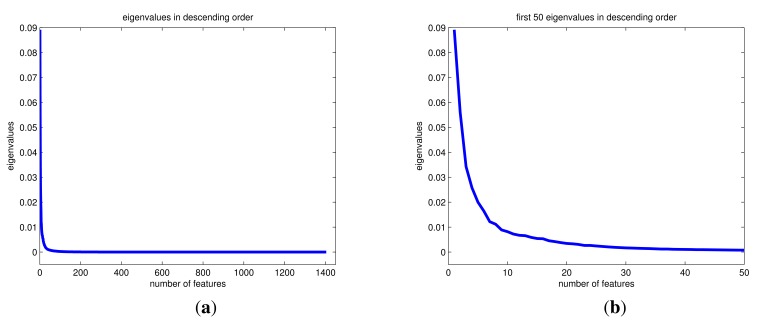
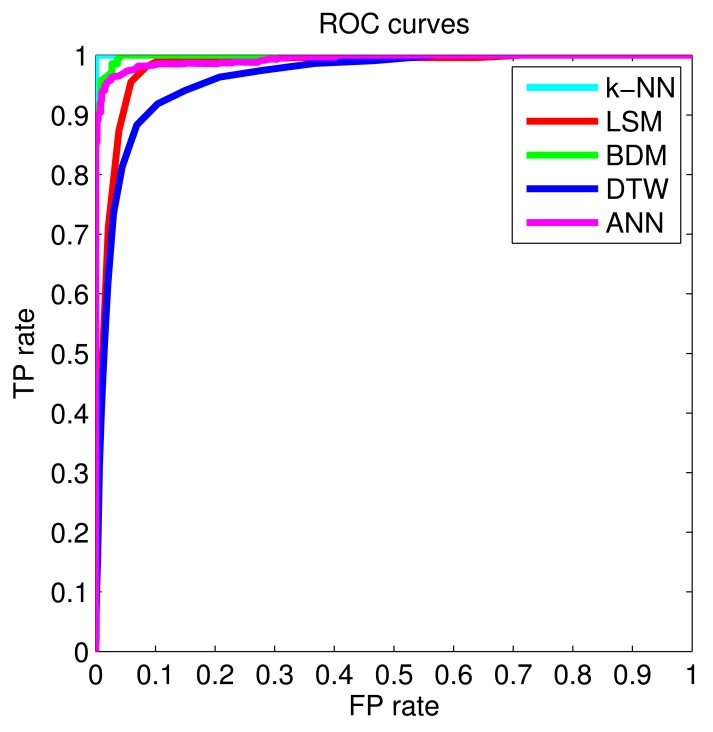
Falls are a serious public health problem and possibly life threatening for people in fall risk groups. We develop an automated fall detection system with wearable motion sensor units fitted to the subjects' body at six different positions. Each unit comprises three tri-axial devices (accelerometer, gyroscope, and magnetometer/compass). Fourteen volunteers perform a standardized set of movements including 20 voluntary falls and 16 activities of daily living (ADLs), resulting in a large dataset with 2520 trials. To reduce the computational complexity of training and testing the classifiers, we focus on the raw data for each sensor in a 4 s time window around the point of peak total acceleration of the waist sensor, and then perform feature extraction and reduction. Most earlier studies on fall detection employ rule-based approaches that rely on simple thresholding of the sensor outputs. We successfully distinguish falls from ADLs using six machine learning techniques (classifiers): the k-nearest neighbor (k-NN) classifier, least squares method (LSM), support vector machines (SVM), Bayesian decision making (BDM), dynamic time warping (DTW), and artificial neural networks (ANNs). We compare the performance and the computational complexity of the classifiers and achieve the best results with the k-NN classifier and LSM, with sensitivity, specificity, and accuracy all above 99%. These classifiers also have acceptable computational requirements for training and testing. Our approach would be applicable in real-world scenarios where data records of indeterminate length, containing multiple activities in sequence, are recorded.
跌倒对于处于跌倒风险群体的人来说是一个严重的公共卫生问题,甚至可能危及生命。我们开发了一种自动跌倒检测系统,该系统配备了可穿戴运动传感器单元,并将其安装在受试者身体的六个不同位置。每个单元包含三个三轴设备(加速度计、陀螺仪和磁力计/指南针)。14名志愿者进行了一组标准化动作,包括20次自愿跌倒和16项日常生活活动(ADL),从而生成了一个包含2520次试验的大型数据集。为了降低训练和测试分类器的计算复杂度,我们聚焦于腰部传感器总加速度峰值点周围4秒时间窗口内每个传感器的原始数据,然后进行特征提取和降维。大多数早期的跌倒检测研究采用基于规则的方法,这些方法依赖于传感器输出的简单阈值化。我们使用六种机器学习技术(分类器)成功地将跌倒与ADL区分开来:k近邻(k-NN)分类器、最小二乘法(LSM)、支持向量机(SVM)、贝叶斯决策(BDM)、动态时间规整(DTW)和人工神经网络(ANN)。我们比较了这些分类器的性能和计算复杂度,k-NN分类器和LSM取得了最佳结果,灵敏度、特异性和准确率均超过99%。这些分类器在训练和测试方面也具有可接受的计算要求。我们的方法适用于记录长度不确定、包含多个连续活动的数据记录的实际场景。