Wang Liuyan, Li Rongguang, Guan Xuemei, Yan Shanchun
College of Computer and Control Engineering, Northeast Forestry University, Harbin, Heilongjiang, China.
Key Laboratory of Sustainable Forest Ecosystem Management, School of Forestry, Northeast Forestry University, Harbin, Heilongjiang, China.
Front Plant Sci. 2024 Dec 2;15:1489116. doi: 10.3389/fpls.2024.1489116. eCollection 2024.
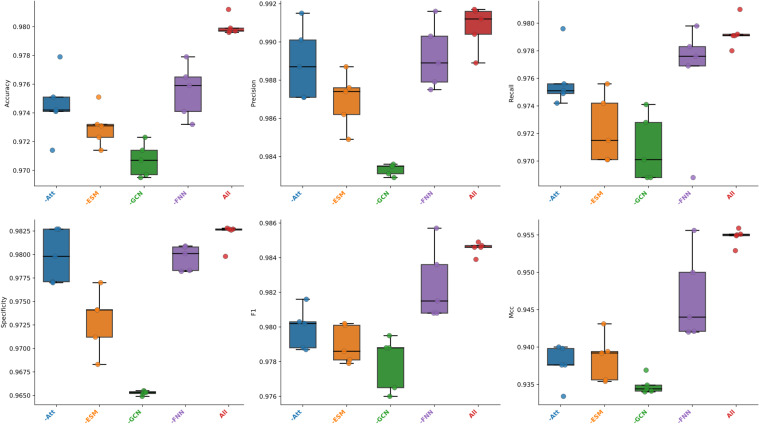
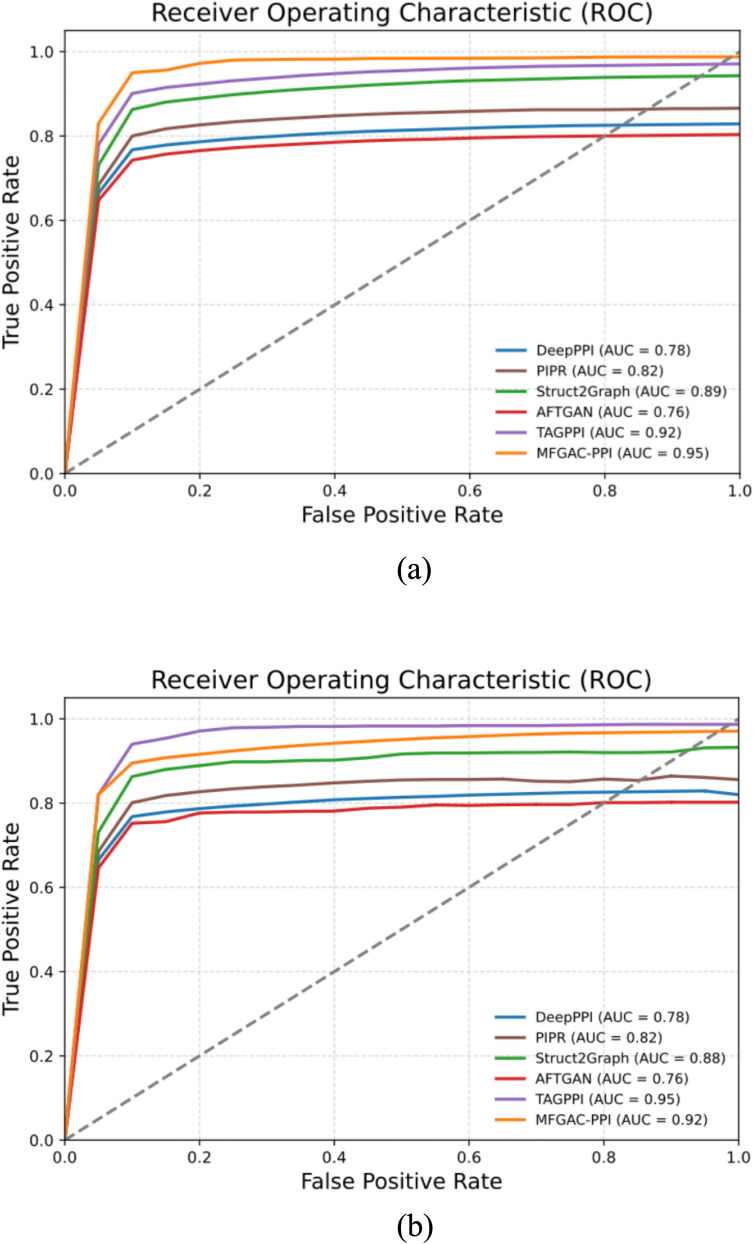
Pine Wilt Disease (PWD) is a devastating forest disease that has a serious impact on ecological balance ecological. Since the identification of plant-pathogen protein interactions (PPIs) is a critical step in understanding the pathogenic system of the pine wilt disease, this study proposes a Multi-feature Fusion Graph Attention Convolution (MFGAC-PPI) for predicting plant-pathogen PPIs based on deep learning. Compared with methods based on single-feature information, MFGAC-PPI obtains more 3D characterization information by utilizing AlphaFold and combining protein sequence features to extract multi-dimensional features via Transform with improved GCN. The performance of MFGAC-PPI was compared with the current representative methods of sequence-based, structure-based and hybrid characterization, demonstrating its superiority across all metrics. The experiments showed that learning multi-dimensional feature information effectively improved the ability of MFGAC-PPI in plant and pathogen PPI prediction tasks. Meanwhile, a pine wilt disease PPI network consisting of 2,688 interacting protein pairs was constructed based on MFGAC-PPI, which made it possible to systematically discover new disease resistance genes in pine trees and promoted the understanding of plant-pathogen interactions.
松材线虫病(PWD)是一种具有毁灭性的森林病害,对生态平衡产生严重影响。由于鉴定植物 - 病原体蛋白质相互作用(PPI)是理解松材线虫病致病系统的关键步骤,本研究提出了一种基于深度学习的多特征融合图注意力卷积方法(MFGAC - PPI)来预测植物 - 病原体PPI。与基于单特征信息的方法相比,MFGAC - PPI通过利用AlphaFold并结合蛋白质序列特征,通过改进的图卷积网络(GCN)变换提取多维度特征,从而获得更多的三维表征信息。将MFGAC - PPI的性能与当前基于序列、基于结构和混合表征的代表性方法进行了比较,证明了其在所有指标上的优越性。实验表明,学习多维度特征信息有效地提高了MFGAC - PPI在植物和病原体PPI预测任务中的能力。同时,基于MFGAC - PPI构建了一个由2688对相互作用蛋白质对组成的松材线虫病PPI网络,这使得系统地发现松树中新的抗病基因成为可能,并促进了对植物 - 病原体相互作用的理解。