Huang Zhaoyang, Guo Xinyang, Qin Jie, Gao Lin, Ju Fen, Zhao Chenguang, Yu Liang
School of Computer Science and Technology, Xidian University, Xi'an 710071, Shaanxi, China.
Orthopedic Department, The Second Affiliated Hospital of Xi'an Jiaotong University, Xi'an, China.
BMC Biol. 2024 Dec 18;22(1):290. doi: 10.1186/s12915-024-02085-8.
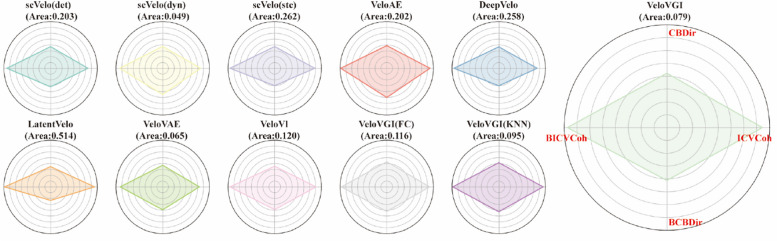
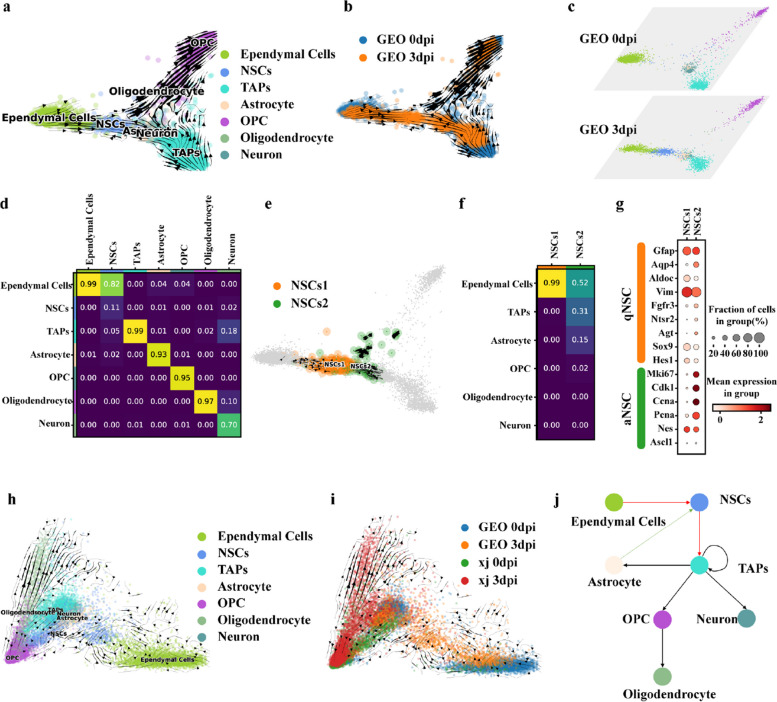
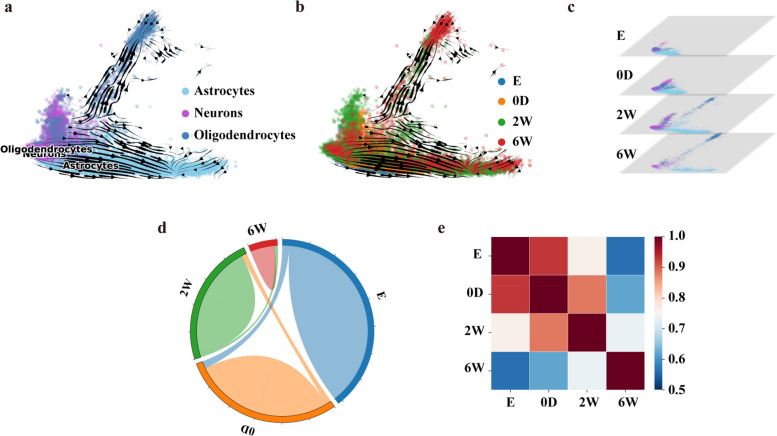
RNA velocity, as an extension of trajectory inference, is an effective method for understanding cell development using single-cell RNA sequencing (scRNA-seq) experiments. However, existing RNA velocity methods are limited by the batch effect because they cannot directly correct for batch effects in the input data, which comprises spliced and unspliced matrices in a proportional relationship. This limitation can lead to an incorrect velocity stream. This paper introduces VeloVGI, which addresses this issue innovatively in two key ways. Firstly, it employs an optimal transport (OT) and mutual nearest neighbor (MNN) approach to construct neighbors in batch data. This strategy overcomes the limitations of existing methods that are affected by the batch effect. Secondly, VeloVGI improves upon VeloVI's velocity estimation by incorporating the graph structure into the encoder for more effective feature extraction. The effectiveness of VeloVGI is demonstrated in various scenarios, including the mouse spinal cord and olfactory bulb tissue, as well as on several public datasets. The results show that VeloVGI outperformed other methods in terms of metric performance.
RNA速度作为轨迹推断的扩展,是一种利用单细胞RNA测序(scRNA-seq)实验来理解细胞发育的有效方法。然而,现有的RNA速度方法受到批次效应的限制,因为它们无法直接校正输入数据中的批次效应,输入数据由呈比例关系的剪接和未剪接矩阵组成。这种限制可能导致错误的速度流。本文介绍了VeloVGI,它通过两种关键方式创新性地解决了这个问题。首先,它采用最优传输(OT)和相互最近邻(MNN)方法在批次数据中构建邻居。这种策略克服了受批次效应影响的现有方法的局限性。其次,VeloVGI通过将图结构纳入编码器以进行更有效的特征提取,改进了VeloVI的速度估计。VeloVGI的有效性在各种场景中得到了证明,包括小鼠脊髓和嗅球组织,以及几个公共数据集。结果表明,VeloVGI在度量性能方面优于其他方法。