Culda Carla Andreea, Rodriguez Nathalie G Tejena, Puleo Fortunato, Sosa Rafael M Polit, Panait Luciana Cătălina, Cazan Cristina Daniela, Deak Georgiana, Leon Renato, Vinueza Rommel Lenin, Páez-Rosas Diego, Mihalca Andrei Daniel
Department of Parasitology and Parasitic Diseases, University of Agricultural Sciences and Veterinary Medicine of Cluj-Napoca, Cluj-Napoca, Romania.
Universidad Regional Amazonica Ikiam, Tena, Ecuador.
Parasit Vectors. 2024 Dec 18;17(1):515. doi: 10.1186/s13071-024-06592-z.
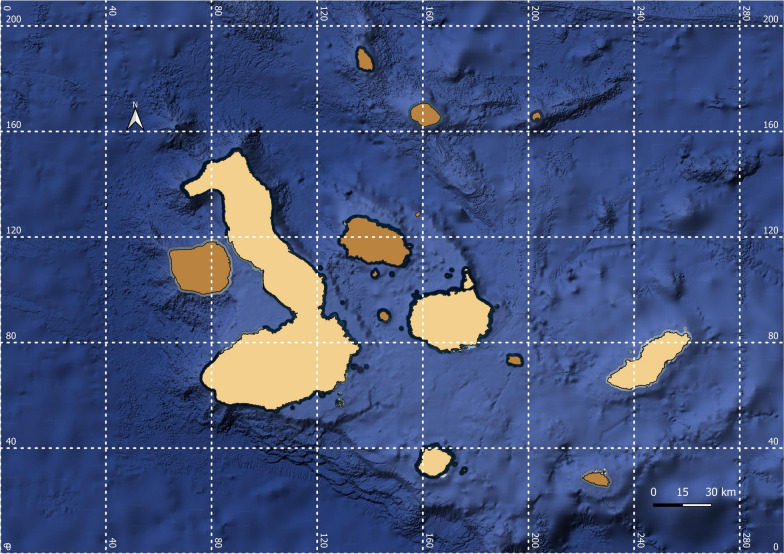
The extraordinary Galapagos Islands, with an impressive number of endemic and native species, maintain the interest and curiosity for researchers from all over the world. The native species are known to be vulnerable to new pathogens, cointroduced with their invasive hosts. In the case of invasive parasitic arthropods, their evolutionary success is related to the association with other invasive hosts (such as domestic animals). These associations could become a significant driver of change, as occasionally they can seek another hosts and have the capacity to transmit pathogens between domestic and wild animals. The current study aims to identify the distribution and abundance of canine vector-borne parasites in the Galapagos Islands based on the possibility that some of them could spill over to endemic mammals.
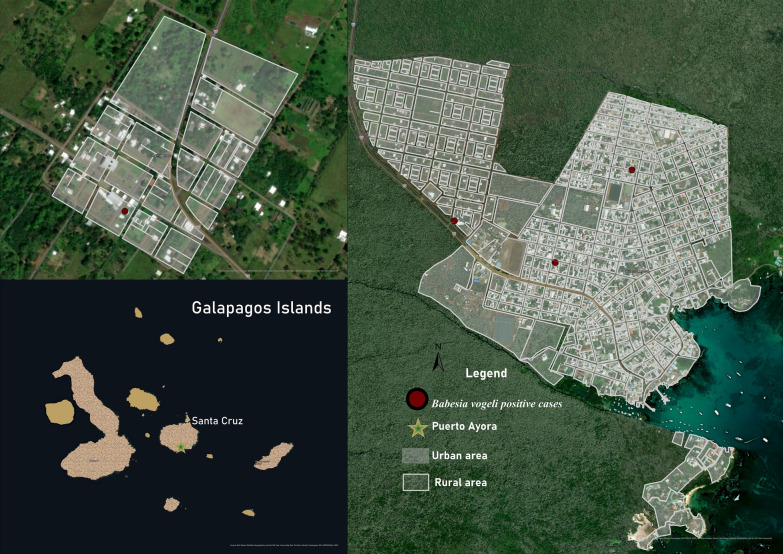
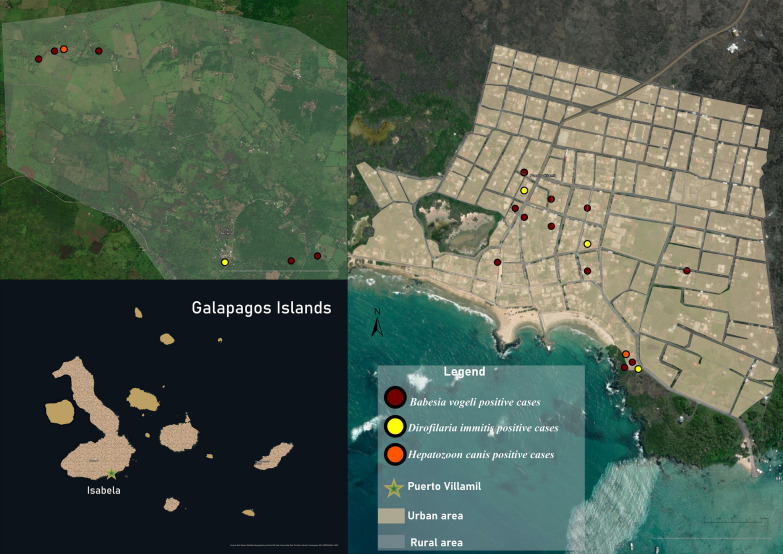
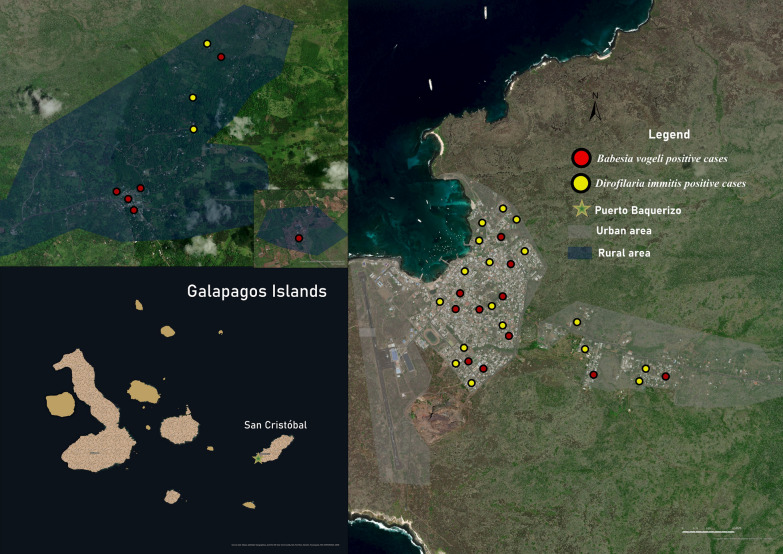
A total of 1221 blood samples were randomly collected from privately owned dogs on San Cristóbal, Isabela, Santa Cruz, and Floreana Islands during the years 2021 and 2022. All samples were examined for vector-borne pathogens using the modified Knott's test and conventional, nested, and multiplex polymerase chain reactions (PCRs), followed by sequencing.
The PCR and Knott tests confirmed the presence of Dirofilaria immitis (2%, 25/1221) in all islands. While molecular analyses showed heartworm DNA only in dogs from the San Cristóbal (3.3%) and Isabela (2.4%) Islands. Moreover, other pathogens Babesia vogeli (3%, 37/1221) and Hepatozoon canis (0.2%, 2/1221) were detected for the first time by molecular analyses.
Dogs from Galapagos are hosts to various pathogens, of which some are potentially zoonotic while some other could be spill-over to endemic endangered carnivores, such as sea lions. To understand and limit their impact, long-term surveillance, control, and awareness is needed.
非凡的加拉帕戈斯群岛拥有数量惊人的特有和本土物种,一直吸引着来自世界各地研究人员的兴趣和好奇心。已知本土物种容易受到与入侵宿主一同引入的新病原体的影响。就入侵性寄生节肢动物而言,它们在进化上的成功与与其他入侵宿主(如家畜)的关联有关。这些关联可能成为重大的变化驱动因素,因为它们偶尔会寻找其他宿主,并能够在 domestic 和野生动物之间传播病原体。本研究旨在根据加拉帕戈斯群岛上一些犬类媒介传播寄生虫可能传播到特有哺乳动物身上的可能性,确定这些寄生虫的分布和丰度。
2021年和2022年期间,从圣克里斯托瓦尔岛、伊莎贝拉岛、圣克鲁斯岛和弗洛雷阿纳岛上的私人饲养犬中随机采集了1221份血样。所有样本均使用改良的 Knott 试验以及常规、巢式和多重聚合酶链反应(PCR)检测媒介传播病原体,随后进行测序。
PCR和Knott试验证实所有岛屿上均存在犬恶丝虫(2%,25/1221)。而分子分析仅在圣克里斯托瓦尔岛(3.3%)和伊莎贝拉岛(2.4%)的犬类中发现了心丝虫DNA。此外,分子分析首次检测到其他病原体,即伯氏巴贝斯虫(3%,37/1221)和犬肝簇虫(0.2%,2/1221)。
加拉帕戈斯群岛的犬类是多种病原体的宿主,其中一些病原体具有潜在的人畜共患性,而其他一些病原体可能传播到特有濒危食肉动物,如海狮身上。为了了解并限制它们的影响,需要进行长期监测、控制和提高认识。