Mazer Vanessa de Barros E Silva, Moreira Rafael da Silveira, Lima Kenio Costa de, Coriolano Maria das Graças Wanderley de Sales, Silva Vanessa de Lima
Universidade Federal de Pernambuco - Recife (PE), Brazil.
Universidade Federal do Rio Grande do Norte - Natal (RN), Brazil.
Rev Bras Epidemiol. 2024 Dec 16;27:e240070. doi: 10.1590/1980-549720240070. eCollection 2024.
To estimate the prevalence of participation of aged Brazilians in Advanced Activities of Daily Living and associated factors.
Cross-sectional study developed with secondary data from the National Health Survey. Aged people (60 years old or older) were included. The dependent variable consisted of questions from the National Health Survey regarding the performance of Advanced Activities of Daily Living, related to work, leisure, and social participation. Descriptive analysis, Rao-Scott test, and standardized residual analysis were performed. Effect measures were calculated using simple and multiple multinominal logistic regression models.
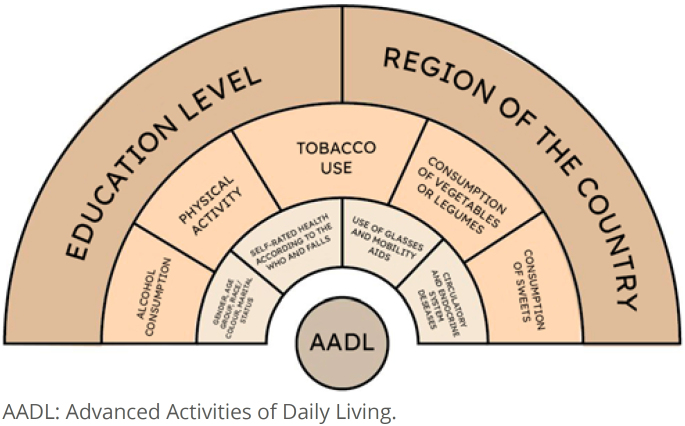
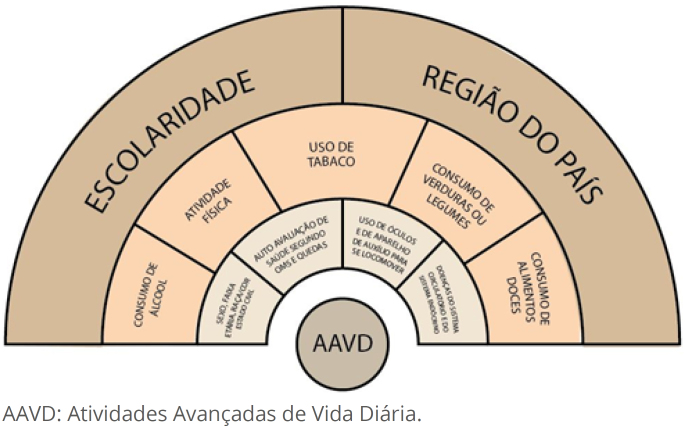
The majority of Brazilian aged people have low participation in Advanced Activities of Daily Living. Aged males, between 60 and 69 years old, white, from the Southeast, South and Central-West regions, with higher educational levels, absence of chronic diseases, monthly alcohol consumption, regular physical activity, frequent intake of vegetables, use of glasses and independence when moving, were more likely to perform Advanced Activities of Daily Living.
These results reinforce the significant influence of demographic, socioeconomic, clinical factors, linked to lifestyle and intrinsic capacity in the execution of Advanced Activities of Daily Living. In a broader sense, such discoveries can strengthen public policies for active and healthy aging.
评估巴西老年人参与高级日常生活活动的患病率及相关因素。
采用横断面研究,使用来自全国健康调查的二手数据。纳入60岁及以上的老年人。因变量包括全国健康调查中关于高级日常生活活动表现的问题,涉及工作、休闲和社会参与。进行了描述性分析、Rao-Scott检验和标准化残差分析。使用简单和多重多项逻辑回归模型计算效应量。
大多数巴西老年人参与高级日常生活活动的程度较低。60至69岁的老年男性,白人,来自东南部、南部和中西部地区,教育水平较高,无慢性病,每月饮酒,经常进行体育活动,经常摄入蔬菜,使用眼镜且行动独立,更有可能进行高级日常生活活动。
这些结果强化了人口统计学、社会经济、临床因素与生活方式和内在能力在执行高级日常生活活动方面的显著影响。从更广泛的意义上讲,此类发现可加强促进积极健康老龄化的公共政策。