Lin Jinting, Wu Jiahao, Zhang Dan, Cai Xinkai, Du Lumiao, Lu Lin, Liu Chaojia, Chen Shengzhen, Yao Qinglong, Xie Shiyu, Xu Xiaowen, Wang Xiaomei, Liu Ruoyu, Qin Yuan, Zheng Ping
Fujian Provincial Key Laboratory of Haixia Applied Plant Systems Biology, Haixia Institute of Science and Technology, College of Life Sciences, College of Marine Sciences, Fujian Agriculture and Forestry University, Fuzhou, 350002, China.
Horticulture Research Institute, Guangxi Academy of Agricultural Sciences, Nanning Investigation Station of South Subtropical Fruit Trees, Ministry of Agriculture, Nanning, 530004, China.
BMC Plant Biol. 2024 Dec 19;24(1):1204. doi: 10.1186/s12870-024-05913-9.
Pineapple (Ananas comosus L.) is a major tropical fruit crop with considerable economic importance, and its growth and development are significantly impacted by low temperatures. The plant-specific GRAS gene family plays crucial roles in diverse processes, including flower and fruit development, as well as in stress responses. However, the role of the GRAS family in pineapple has not yet been systematically analyzed.
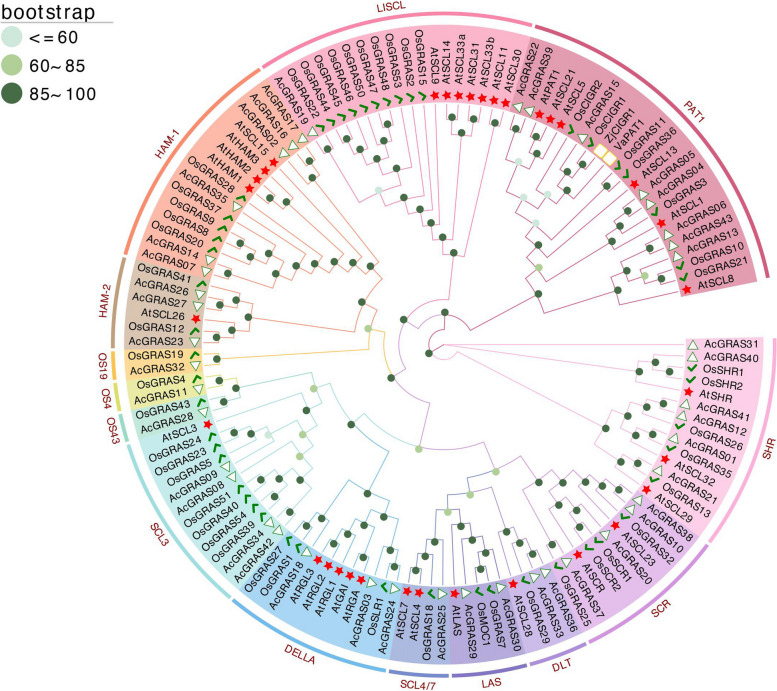
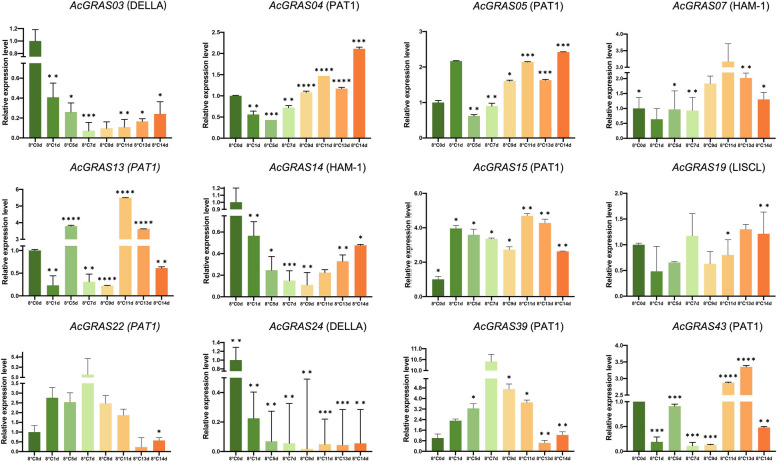
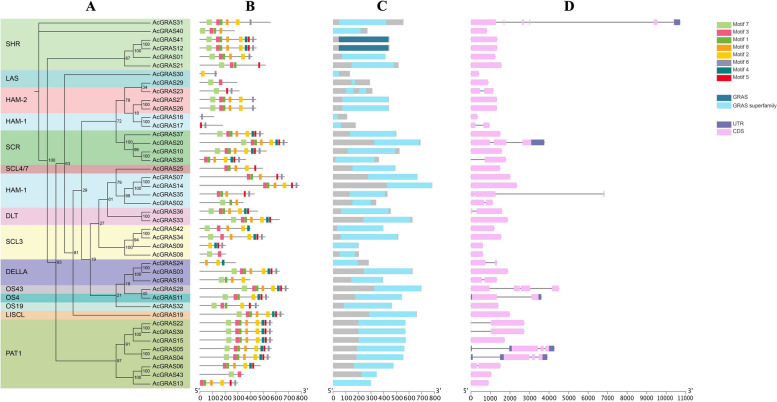
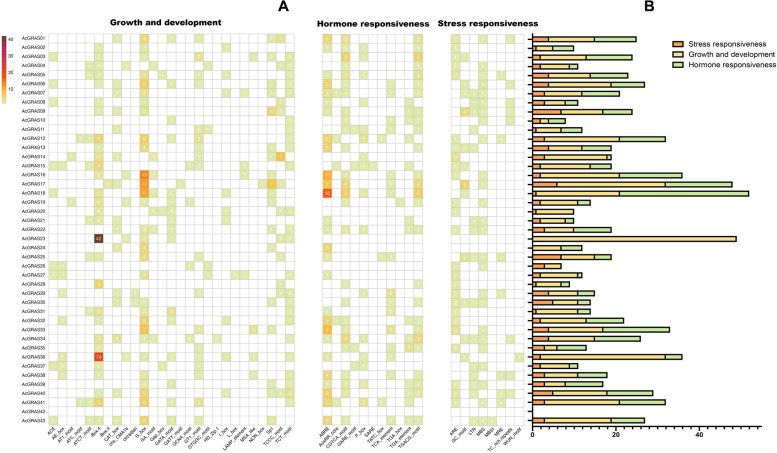
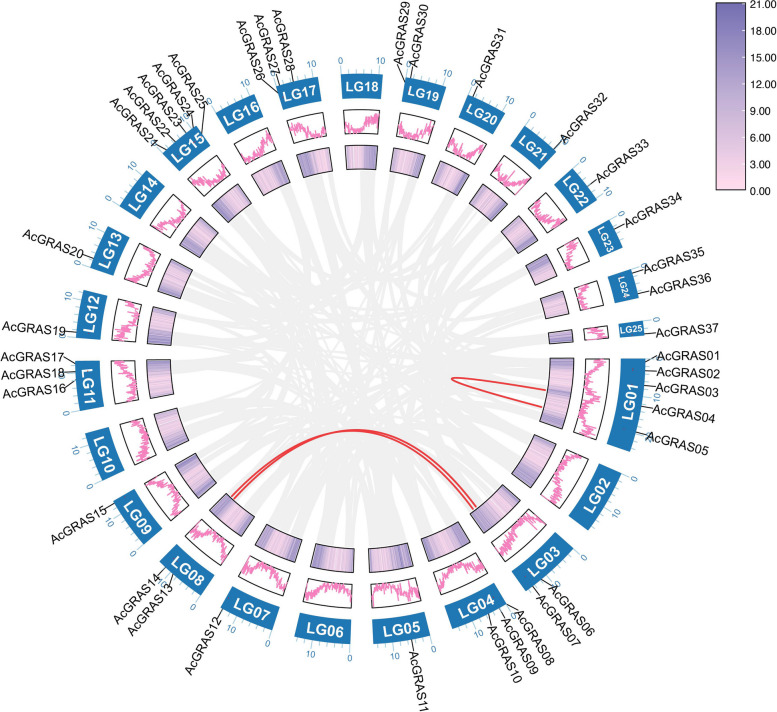
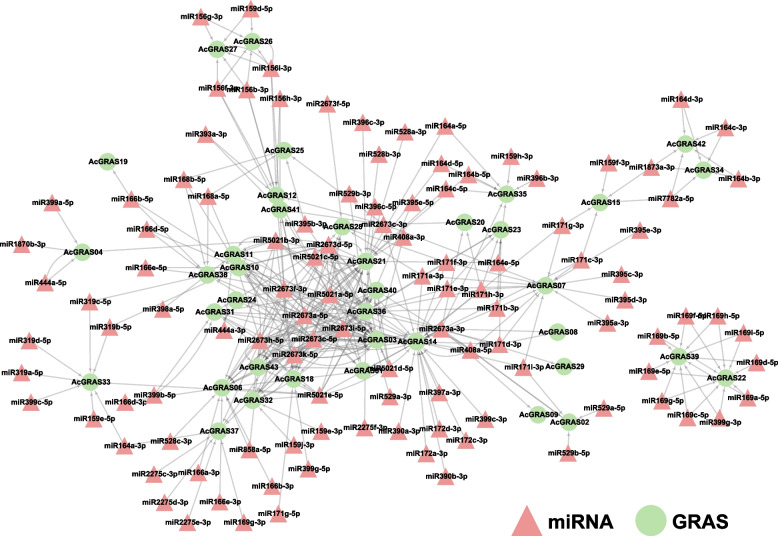
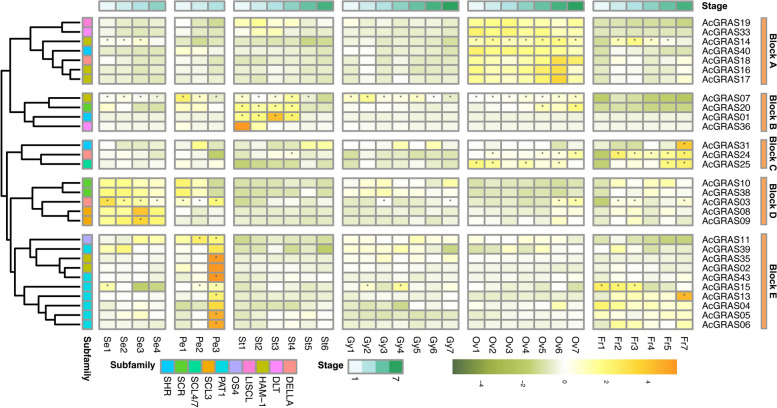
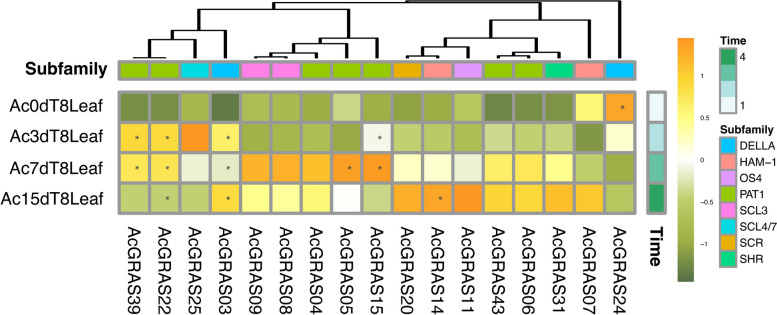
In this study, 43 AcGRAS genes were identified in the pineapple genome; these genes were distributed unevenly across 19 chromosomes and 6 scaffolds and were designated as AcGRAS01 to AcGRAS43 based on their chromosomal locations. Phylogenetic analysis classified these genes into 14 subfamilies: OS19, HAM-1, HAM-2, SCL4/7, LISCL, SHR, PAT1, DLT, LAS, SCR, SCL3, OS43, OS4, and DELLA. Gene structure analysis revealed that 60.5% of the AcGRAS genes lacked introns. Expression profiling demonstrated tissue-specific expression, with most AcGRAS genes predominantly expressed in specific floral organs, fruit tissues, or during particular developmental stages, suggesting functional diversity in pineapple development. Furthermore, the majority of AcGRAS genes were induced by cold stress, but different members seemed to play distinct roles in short-term or long-term cold adaptation in pineapple. Notably, most members of the PAT1 subfamily were preferentially expressed during late petal development and were upregulated under cold stress, suggesting their special roles in petal development and the cold response. In contrast, no consistent expression patterns were observed among genes in other subfamilies, suggesting that various regulatory factors, such as miRNAs, transcription factors, and cis-regulatory elements, may contribute to the diverse functions of AcGRAS members, even within the same subfamily.
This study provides the first comprehensive analysis of GRAS genes in pineapple, offers valuable insights for further functional investigations of AcGRASs and provides clues for improving pineapple cold resistance breeding.
菠萝(Ananas comosus L.)是一种具有重要经济意义的主要热带水果作物,其生长发育受到低温的显著影响。植物特有的GRAS基因家族在包括花和果实发育以及应激反应在内的多种过程中发挥着关键作用。然而,GRAS家族在菠萝中的作用尚未得到系统分析。
在本研究中,在菠萝基因组中鉴定出43个AcGRAS基因;这些基因不均匀地分布在19条染色体和6个支架上,并根据其染色体位置命名为AcGRAS01至AcGRAS43。系统发育分析将这些基因分为14个亚家族:OS19、HAM-1、HAM-2、SCL4/7、LISCL、SHR、PAT1、DLT、LAS、SCR、SCL3、OS43、OS4和DELLA。基因结构分析表明,60.5%的AcGRAS基因没有内含子。表达谱分析显示了组织特异性表达,大多数AcGRAS基因主要在特定的花器官、果实组织或特定发育阶段表达,这表明菠萝发育中存在功能多样性。此外,大多数AcGRAS基因受到冷胁迫诱导,但不同成员在菠萝短期或长期冷适应中似乎发挥着不同作用。值得注意的是,PAT1亚家族的大多数成员在花瓣发育后期优先表达,并在冷胁迫下上调,这表明它们在花瓣发育和冷反应中具有特殊作用。相比之下,其他亚家族的基因未观察到一致的表达模式,这表明各种调控因子,如miRNA、转录因子和顺式调控元件,可能有助于AcGRAS成员的多样化功能,即使在同一亚家族内也是如此。
本研究首次对菠萝中的GRAS基因进行了全面分析,为进一步对AcGRASs进行功能研究提供了有价值的见解,并为改善菠萝抗寒育种提供了线索。