Xu Rui, Wei Fangjun, Chen Yanzhao, Khan Faiza Shafique, Wei Yongzan, Zhang Hongna
Key Laboratory of Quality Regulation of Tropical Horticultural Crop in Hainan Province, School of Tropical Agriculture and Forestry, Hainan University, Haikou 570228, China.
School of Breeding and Multiplication, Sanya Institute of Breeding and Multiplication, Hainan University, Sanya 572025, China.
Int J Mol Sci. 2024 Dec 14;25(24):13407. doi: 10.3390/ijms252413407.
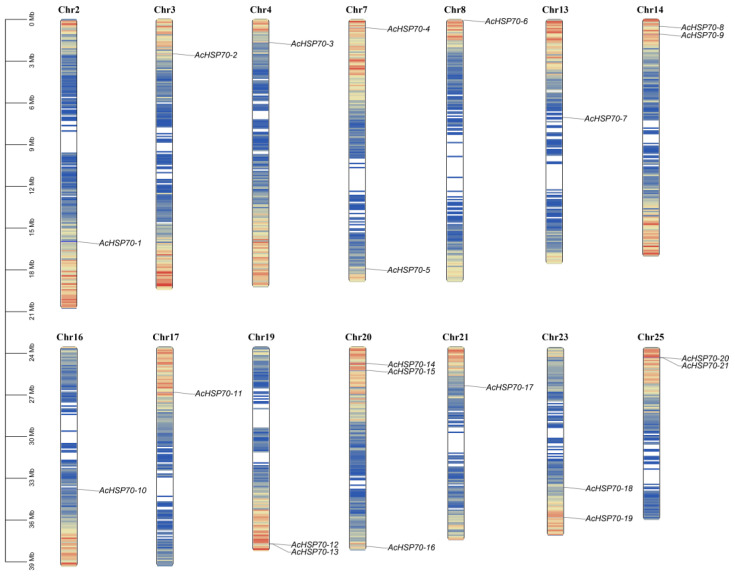
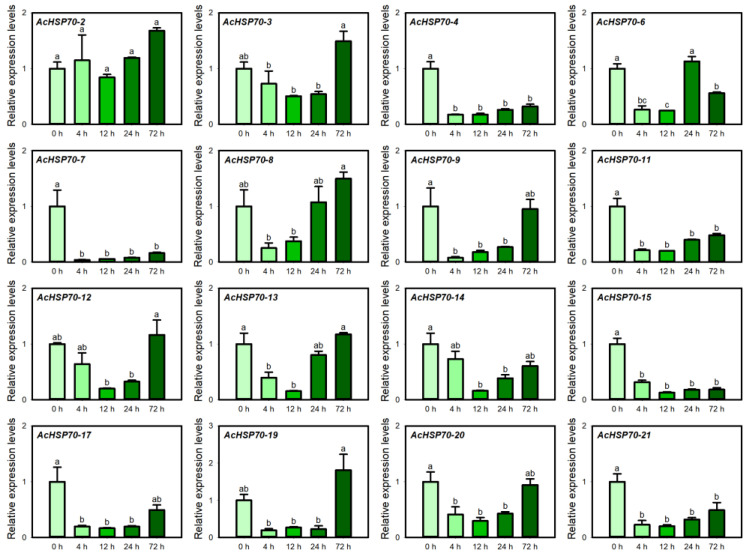
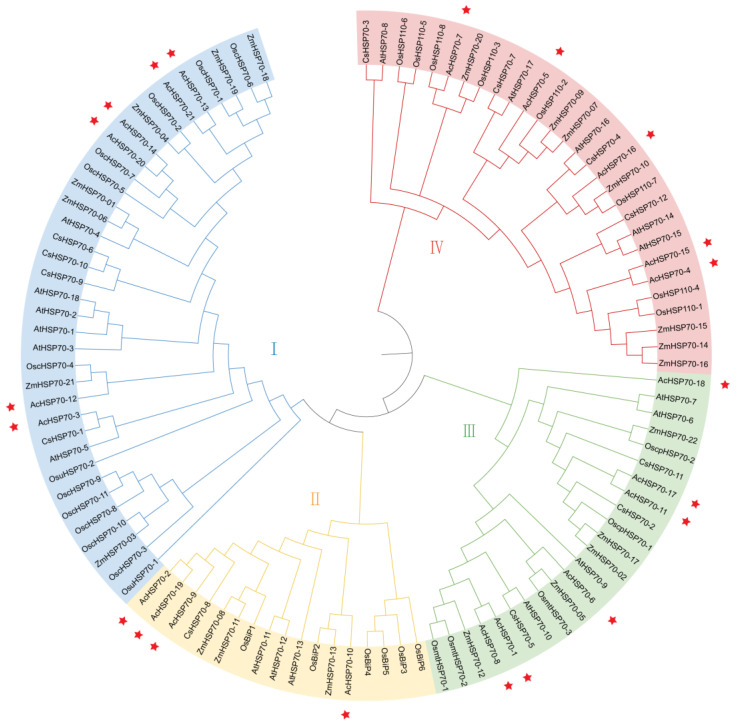
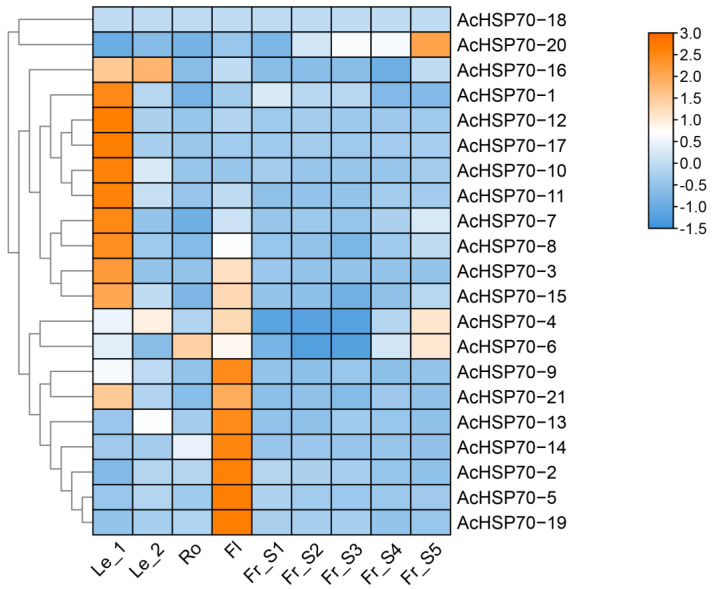
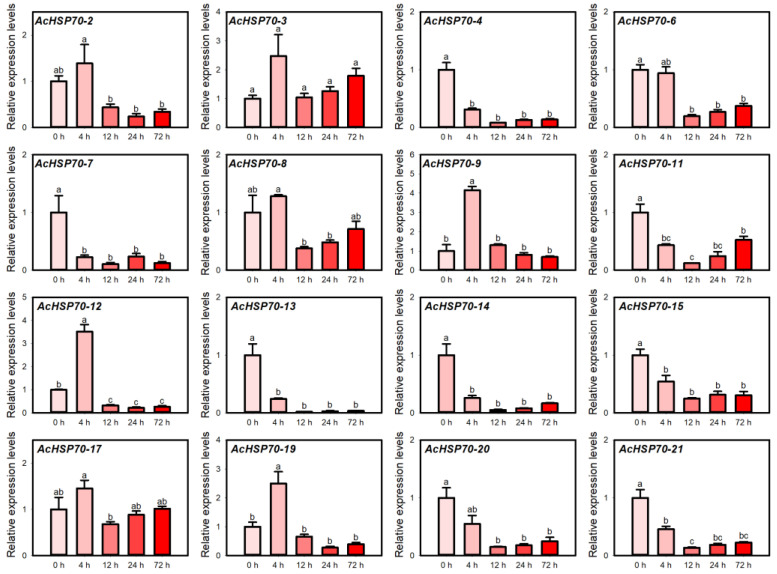
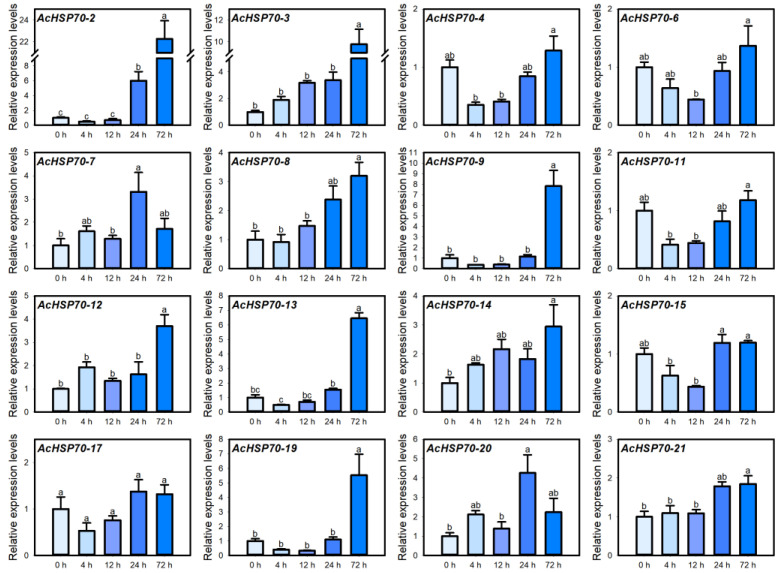
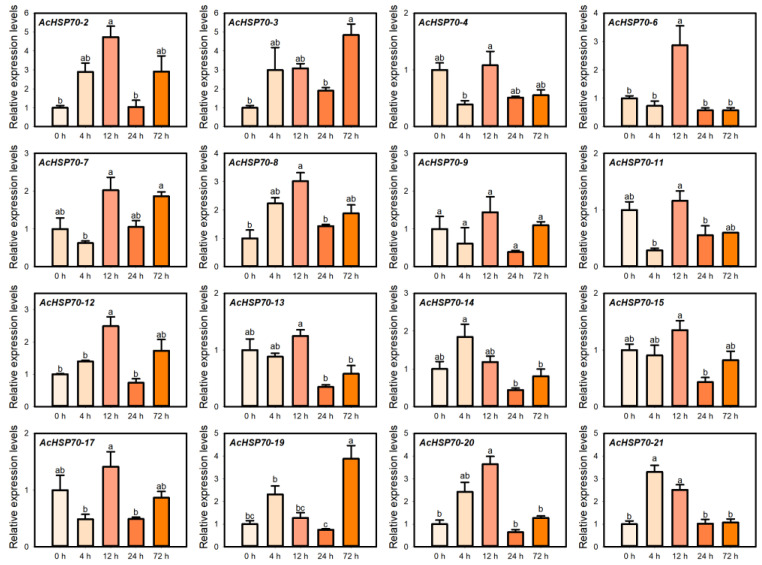
Pineapple ( (L.) Merr.) is an economically significant and delicious tropical fruit. Pineapple commercial production faces severe decline due to abiotic stresses, which affect the development and quality of pineapple fruit. Heat shock protein 70 (HSP70) plays an essential role in abiotic stress tolerance. However, the pineapple family identification and expression analysis in response to abiotic stresses has not been studied. To explore the functional role of , different abiotic stress treatments were applied to pineapple cultivar "Bali" seedlings. A total of 21 members were identified in the pineapple genome. The identified genes were classified into four subfamilies (I-IV) using phylogenetic analysis. The family is expressed under different stress conditions. Quantitative real time polymerase chain reaction (qRT-PCR) revealed the expression pattern of the family under cold, drought, salt, and heat stress. The expression level of genes such as increased under heat, cold, and drought stress, while the expression level of genes such as decreased under salt stress. Furthermore, the expression profile of s in different tissues and development stages was analyzed using transcriptome analysis. The genes exhibited unique expression patterns in pineapple tissue at different developmental stages. The study therefore provides a list of genes with substantial roles in abiotic stress response and valuable information for understanding functional characteristics during abiotic stress tolerance in pineapple.
菠萝((L.) Merr.)是一种具有重要经济价值且美味的热带水果。由于非生物胁迫,菠萝的商业生产面临严重衰退,这些胁迫会影响菠萝果实的发育和品质。热休克蛋白70(HSP70)在非生物胁迫耐受性中起着至关重要的作用。然而,尚未对菠萝家族在响应非生物胁迫时的鉴定和表达分析进行研究。为了探究其功能作用,对菠萝品种“巴厘”幼苗施加了不同的非生物胁迫处理。在菠萝基因组中总共鉴定出21个成员。使用系统发育分析将鉴定出的基因分为四个亚家族(I - IV)。该家族在不同胁迫条件下表达。实时定量聚合酶链反应(qRT-PCR)揭示了该家族在冷、旱、盐和热胁迫下的表达模式。诸如等基因的表达水平在热、冷和干旱胁迫下升高,而诸如等基因的表达水平在盐胁迫下降低。此外,使用转录组分析对不同组织和发育阶段的s表达谱进行了分析。这些基因在菠萝不同发育阶段的组织中表现出独特的表达模式。因此,该研究提供了一系列在非生物胁迫响应中起重要作用的基因清单,以及用于理解菠萝在非生物胁迫耐受性期间功能特征的有价值信息。