Balola Alexandra, Ferreira Sofia, Rocha Isabel
Instituto de Tecnologia Química e Biológica António Xavier, Oeiras, Portugal.
Metab Eng Commun. 2024 Nov 29;19:e00254. doi: 10.1016/j.mec.2024.e00254. eCollection 2024 Dec.
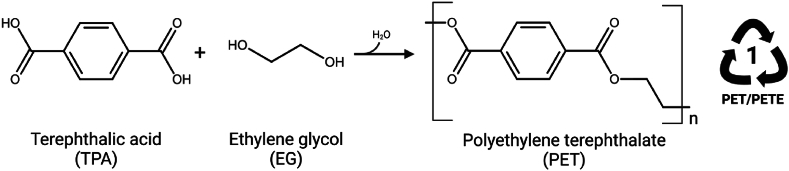
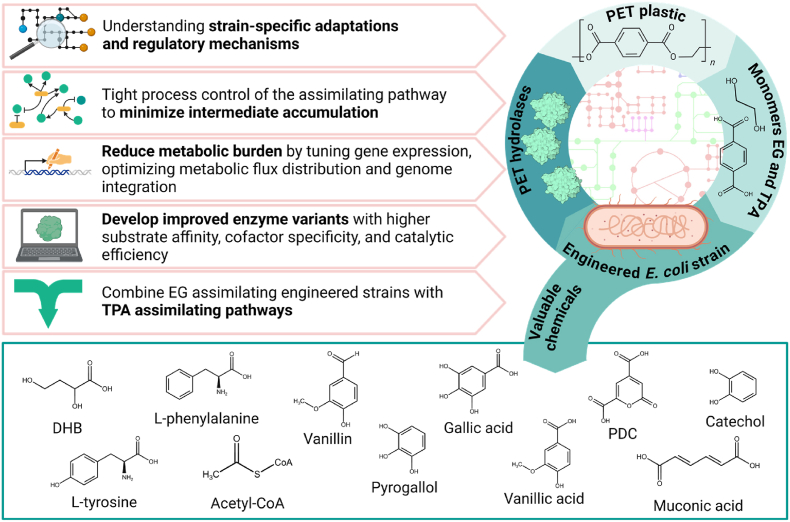
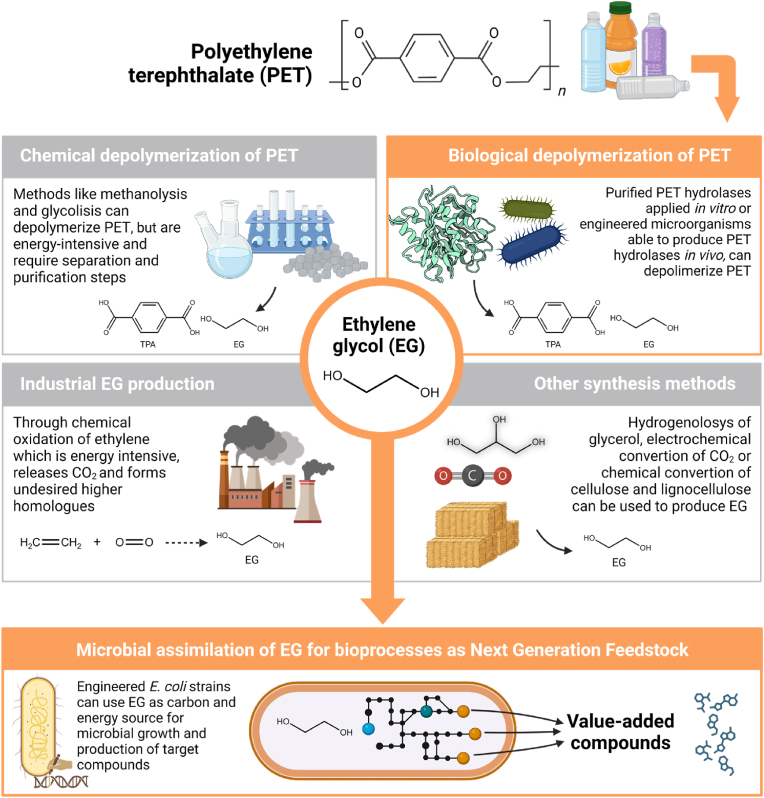
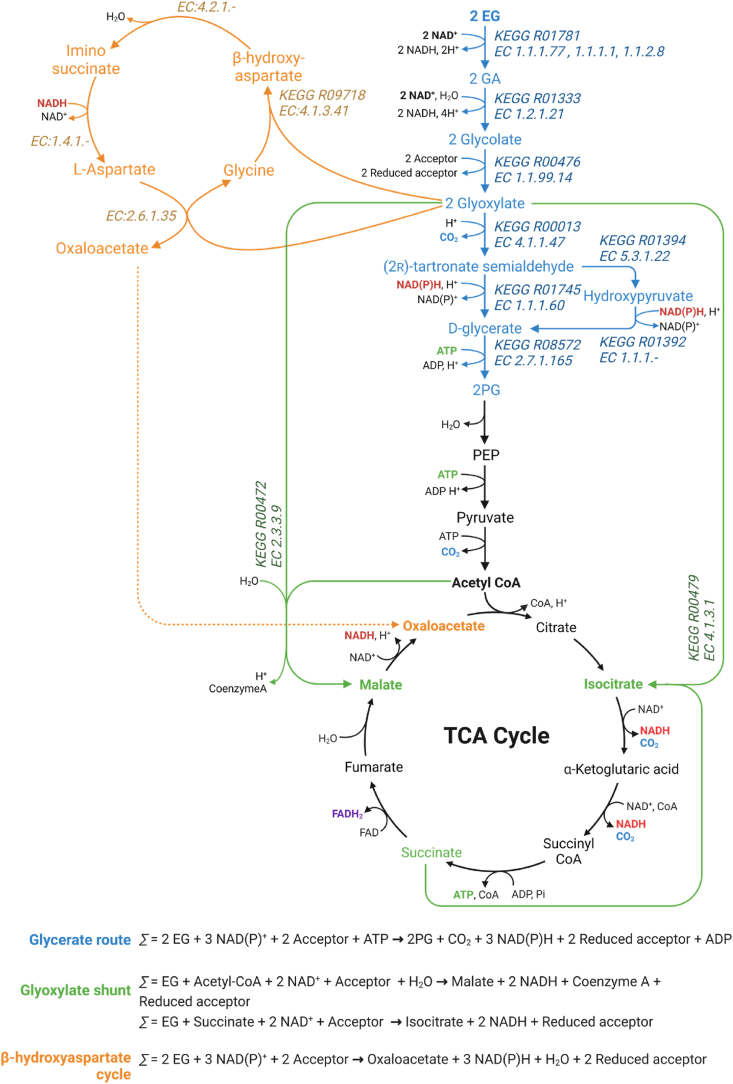
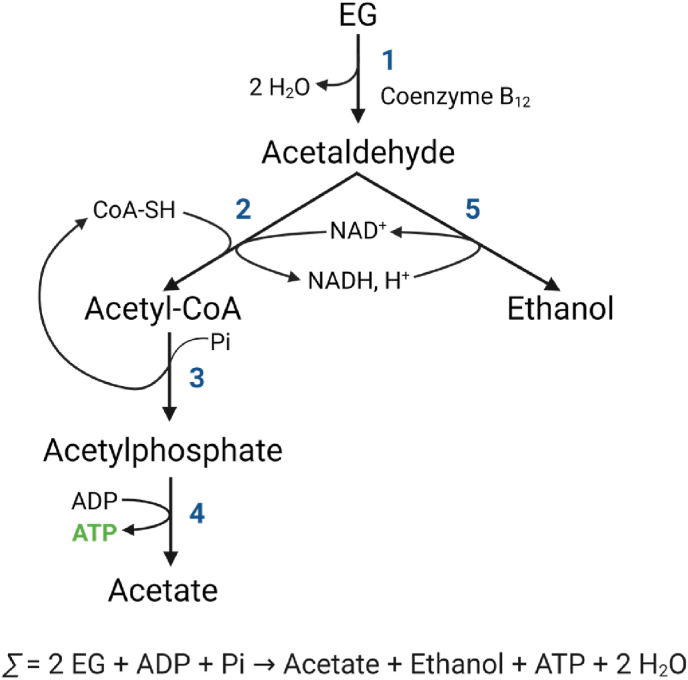
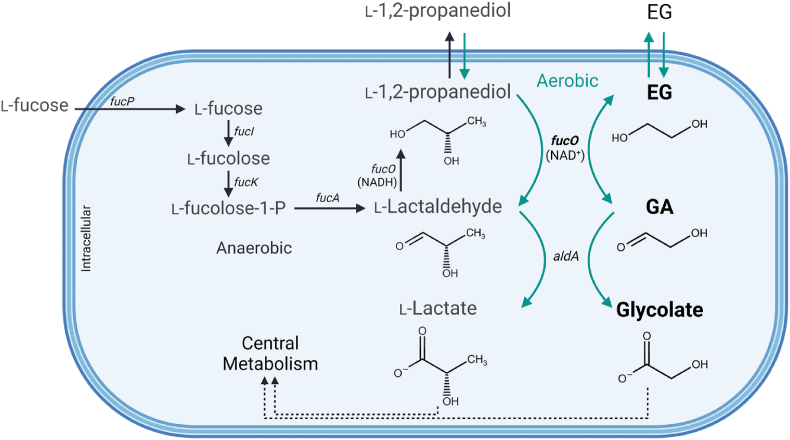
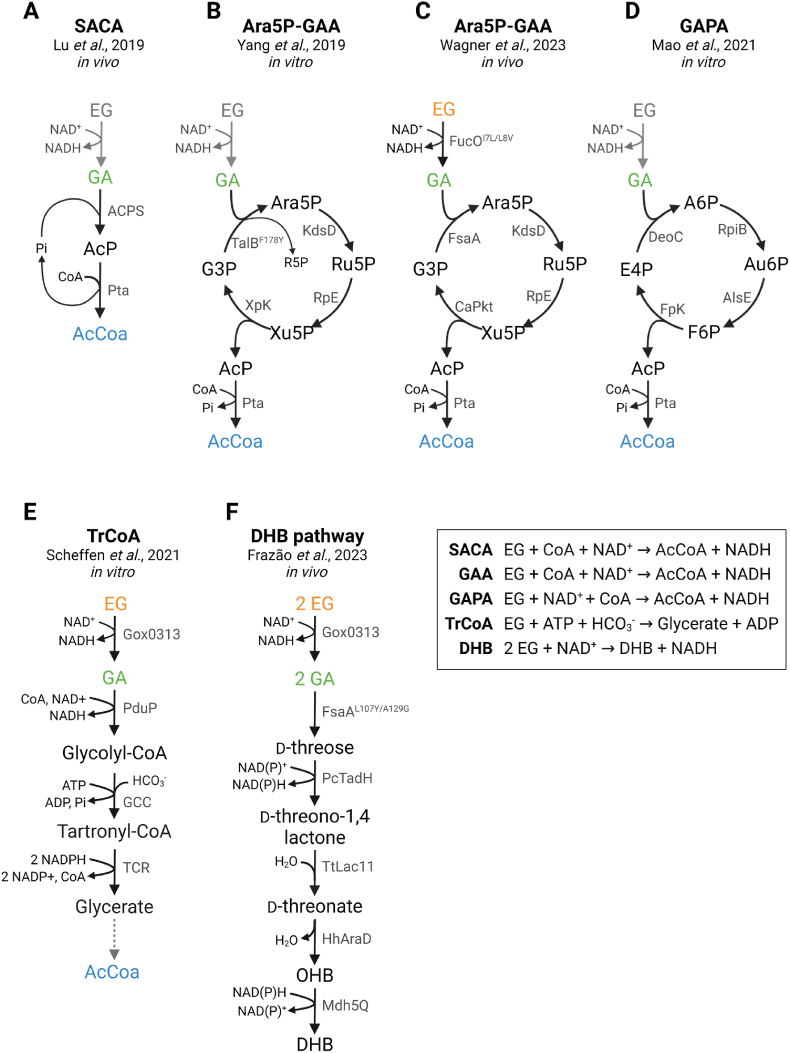
Polyethylene Terephthalate (PET) is a petroleum-based plastic polymer that, by design, can last decades, if not hundreds of years, when released into the environment through plastic waste leakage. In the pursuit of sustainable solutions to plastic waste recycling and repurposing, the enzymatic depolymerization of PET has emerged as a promising green alternative. However, the metabolic potential of the resulting PET breakdown molecules, such as the two-carbon (C2) molecule ethylene glycol (EG), remains largely untapped. Here, we review and discuss the current state of research regarding existing natural and synthetic microbial pathways that enable the assimilation of EG as a carbon and energy source for . Leveraging the metabolic versatility of , we explore the viability of this widely used industrial strain in harnessing EG as feedstock for the synthesis of target value-added compounds metabolic and protein engineering strategies. Consequently, we assess the potential of EG as a versatile alternative to conventional carbon sources like glucose, facilitating the closure of the loop between the highly available PET waste and the production of valuable biochemicals. This review explores the interplay between PET biodegradation and EG metabolism, as well as the key challenges and opportunities, while offering perspectives and suggestions for propelling advancements in microbial EG assimilation for circular economy applications.
聚对苯二甲酸乙二酯(PET)是一种石油基塑料聚合物,从设计角度来看,如果通过塑料垃圾泄漏进入环境,它可以持续存在数十年,甚至数百年。在寻求塑料垃圾回收和再利用的可持续解决方案的过程中,PET的酶促解聚已成为一种有前景的绿色替代方案。然而,PET分解产生的分子的代谢潜力,如二碳(C2)分子乙二醇(EG),在很大程度上仍未得到开发。在这里,我们回顾并讨论了有关现有天然和合成微生物途径的研究现状,这些途径能够将EG作为碳源和能源进行同化。利用[具体微生物名称]的代谢多功能性,我们探索了这种广泛使用的工业菌株利用EG作为原料合成目标增值化合物的可行性以及代谢和蛋白质工程策略。因此,我们评估了EG作为葡萄糖等传统碳源的通用替代品的潜力,促进了从大量可用的PET废料到生产有价值生物化学品的循环闭合。本综述探讨了PET生物降解与EG代谢之间的相互作用,以及关键挑战和机遇,同时为推动微生物EG同化在循环经济应用中的进展提供了观点和建议。