Grabek-Lejko Dorota, Miłek Michał, Dżugan Małgorzata
Department of Bioenergetics, Food Analysis and Microbiology, Institute of Food Technology and Nutrition, University of Rzeszow, Zelwerowicza 4 Street, Rzeszow, 35-601, Poland.
Department of Chemistry and Food Toxicology, Institute of Food Technology and Nutrition, University of Rzeszow, Ćwiklińskiej 1a St, Rzeszow, 35-601, Poland.
Sci Rep. 2024 Dec 28;14(1):31170. doi: 10.1038/s41598-024-82429-0.
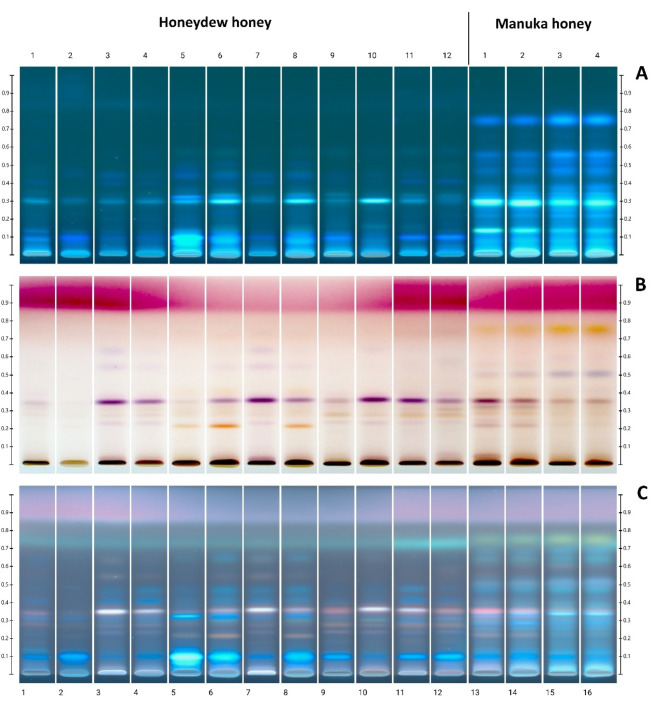
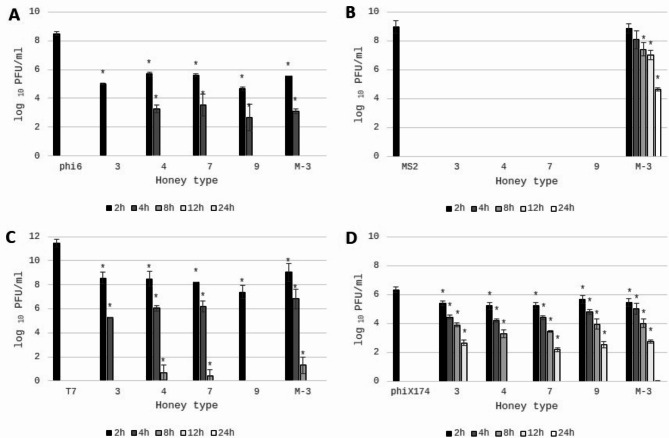
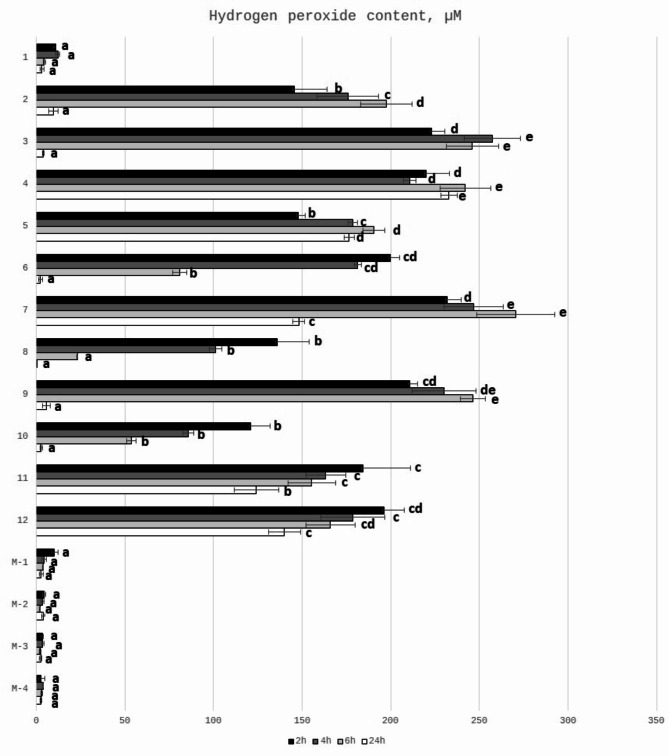
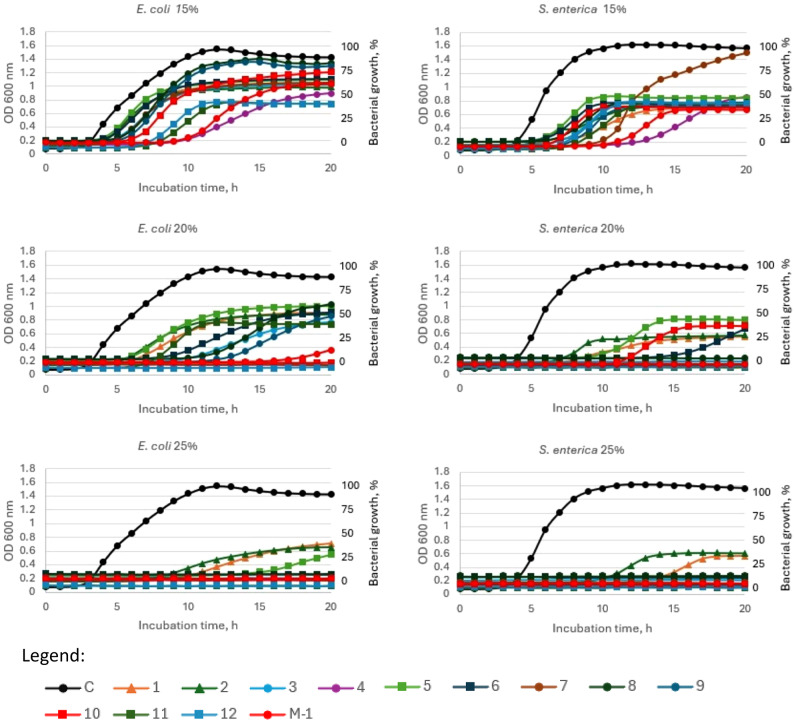
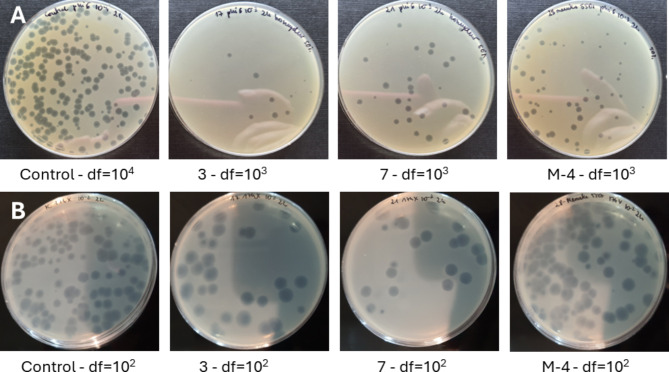
The aim of the present study was to compare the antioxidant, antibacterial and antiviral activities of Podkarpackie coniferous honeydew honey and Manuka honey. The quality of tested honey samples (honeydew-12 and Manuka-4) regarding honey standard was evaluated as well as additional indicators (methylglyoxal, total phenolics and HPTLC phenolic profile, antioxidant potential, glucose oxidase activity, and hydrogen peroxide) were compared. Antibacterial potential was analyzed against Gram-positive (S. aureus and B. cereus) and Gram-negative (E. coli and S. enterica) bacteria. Antiviral activity against different RNA (phi6, MS2) and DNA (T7, phiX174) bacteriophages considered as "viral surrogates" was determined. Based on the determined physicochemical parameters the good quality of tested honeys was confirmed, excluding two samples. The content of polyphenolic compounds in honeydew honey ranged from 583.87 to 1102.42 mg of gallic acid/kg and was strongly correlated with the antioxidant properties. Moreover, for samples with the strongest activity these parameters were comparable to Manuka honey. However, the obtained HPTLC polyphenolic profiles were completely different for honeydew than for Manuka honey which exhibited additional bands (Rf = 0.74 and 0.52). Honeydew honeys were characterized by a strong antiviral and antibacterial properties most of all against Gram-positive bacteria. The MICs (minimal inhibitory concentrations) for S. aureus and B. cereus ranged 15-35% and 8-15% for honeydew and Manuka honeys, respectively. The strongest antiviral properties of honeydew honey were demonstrated mainly against RNA bacteriophages (phi6, MS2) which was even higher than for Manuka honey, especially against MS2 virus. The obtained results suggest that Podkarpackie honeydew honey with the controlled glucose oxidase activity may be a natural substance used to combat viral and bacterial diseases.
本研究的目的是比较喀尔巴阡针叶树甘露蜜和麦卢卡蜂蜜的抗氧化、抗菌和抗病毒活性。评估了测试蜂蜜样品(甘露蜜 -12 和麦卢卡 -4)符合蜂蜜标准的质量,并比较了其他指标(甲基乙二醛、总酚类和高效薄层色谱酚类图谱、抗氧化潜力、葡萄糖氧化酶活性和过氧化氢)。分析了对革兰氏阳性菌(金黄色葡萄球菌和蜡样芽孢杆菌)和革兰氏阴性菌(大肠杆菌和肠炎沙门氏菌)的抗菌潜力。测定了对不同 RNA(phi6、MS2)和 DNA(T7、phiX174)噬菌体(被视为“病毒替代物”)的抗病毒活性。根据测定的理化参数,确认了测试蜂蜜的良好质量,但排除了两个样品。甘露蜜中多酚类化合物的含量范围为 583.87 至 1102.42 毫克没食子酸/千克,并且与抗氧化性能密切相关。此外,对于活性最强的样品,这些参数与麦卢卡蜂蜜相当。然而,甘露蜜和麦卢卡蜂蜜的高效薄层色谱多酚类图谱完全不同,麦卢卡蜂蜜显示出额外的条带(Rf = 0.74 和 0.52)。甘露蜜的特点是具有很强的抗病毒和抗菌特性,尤其是对革兰氏阳性菌。甘露蜜和麦卢卡蜂蜜对金黄色葡萄球菌和蜡样芽孢杆菌的最低抑菌浓度(MICs)分别为 15 - 35% 和 8 - 15%。甘露蜜最强的抗病毒特性主要体现在对 RNA 噬菌体(phi6、MS2)上,甚至高于麦卢卡蜂蜜,尤其是对 MS2 病毒。所得结果表明,具有可控葡萄糖氧化酶活性的喀尔巴阡甘露蜜可能是一种用于对抗病毒和细菌疾病的天然物质。