Wang Junjie, Xiao Li, Li Zhou
Department of Geriatrics, First Affiliated Hospital, Army Medical University, Chongqing, China.
School of Health Management Policy, Peking Union Medical College, Chinese Academy of Medical Sciences, Beijing, China.
Lipids Health Dis. 2024 Dec 31;23(1):427. doi: 10.1186/s12944-024-02415-3.
With metabolic disorders on the rise globally, the cardiometabolic index (CMI) has emerged as a crucial predictor of mortality risks linked to cancer, cardiovascular disease, and diabetes. This novel index, which combines lipid metabolism and body composition, is the focus of this study, aimed at exploring its association with all-cause and specific mortality in an all-age adult population.
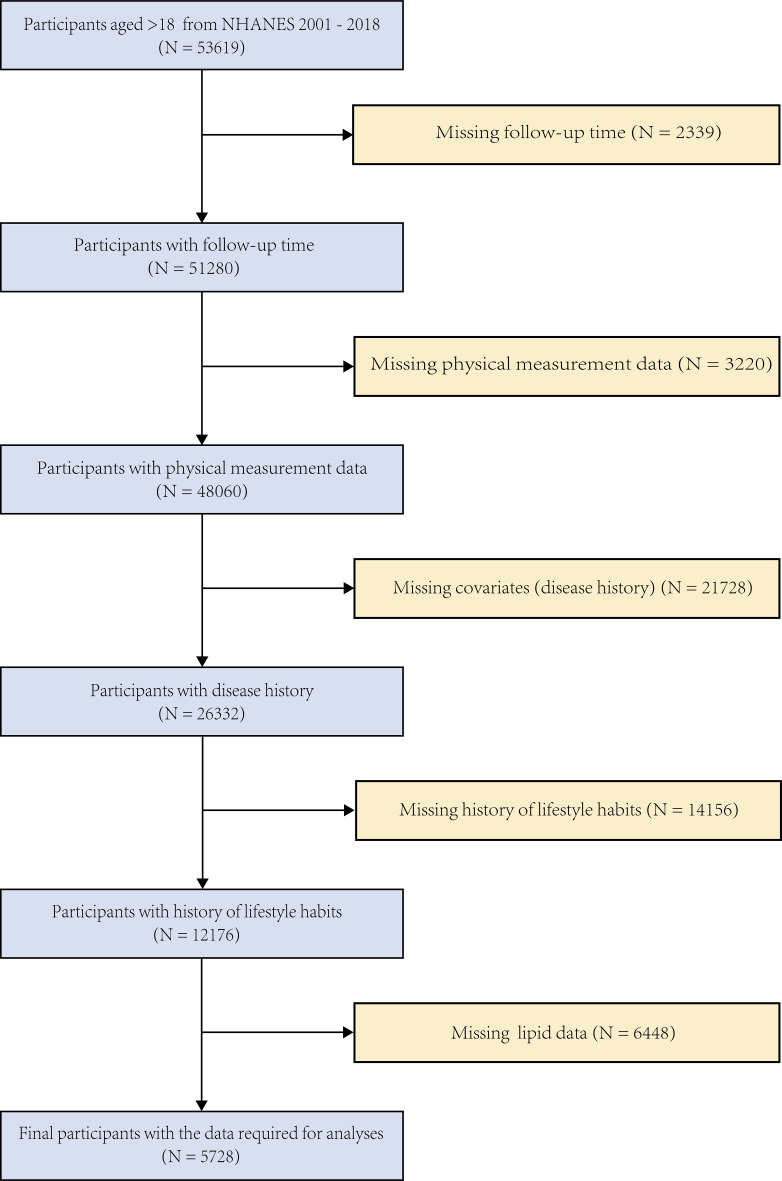
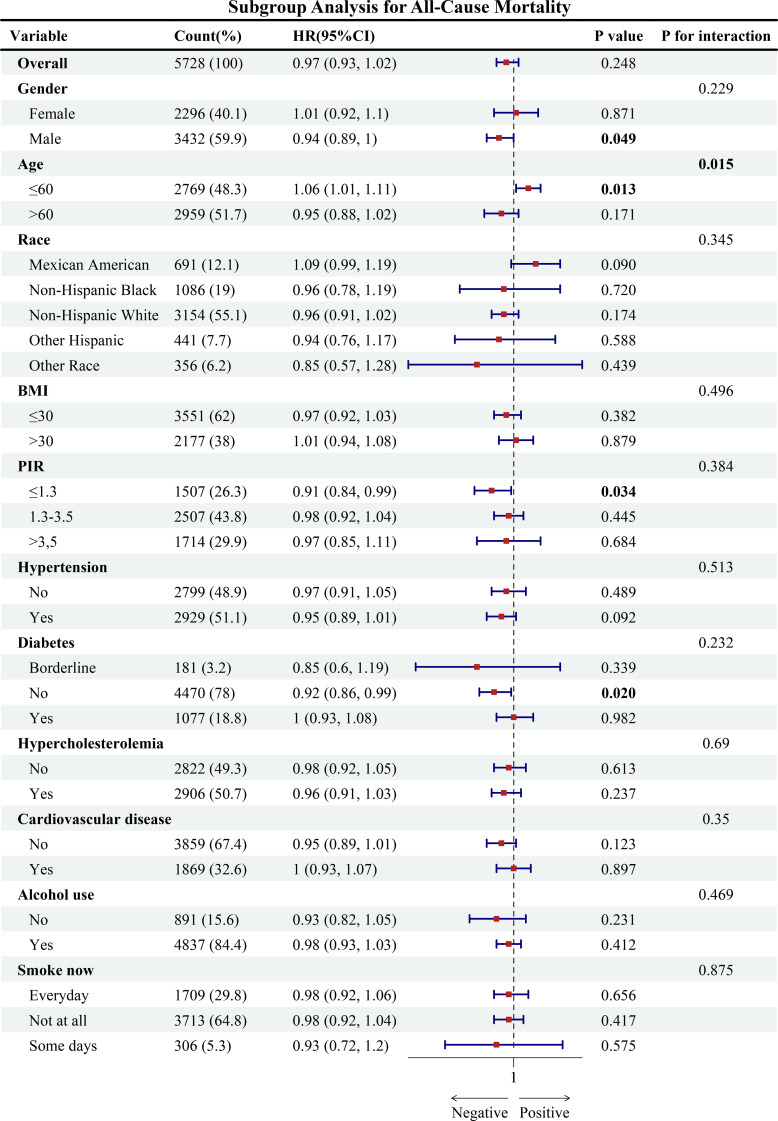
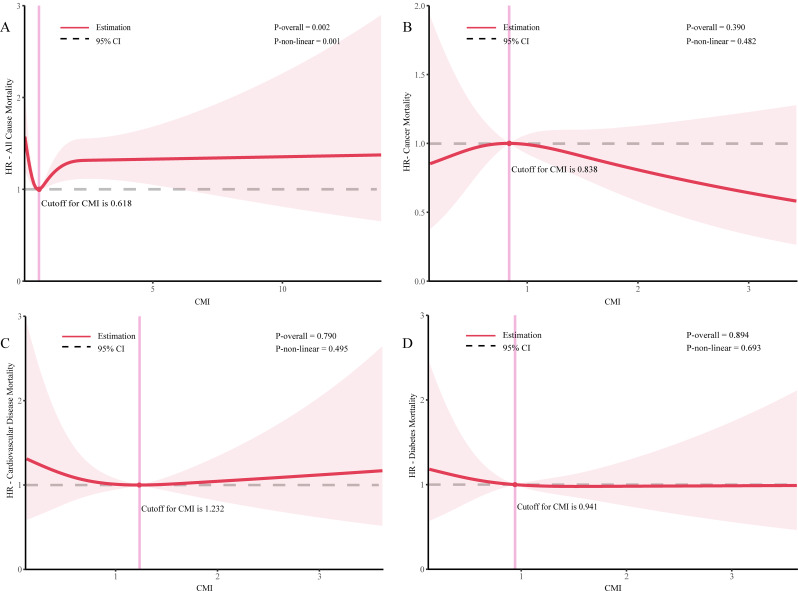
A longitudinal cohort study including 5,728 participants aged over 18 from nine cycles between 2001 and 2018 was enrolled and assessed. CMI served as the exposure variable, while outcomes included all-cause mortality and mortality due to cardiovascular disease, cancer, and diabetes. The Cox frailty model and average marginal effects were employed to evaluate the contribution of CMI to all-cause and specific mortality collectively. Restricted cubic spline analyses and stratified analyses were conducted to investigate potential nonlinear effects and interactions.
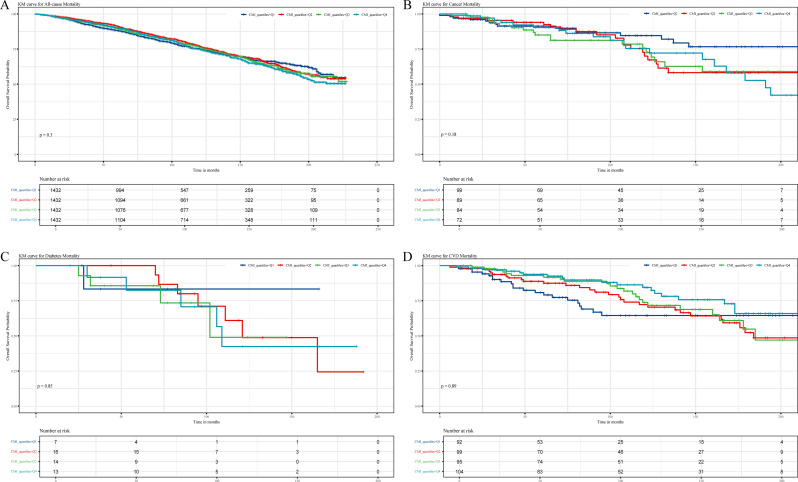
The decreased participants exhibited considerably higher CMI than the alive's. A positive association was found between CMI and all-cause mortality (HR=1.05, 95% CI=1.01-1.10). Notably, CMI was linked to an increased risk of cancer mortality (HR=1.02) and a reduced risk of cardiovascular disease mortality (HR=0.85). Furthermore, the average marginal effect of CMI on diabetes mortality was the largest (AME=0.499). The RCS curves revealed that participants had the lowest risk of all-cause mortality at a CMI of 0.618. Sensitivity analyses further supported these findings.
This study represents the first comprehensive assessment on the contribution of CMI to mortality across an all-age adult population, providing some insights for the comprehensive assessment of health and disease states.
随着全球代谢紊乱问题日益严重,心脏代谢指数(CMI)已成为与癌症、心血管疾病和糖尿病相关的死亡风险的关键预测指标。这个结合了脂质代谢和身体成分的新指数是本研究的重点,旨在探讨其与全年龄段成年人群全因死亡率和特定死亡率的关联。
纳入并评估了一项纵向队列研究,该研究包括2001年至2018年九个周期中5728名18岁以上的参与者。CMI作为暴露变量,而结局包括全因死亡率以及心血管疾病、癌症和糖尿病导致的死亡率。采用Cox脆弱模型和平均边际效应来共同评估CMI对全因死亡率和特定死亡率的影响。进行了受限立方样条分析和分层分析以研究潜在的非线性效应和相互作用。
死亡参与者的CMI显著高于存活者。发现CMI与全因死亡率之间存在正相关(HR = 1.05,95% CI = 1.01 - 1.10)。值得注意的是,CMI与癌症死亡率风险增加(HR = 1.02)和心血管疾病死亡率风险降低(HR = 0.85)相关。此外,CMI对糖尿病死亡率的平均边际效应最大(AME = 0.499)。受限立方样条曲线显示,当CMI为0.618时,参与者的全因死亡率风险最低。敏感性分析进一步支持了这些发现。
本研究首次全面评估了CMI对全年龄段成年人群死亡率的影响,为全面评估健康和疾病状态提供了一些见解。