Babar Mahrukh, Aslam Bilal, Faisal Muhammad Naeem, Malik Abdul, Akhtar Suhail, Fatima Sabiha, Majeed Wafa, Umer Asher, Farooq Muhammad Akmal
Institute of Physiology and Pharmacology, University of Agriculture, Faisalabad, Pakistan.
Department of Pharmaceutics, College of Pharmacy, King Saud University, Riyadh, Saudi Arabia.
Front Pharmacol. 2024 Dec 17;15:1474592. doi: 10.3389/fphar.2024.1474592. eCollection 2024.
Rheumatoid arthritis is an autoimmune disease that mainly causes joint damage. The patient experiences loss of appetite, pain, fever, and fatigue. The present study was designed to phytochemically characterize and evaluate the anti-arthritic activity of green-synthesized copper oxide (CuO) nanoparticles (NPs) using the hydroalcoholic extract of roots in an adjuvant-induced arthritic rat model.
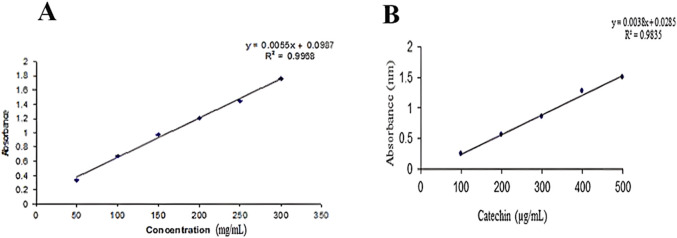
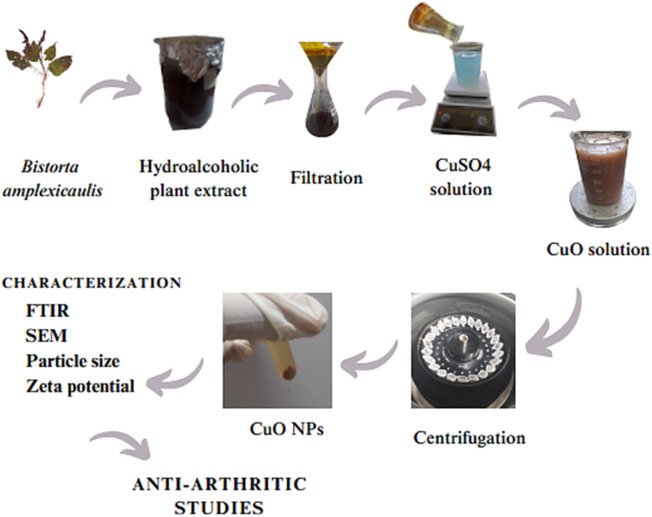
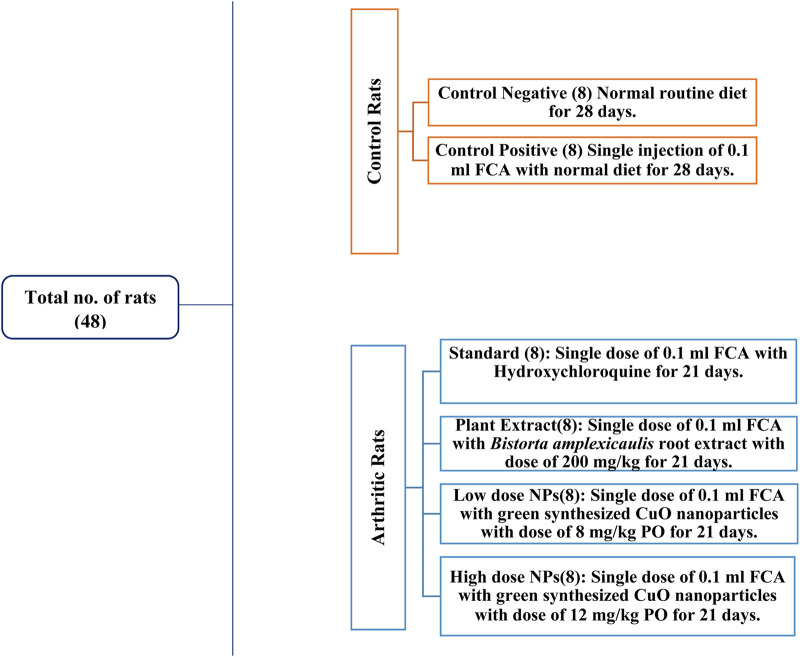
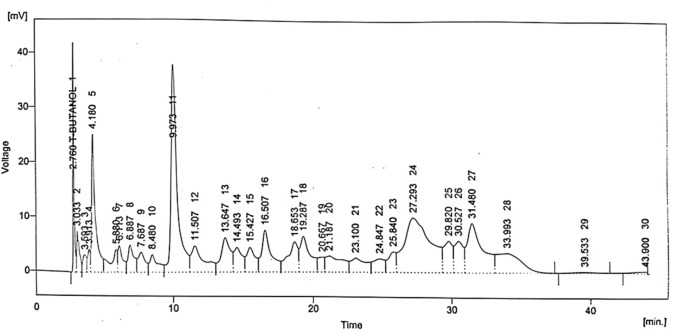
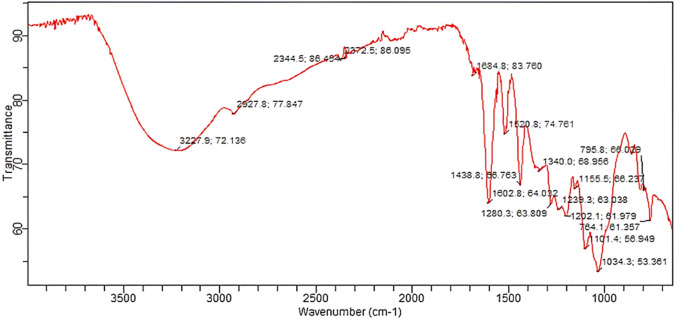
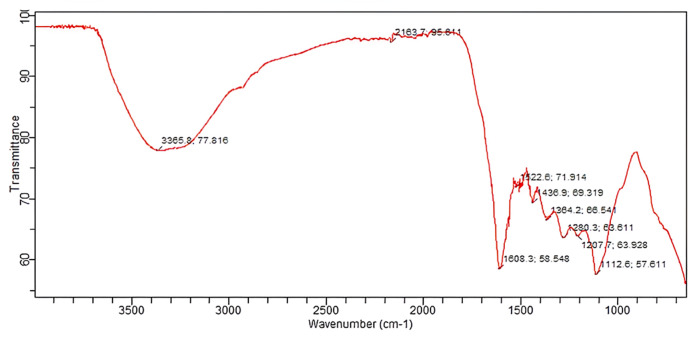
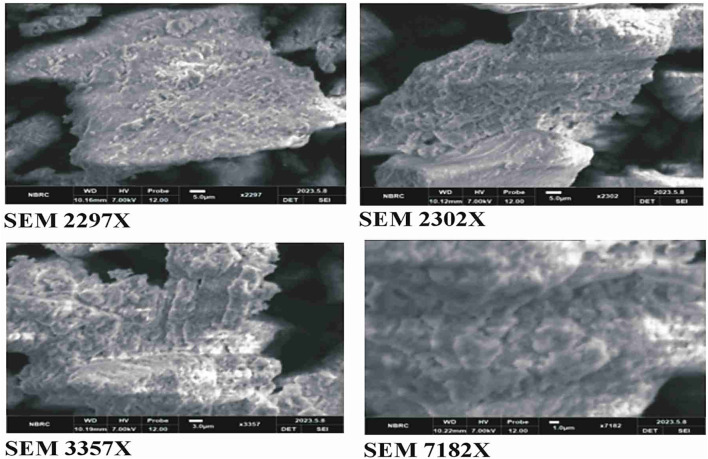
For this purpose, crude powdered plant material was used for proximate analysis, and the plant extract was assessed for qualitative phytochemical analysis, mineral contents, and flavonoid and phenolic contents, as well as quantitative phytochemical analysis through reversed-phase high-performance liquid chromatography (RP-HPLC) and Fourier-transform infrared (FTIR) spectroscopy. The antioxidant activity of both extracts was determined by the 2,2-diphenyl-1-picrylhydrazyl (DPPH) assay. The biosynthesized CuO NPs from the extract showed anti-arthritic activity due to the presence of flavonoids and phenols, which showed a pain reliever effect by blocking the cyclo-oxygenase enzyme and has immune suppressant activity, thus securing the joint from destruction. The nanoparticles were characterized by zeta size, zeta potential, scanning electron microscopy (SEM), and FTIR spectroscopy. Forty-eight albino rats were divided randomly into six treatment groups.
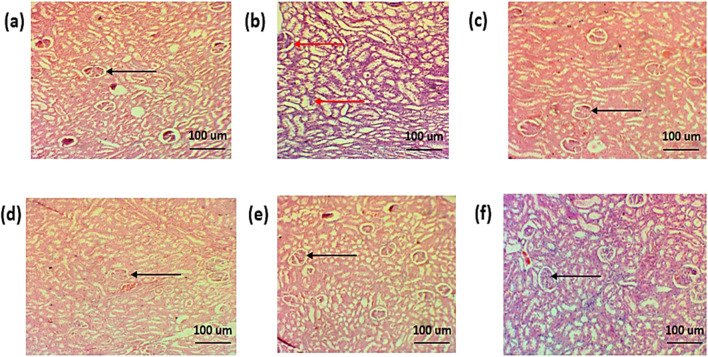
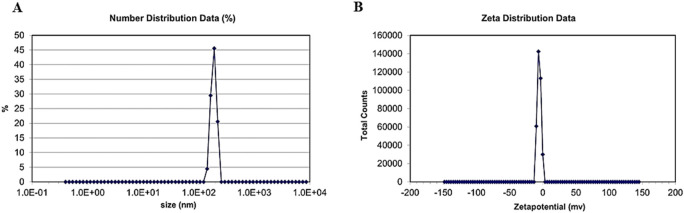
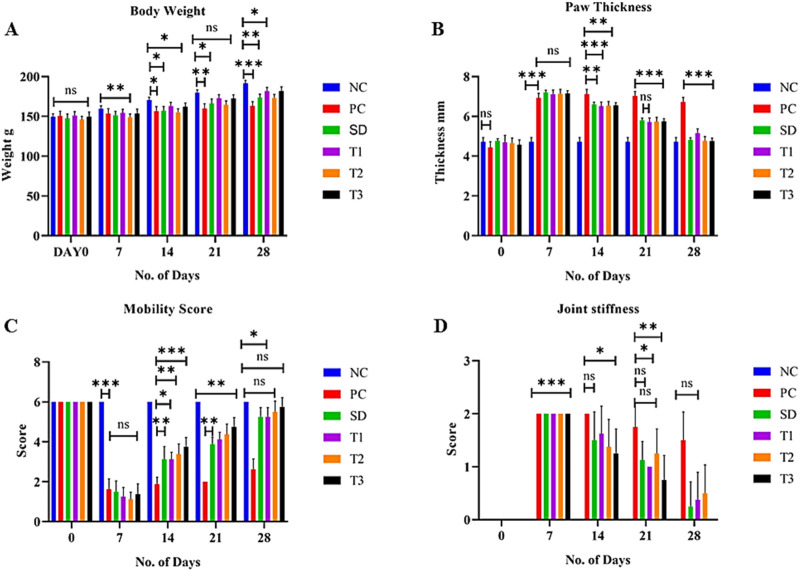
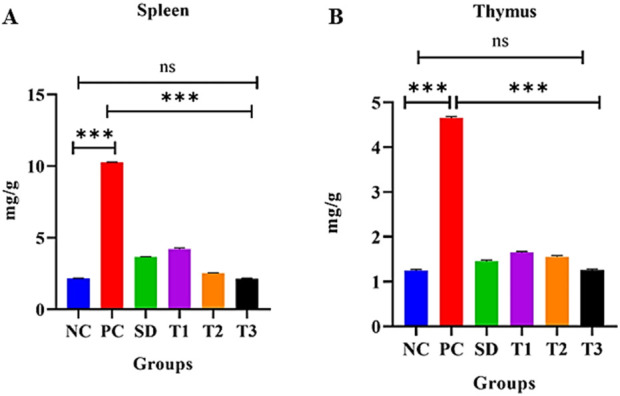
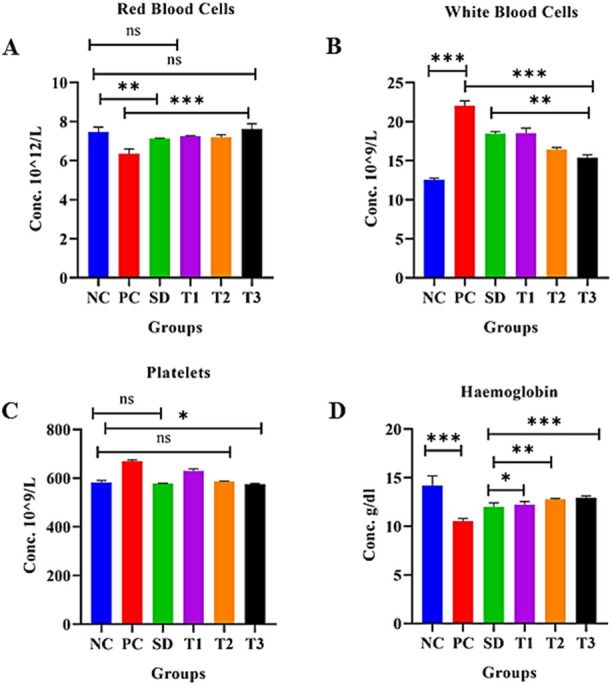
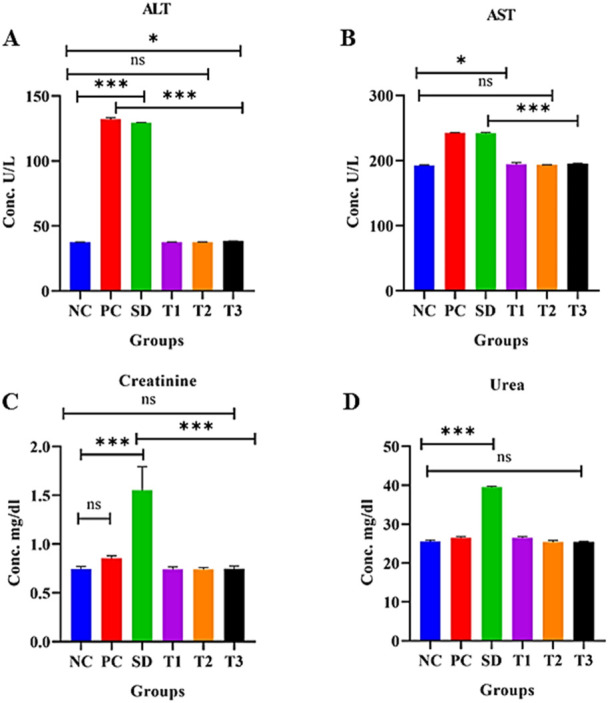
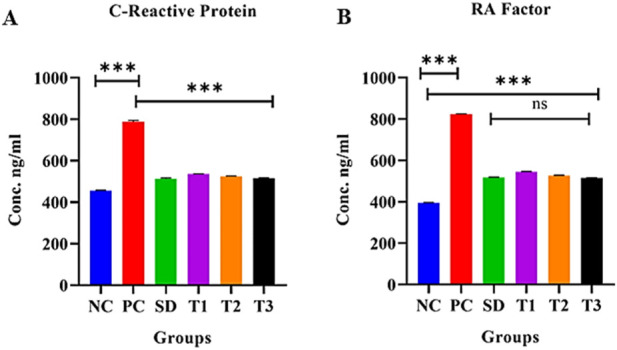
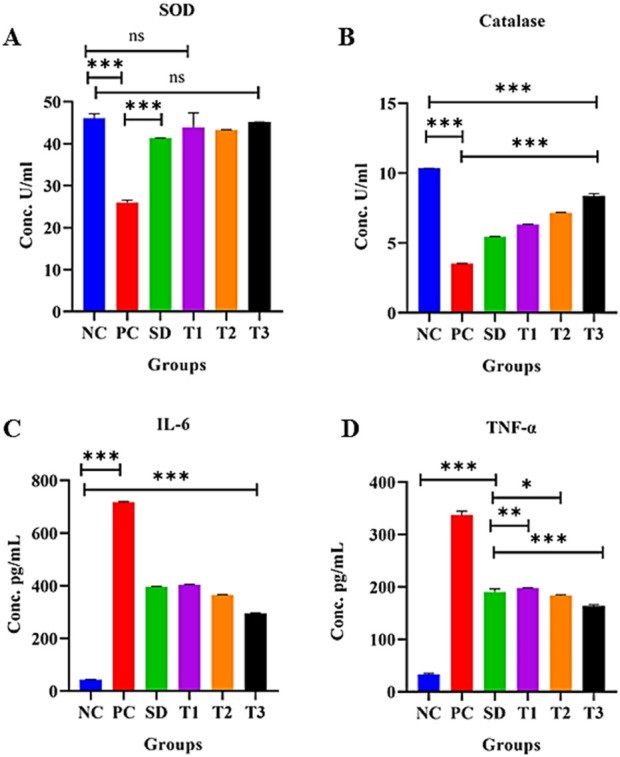
The zeta size and zeta potential of the nanoparticles were 186.8 nm and -9.23 mV, respectively. Joint stiffness, spleen weight, thymus weight, and paw thickness showed a significant decrease after treatment with NPs. The hematological parameters such as red blood cells (RBCs) and hemoglobin showed a significant increase, while platelets and white blood cells (WBCs) showed a significant decrease in NP-treated groups. C-reactive protein (CRP), rheumatoid factor (RF), liver and kidney function biomarkers, tumor necrosis factor-α (TNF-α), and interleukin-6 (IL-6) levels showed a significant decrease at both low and high doses of green-synthesized CuO nanoparticles from the root extract. The final data were analyzed by one way and two-way analysis of variance (ANOVA) and Tukey's multi-comparison test.
So, from this study, it was concluded that both the plant root extract and green-synthesized CuO nanoparticles have anti-arthritic potential, but CuO NPs showed remarkable results.
类风湿性关节炎是一种主要导致关节损伤的自身免疫性疾病。患者会出现食欲不振、疼痛、发热和疲劳等症状。本研究旨在对采用根部水醇提取物绿色合成的氧化铜(CuO)纳米颗粒(NPs)进行植物化学表征,并在佐剂诱导的关节炎大鼠模型中评估其抗关节炎活性。
为此,使用粗粉状植物材料进行近似分析,并对植物提取物进行定性植物化学分析、矿物质含量、黄酮类和酚类含量评估,以及通过反相高效液相色谱(RP-HPLC)和傅里叶变换红外(FTIR)光谱进行定量植物化学分析。两种提取物的抗氧化活性通过2,2-二苯基-1-苦基肼(DPPH)法测定。从提取物中生物合成的CuO NPs由于存在黄酮类和酚类而表现出抗关节炎活性,它们通过阻断环氧化酶发挥止痛作用并具有免疫抑制活性,从而保护关节免受破坏。通过zeta尺寸、zeta电位、扫描电子显微镜(SEM)和FTIR光谱对纳米颗粒进行表征。将48只白化大鼠随机分为六个治疗组。
纳米颗粒的zeta尺寸和zeta电位分别为186.8 nm和 -9.23 mV。用NPs治疗后,关节僵硬、脾脏重量、胸腺重量和爪厚度均显著降低。纳米颗粒治疗组的血液学参数如红细胞(RBCs)和血红蛋白显著增加,而血小板和白细胞(WBCs)显著减少。低剂量和高剂量的根部提取物绿色合成的CuO纳米颗粒均使C反应蛋白(CRP)、类风湿因子(RF)、肝肾功能生物标志物、肿瘤坏死因子-α(TNF-α)和白细胞介素-6(IL-6)水平显著降低。最终数据通过单因素和双因素方差分析(ANOVA)以及Tukey多重比较检验进行分析。
因此,从本研究得出结论,植物根提取物和绿色合成的CuO纳米颗粒均具有抗关节炎潜力,但CuO NPs显示出显著结果。