Easy Elham, Fang Mengqi, Li Mingxing, Yang Eui-Hyeok, Zhang Xian
Department of Mechanical Engineering, Stevens Institute of Technology, Hoboken, NJ, 07030, USA.
Center for Functional Nanomaterials, Brookhaven National Laboratory, Upton, NY, 11973, USA.
Sci Rep. 2025 Jan 2;15(1):127. doi: 10.1038/s41598-024-84524-8.
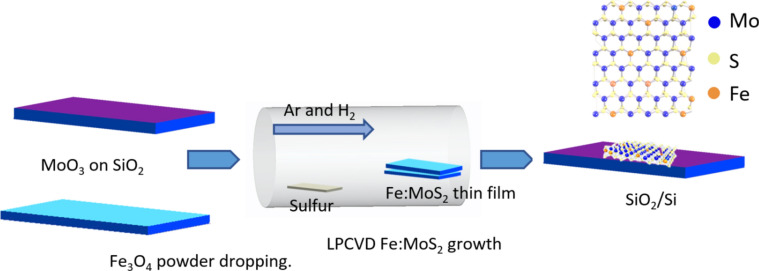
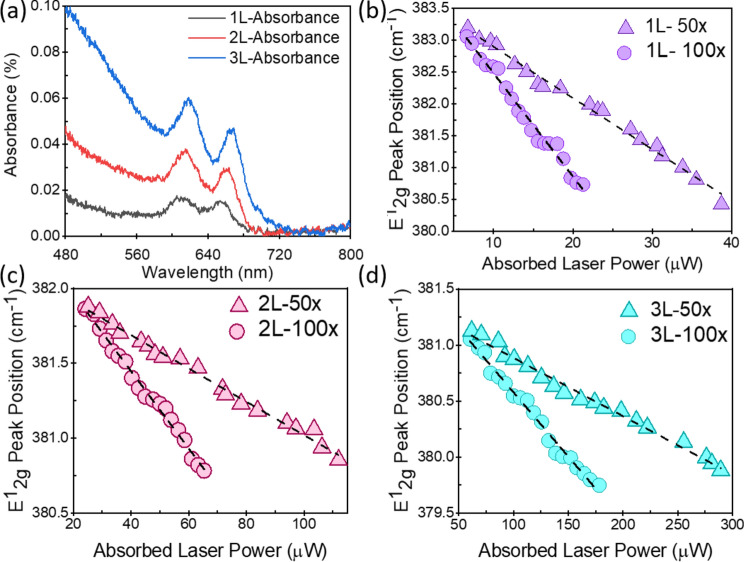
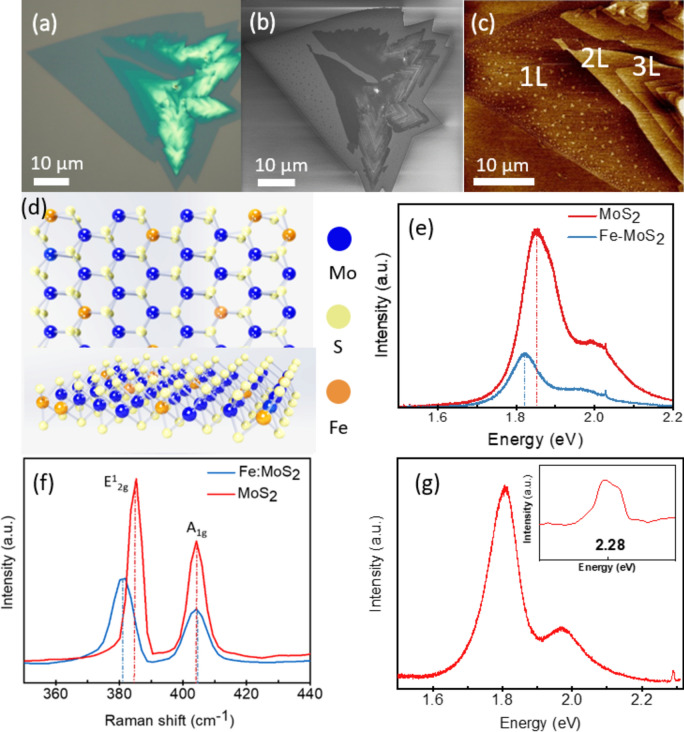
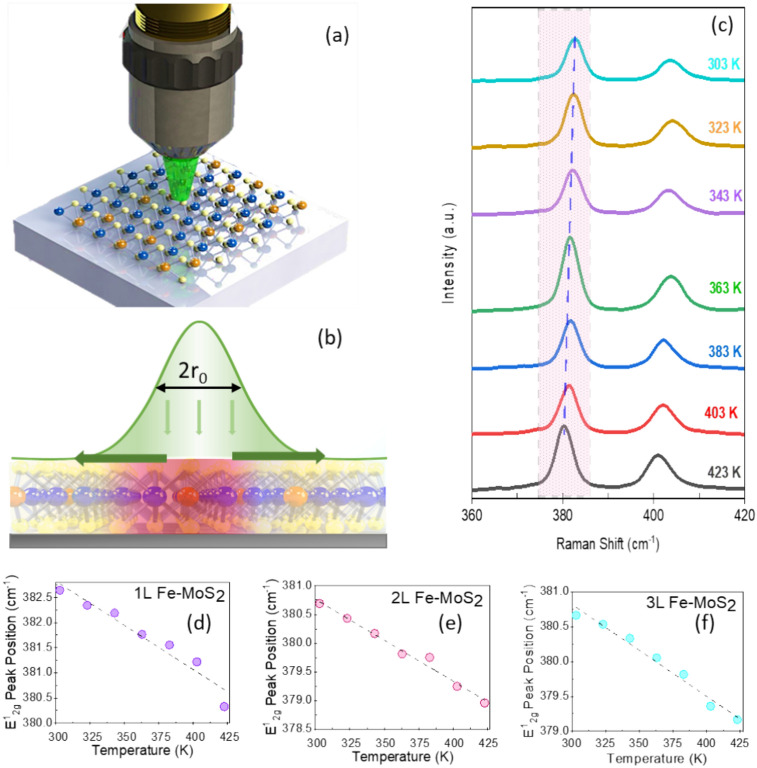
Two-Dimensional transition metal dichalcogenides have been the subject of extensive attention thanks to their unique properties and atomically thin structure. Because of its unprecedented room-temperature magnetic properties, iron-doped MoS (Fe:MoS) is considered the next-generation quantum and magnetic material. It is essential to understand Fe:MoS's thermal behavior since temperature and thermal load/activation are crucial for their magnetic properties and the current nano and quantum devices have been severely limited by thermal management. In this work, Fe:MoS is synthesized by doping Fe atoms into MoS using the chemical vapor deposition synthesis and a refined version of opto-thermal Raman technique is used to study the thermal transport properties of Fe:MoS in the forms of single (1L), bilayer (2L), and tri-layer (3L). In the Opto-thermal Raman technique, a laser is focused on the center of a thin film and used to measure the peak position of a Raman-active mode. The lateral thermal conductivity of 1-3L of Fe:MoS and the interfacial thermal conductance between Fe:MoS and the substrate were obtained by analyzing the temperature-dependent and power-dependent Raman measurement, laser power absorption coefficient, and laser spot sizes. At the room temperature, the lateral thermal conductivity of 1-3L Fe:MoS were discovered as 24 ± 11, 18 ± 9, and 16 ± 8 W/m·K, respectively which presents a decreasing trend from 1 to 3L and is about 40% lower than that of MoS. The interfacial thermal conductance of between Fe:MoS and the substrate were discovered to be 0.3 ± 0.2, 1.1 ± 0.7, and 3.0 ± 2.3 MW/m⋅K for 1L to 3L respectively. We also characterized Fe:MoS's thermal transport at high temperature, and calculated Fe:MoS's thermal transport by density theory function. These findings will shed light on the thermal management and thermoelectric designs for Fe:MoS based nano and quantum electronic devices.
二维过渡金属二硫属化物因其独特的性质和原子级薄的结构而受到广泛关注。由于其前所未有的室温磁性,铁掺杂的二硫化钼(Fe:MoS)被认为是下一代量子和磁性材料。了解Fe:MoS的热行为至关重要,因为温度和热负载/激活对其磁性至关重要,并且当前的纳米和量子器件在热管理方面受到严重限制。在这项工作中,通过化学气相沉积合成法将铁原子掺杂到二硫化钼中合成了Fe:MoS,并使用改进版的光热拉曼技术研究了单层(1L)、双层(2L)和三层(3L)形式的Fe:MoS的热输运性质。在光热拉曼技术中,激光聚焦在薄膜中心,用于测量拉曼活性模式的峰值位置。通过分析与温度和功率相关的拉曼测量、激光功率吸收系数和激光光斑尺寸,获得了1 - 3L Fe:MoS的横向热导率以及Fe:MoS与衬底之间的界面热导。在室温下,发现1 - 3L Fe:MoS的横向热导率分别为24±11、18±9和16±8 W/m·K,呈现出从1L到3L逐渐降低的趋势,并且比二硫化钼低约40%。对于1L到3L,发现Fe:MoS与衬底之间的界面热导分别为0.3±0.2、1.1±0.7和3.0±2.3 MW/m⋅K。我们还对Fe:MoS在高温下的热输运进行了表征,并通过密度泛函理论计算了Fe:MoS的热输运。这些发现将为基于Fe:MoS的纳米和量子电子器件的热管理和热电设计提供启示。