Selim Samy, Saddiq Amna A, Ashy Ruba Abdulrahman, Baghdadi Afra Mohammed, Alzahrani Ashwag Jaman, Mostafa Ehab M, Al Jaouni Soad K, Elamir Mohammed Yagoub Mohammed, Amin Mohamed A, Salah Ahmed M, Hagagy Nashwa
Department of Clinical Laboratory Sciences, College of Applied Medical Sciences, Jouf University, P.O. 2014, Sakaka, Saudi Arabia.
Department of Biological Sciences, College of Science, University of Jeddah, Jeddah, Saudi Arabia.
AMB Express. 2025 Jan 2;15(1):1. doi: 10.1186/s13568-024-01808-y.
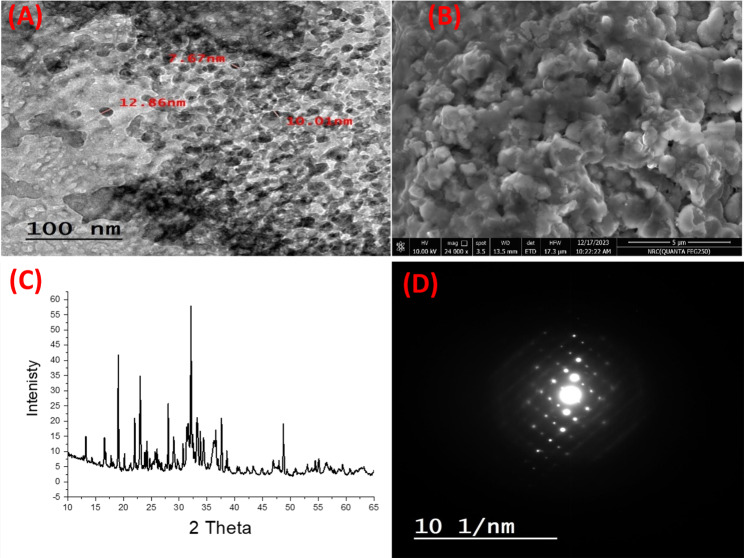
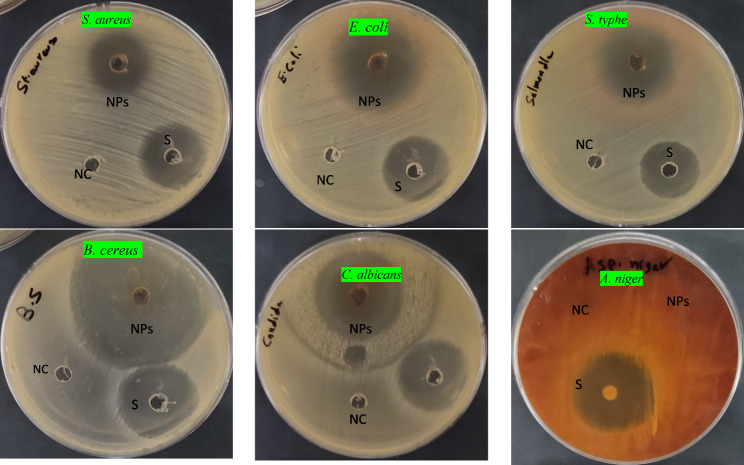
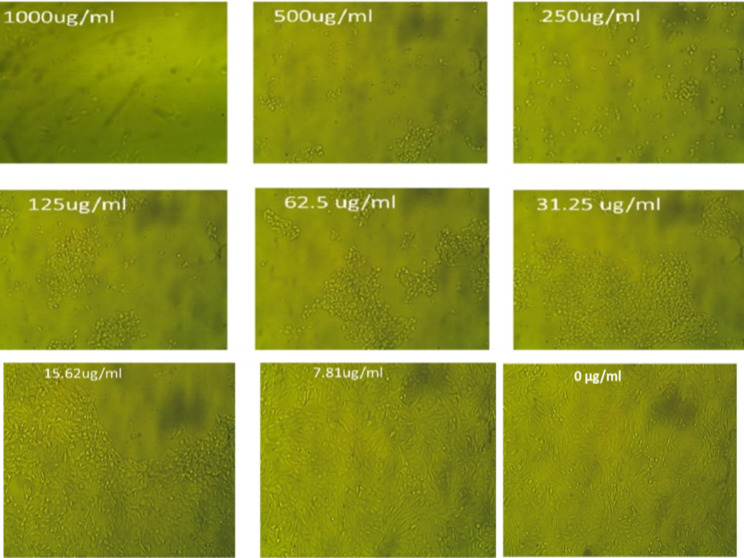
Extracts of medicinal seeds can be used to synthesize nanoparticles (NPs) in more environmentally friendly ways than physical or chemical ways. For the first time, aqueous extract from unexploited grape seeds was used in this study to create Se/ZnO NPS utilizing a green technique, and their antimicrobial activity, cytotoxicity, antioxidant activities, and plant bio stimulant properties of the economic Vicia faba L. plant were evaluated. Se/ZnO NPS is characterized by SEM and TEM images, FTIR, and XRD. Through the well diffusion assay and the scavenging of 1,1-Diphenyl-2-picrylhydrazyl (DPPH) free radical experiment, biogenic Se/ZnO NPs demonstrated their antibacterial and antioxidant activities. The nanomaterial compound showed the highest inhibitory effects of 99.7, 55.63, 16.91, 10.25, 6.61, 3.83, 3.00, and 2.59%, respectively, against the cervical carcinoma (SKOV3 cells) cell line at conc of 7.81, 15.62, 31.25, 62.5, 125, 250, 500, and 1000 µg/ml, respectively, with IC50 values at 20.31 µg, resulting in 50% cell death. This study demonstrated the value of bimetallic nano-fertilizers Se/Zn in promoting faba bean development, yield features, and metabolite contents (protein, phenol, carbs, and pigments). These fertilizers are probably also advantageous for other crops. When applied in contrast to the control, 100 ppm of biological nano-Se/ZnO may generally result in the best growth and yield of faba beans. Further research is needed on the ecological aspect of biological nanofertilizers in addition to the economic one.
与物理或化学方法相比,药用种子提取物可用于以更环保的方式合成纳米颗粒(NPs)。本研究首次使用未开发葡萄种子的水提取物,通过绿色技术制备硒/氧化锌纳米颗粒(Se/ZnO NPS),并评估了其对经济作物蚕豆(Vicia faba L.)的抗菌活性、细胞毒性、抗氧化活性和植物生物刺激特性。通过扫描电子显微镜(SEM)和透射电子显微镜(TEM)图像、傅里叶变换红外光谱(FTIR)和X射线衍射(XRD)对Se/ZnO NPS进行了表征。通过琼脂扩散法和1,1-二苯基-2-苦基肼(DPPH)自由基清除实验,生物合成的Se/ZnO纳米颗粒显示出其抗菌和抗氧化活性。该纳米材料化合物对宫颈癌细胞系(SKOV3细胞)的抑制作用最高,在浓度分别为7.81、15.62、31.25、62.5、125、250、500和1000µg/ml时,抑制率分别为99.7%、55.63%、16.91%、10.25%、6.61%、3.83%、3.00%和2.59%,半数抑制浓度(IC50)值为20.31µg,导致50%的细胞死亡。本研究证明了双金属纳米肥料硒/锌在促进蚕豆生长发育、产量特征和代谢产物含量(蛋白质、酚类、碳水化合物和色素)方面的价值。这些肥料可能对其他作物也有好处。与对照相比,100 ppm的生物纳米硒/氧化锌通常可能使蚕豆生长和产量最佳。除了经济方面,还需要对生物纳米肥料的生态方面进行进一步研究。