Shams Seyedeh Elham, Dastgheib Seyed Alireza, Mousavi-Beni Seyede Arefe, Hosein Lookzadeh Mohamad, Mirjalili Seyed Reza, Golshan-Tafti Mohammad, Bahrami Reza, Yeganegi Maryam, Shahbazi Amirhossein, Masoudi Ali, Shiri Amirmasoud, Noorishadkam Mahmood, Neamatzadeh Hossein
Department of Pediatrics, Hamadan University of Medical Sciences, Hamadan, Iran.
Department of Medical Genetics, School of Medicine, Shiraz University of Medical Sciences, Shiraz, Iran.
Front Pediatr. 2024 Dec 19;12:1511355. doi: 10.3389/fped.2024.1511355. eCollection 2024.
Inflammation is increasingly recognized as a key factor in the pathophysiology of bronchopulmonary dysplasia (BPD). While previous research has established significant links between TNF-α polymorphisms and BPD susceptibility, further validation of these associations is needed. This study aims to examine the relationship between TNF-α polymorphisms and the risk of BPD.
All relevant articles published before October 1, 2024, have been screened in the PubMed, Web of Science, CNKI, and Scopus databases.
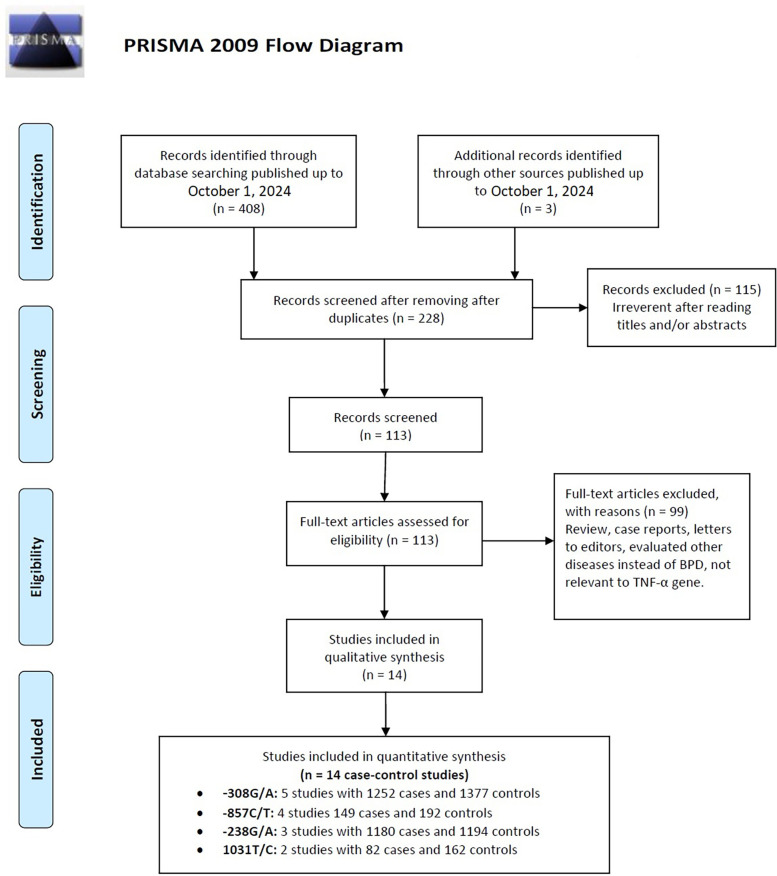
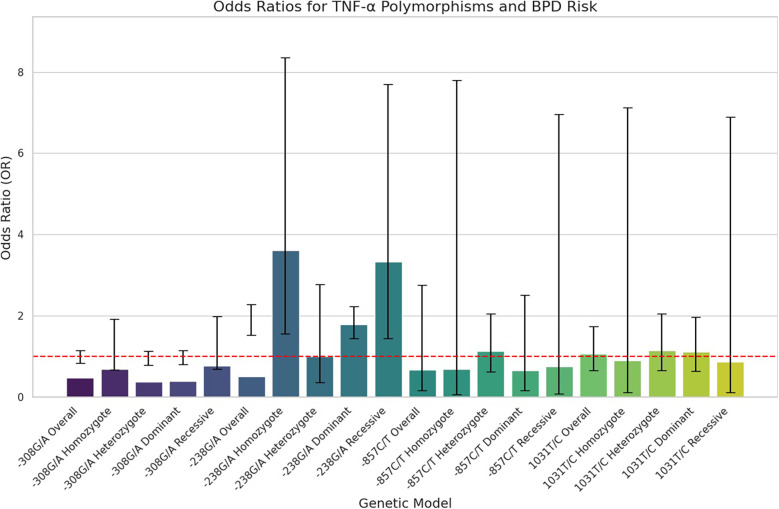
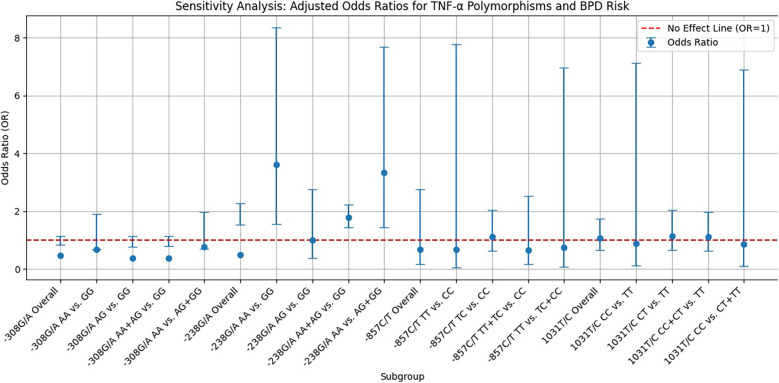
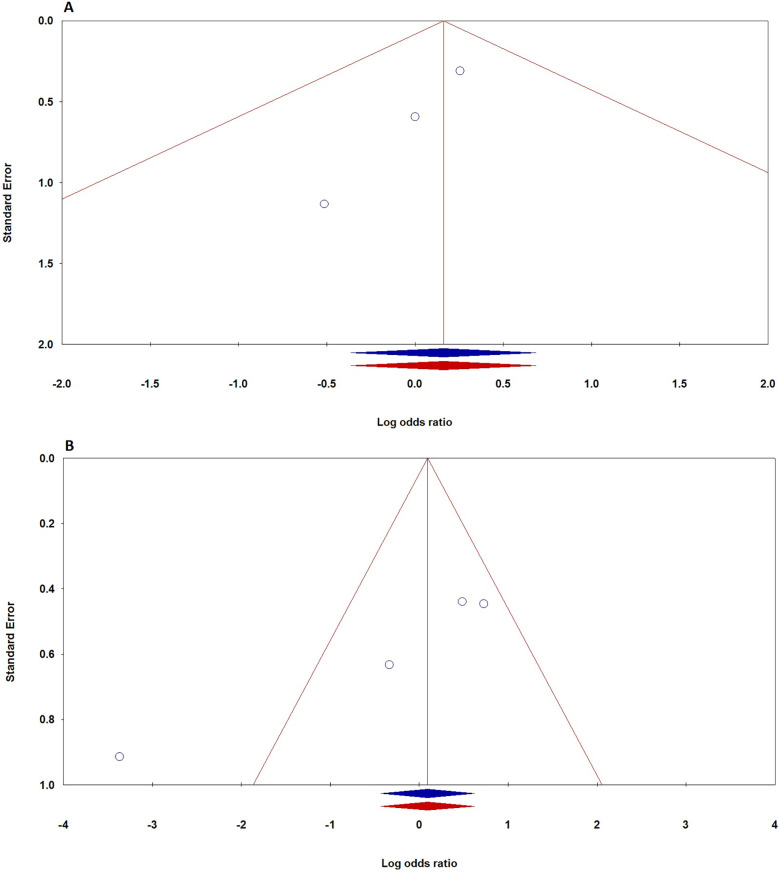
A total of 14 case-control studies were conducted: five studies with 1,252 cases and 1,377 controls on -308G/A, three studies with 1,180 cases and 1,194 controls on -238G/A, four studies with 149 cases and 192 controls on -857C/T, and two studies with 82 cases and 162 controls on 1,031 T/C. A significant association was found between the TNF-α -238G/A polymorphism and the risk of BPD. However, no significant relationships were observed for the TNF-α -308G/A, -857C/T, and 1,031 T/C polymorphisms regarding BPD susceptibility.
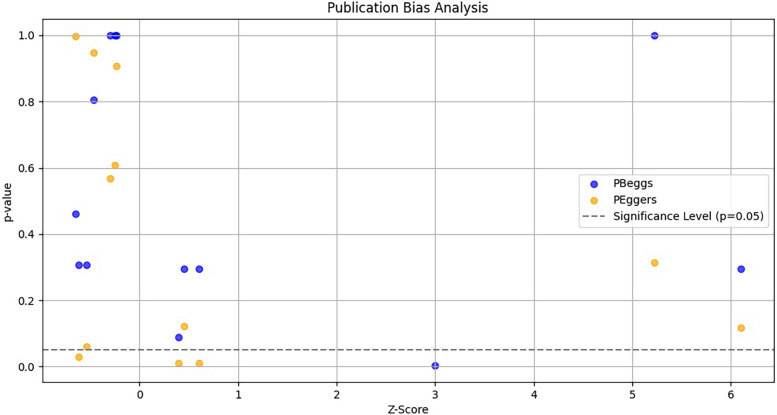
Our findings indicate a significant association between the TNF-α -238G/A polymorphism and the susceptibility to BPD in preterm neonates, suggesting potential biomarkers for its pathogenesis. However, this meta-analysis has limitations, including possible publication bias and heterogeneity due to the limited number of studies, which may affect the reliability of our conclusions. Moreover, population variability further complicates the interpretation of the link between TNF-α polymorphisms and BPD risk.
炎症越来越被认为是支气管肺发育不良(BPD)病理生理学中的一个关键因素。虽然先前的研究已经确立了肿瘤坏死因子-α(TNF-α)基因多态性与BPD易感性之间的重要联系,但仍需要对这些关联进行进一步验证。本研究旨在探讨TNF-α基因多态性与BPD风险之间的关系。
在PubMed、Web of Science、中国知网(CNKI)和Scopus数据库中筛选了2024年10月1日前发表的所有相关文章。
共进行了14项病例对照研究:5项研究涉及1252例病例和1377例对照,研究-308G/A多态性;3项研究涉及1180例病例和1194例对照,研究-238G/A多态性;4项研究涉及149例病例和192例对照,研究-857C/T多态性;2项研究涉及82例病例和162例对照,研究1031T/C多态性。发现TNF-α -238G/A基因多态性与BPD风险之间存在显著关联。然而,未观察到TNF-α -308G/A、-857C/T和1031T/C基因多态性与BPD易感性之间存在显著关系。
我们的研究结果表明,TNF-α -238G/A基因多态性与早产儿BPD易感性之间存在显著关联,提示其发病机制可能存在潜在的生物标志物。然而,这项荟萃分析存在局限性,包括可能存在的发表偏倚以及由于研究数量有限导致的异质性,这可能会影响我们结论的可靠性。此外,人群变异性进一步使TNF-α基因多态性与BPD风险之间联系的解释变得复杂。