
二氧化碳冷冻疗法治疗皮肤利什曼病的有效性:系统评价与荟萃分析。
Effectiveness of carbon dioxide cryotherapy for the treatment of cutaneous leishmaniasis: Systematic review and meta-analysis.
作者信息
Tilahun Zewdu Feleke, Misganaw Geremew Bisrat, Gadisa Belachew Endalamaw, Alemu Gelay Kassahun
机构信息
Dermatology Department, Boru Meda General Hospital, Dessie, Amhara, Ethiopia.
Institute of public health, University of Gondar, Gondar, Amhara, Ethiopia.
出版信息
PLoS Negl Trop Dis. 2025 Jan 6;19(1):e0012741. doi: 10.1371/journal.pntd.0012741. eCollection 2025 Jan.
BACKGROUND
Cutaneous leishmaniasis is one of the neglected tropical diseases which is hard to treat. Carbon dioxide-based cryotherapy is a novel therapeutic option for cutaneous leishmaniasis in both developed and developing nations. This study aims to summarize the pooled evidence on the effectiveness of carbon dioxide-based cryotherapy for the treatment of cutaneous leishmaniasis.
METHODS
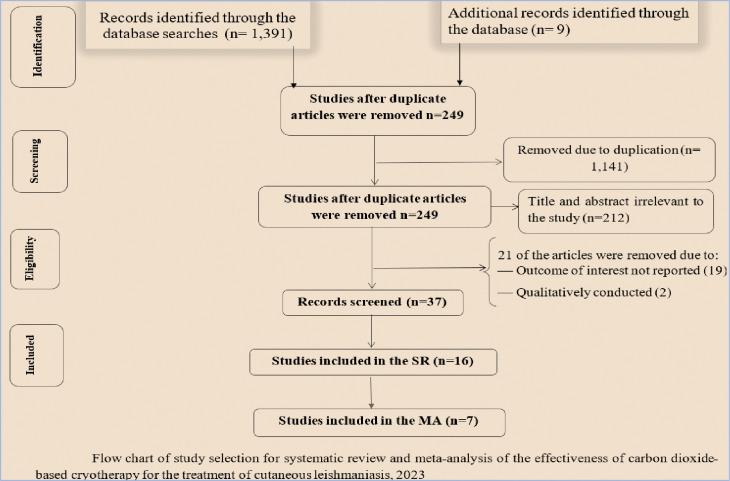
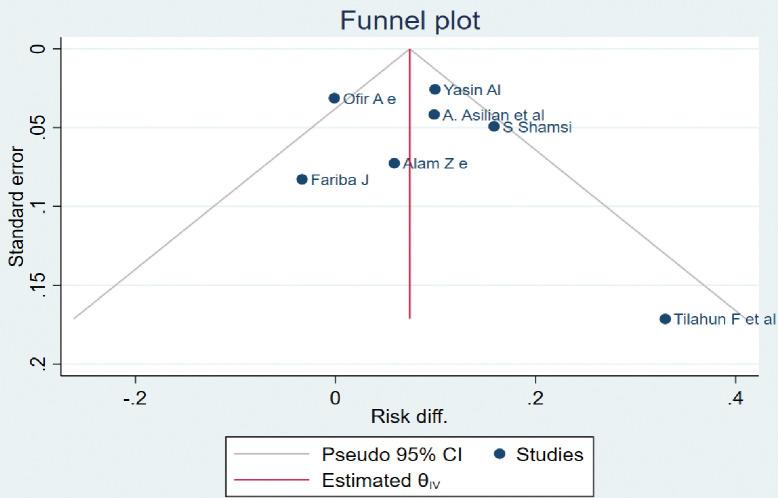
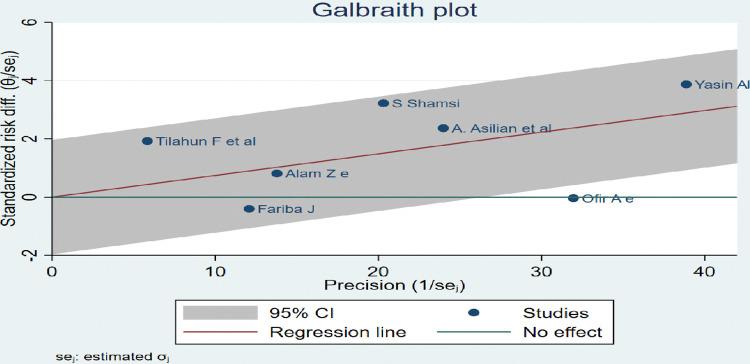
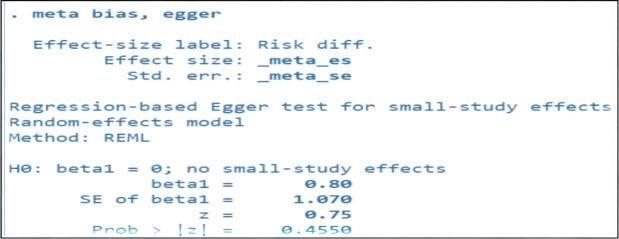
Searches of grey literature using Google Scholar and databases including PubMed, Scopus, EMBASE, Web of Science, and Google Scholar were conducted to find studies that reported the cure rate of cryotherapy. The search, screening, data extraction, and critical evaluation were carried out by two authors, with a third acting as a tiebreaker. To locate papers, we used Medical Subject Headings (MeSH) phrases and keywords. Between May 10 and May 13, 2023, the review protocol was developed using the Preferred Reporting Items for Systematic Reviews and Meta-Analyses (PRISMA) 2020 checklist. For the meta-analysis, STATA 17 was the statistical software used. The random effects model was employed to compile the effect estimates. Lastly, we used the funnel plot and Egger's test to evaluate publication bias, heterogeneity, sensitivity, and subgroup analyses.
RESULT
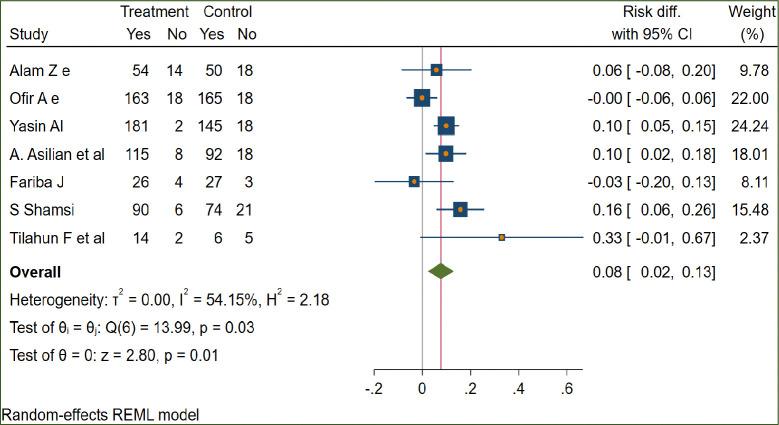
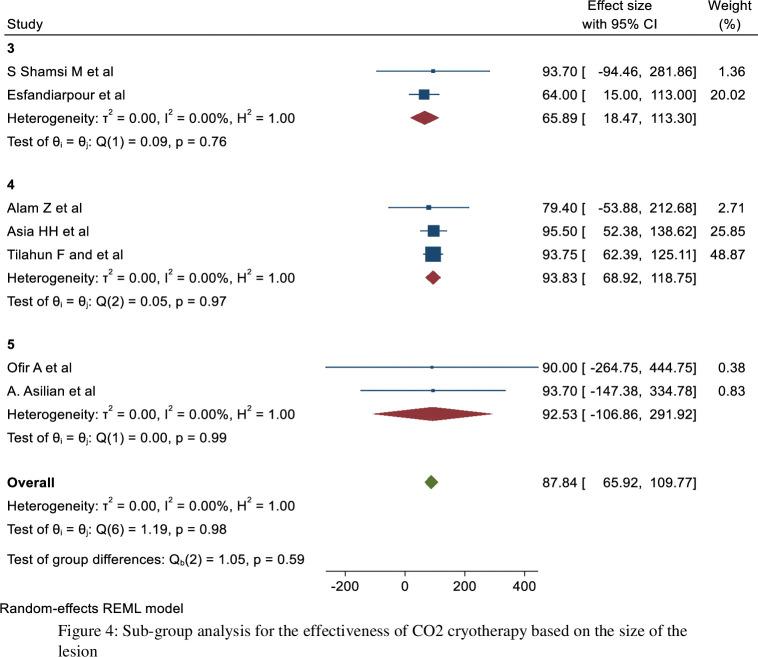
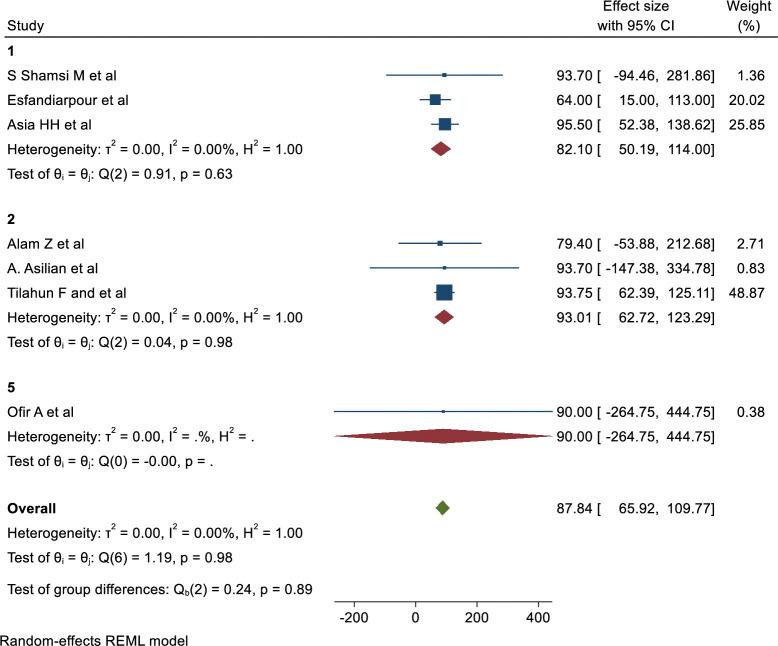
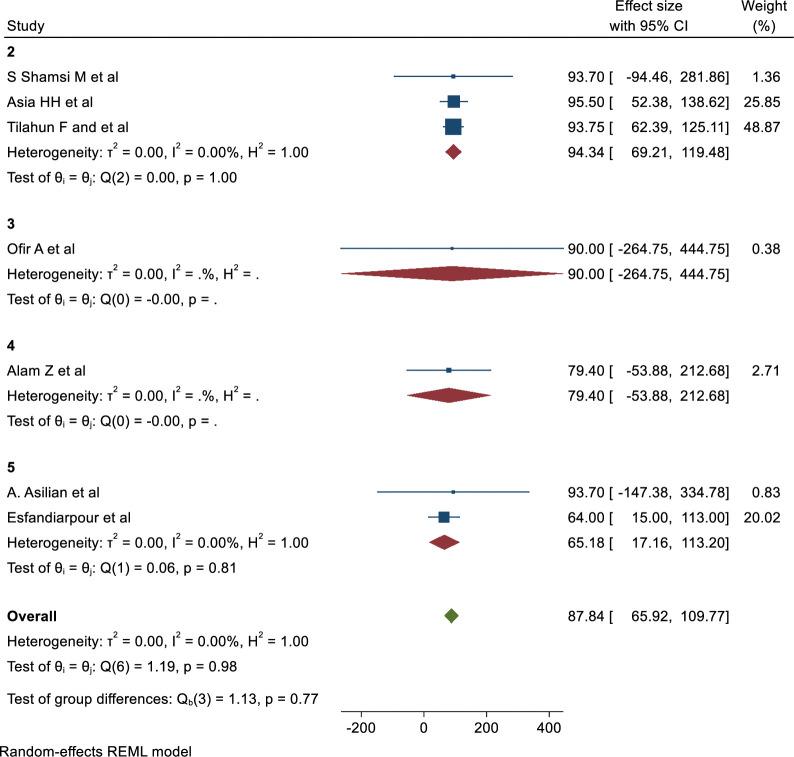
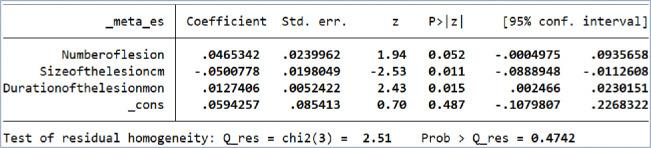
Out of the 16 researches included in the review, seven papers with a total of 1,357 cases were chosen for the meta-analysis. For the treatment of cutaneous leishmaniasis, the pooled cure rate with carbon dioxide-based cryotherapy was 87.84% (95% CI: 65.92-109.77). Randomized controlled trials made up the majority of the studies that were used. The highest cure rate was seen when there were two lesions, 94.34% (95% CI:68.21-119.48), and when the size of the lesion was less than or equal to 4, 93.83% (95% CI:68.92-118.75). There was no indication of a significant publishing bias.
CONCLUSION
Carbon dioxide-based cryotherapy revealed a high pooled efficacy. The efficacy of the CL instances was mostly dependent on the extent of the lesion and the frequency of therapy administration. To determine if this therapy is beneficial in a routine care context, a large-scale study with a sound design is necessary.
背景
皮肤利什曼病是难以治疗的被忽视热带病之一。基于二氧化碳的冷冻疗法在发达国家和发展中国家都是治疗皮肤利什曼病的一种新型治疗选择。本研究旨在总结关于基于二氧化碳的冷冻疗法治疗皮肤利什曼病有效性的汇总证据。
方法
通过谷歌学术搜索灰色文献,并检索包括PubMed、Scopus、EMBASE、科学网和谷歌学术在内的数据库,以查找报告冷冻疗法治愈率的研究。检索、筛选、数据提取和批判性评价由两位作者进行,第三位作者作为仲裁者。为查找论文,我们使用了医学主题词(MeSH)短语和关键词。2023年5月10日至5月13日期间,使用系统评价和Meta分析的首选报告项目(PRISMA)2020清单制定了综述方案。对于Meta分析,使用的统计软件是STATA 17。采用随机效应模型汇总效应估计值。最后,我们使用漏斗图和埃格检验来评估发表偏倚、异质性、敏感性和亚组分析。
结果
在纳入综述的16项研究中,7篇论文共1357例被选入Meta分析。对于皮肤利什曼病的治疗,基于二氧化碳的冷冻疗法的汇总治愈率为87.84%(95%置信区间:65.92 - 109.77)。所使用的研究大多为随机对照试验。当有两个病灶时治愈率最高,为94.34%(95%置信区间:68.21 - 119.48),当病灶大小小于或等于4时,治愈率为93.83%(95%置信区间:68.92 - 118.75)。没有明显的发表偏倚迹象。
结论
基于二氧化碳的冷冻疗法显示出较高的汇总疗效。皮肤利什曼病病例的疗效主要取决于病灶范围和治疗给药频率。为确定这种疗法在常规护理环境中是否有益,有必要进行一项设计合理的大规模研究。
 Zotero 插件