Jo Sung-Hoon, Ha Kyoung-Soo, Moon Kyoung-Sik, Kim Jong-Gwan, Oh Chen-Gum, Kim Young-Cheul, Apostolidis Emmanouil, Kwon Young-In
Department of Food and Nutrition, Hannam University, Daejeon 305-811, Korea.
Int J Mol Sci. 2013 Jul 9;14(7):14214-24. doi: 10.3390/ijms140714214.
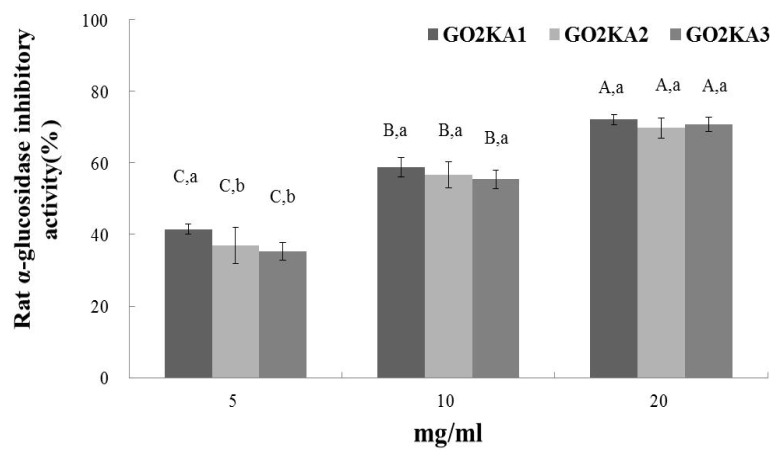
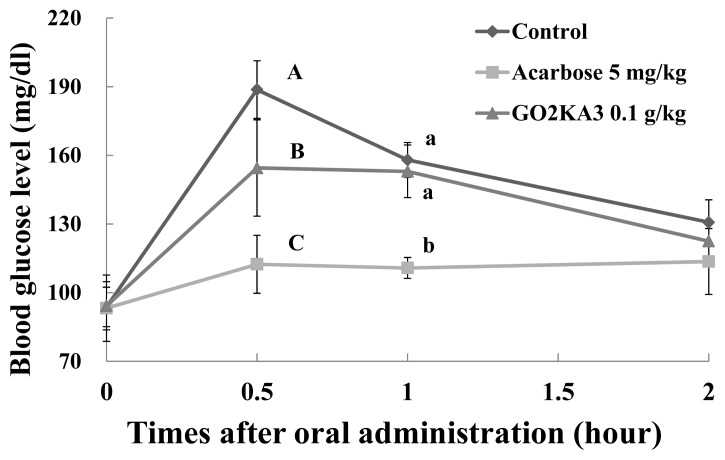
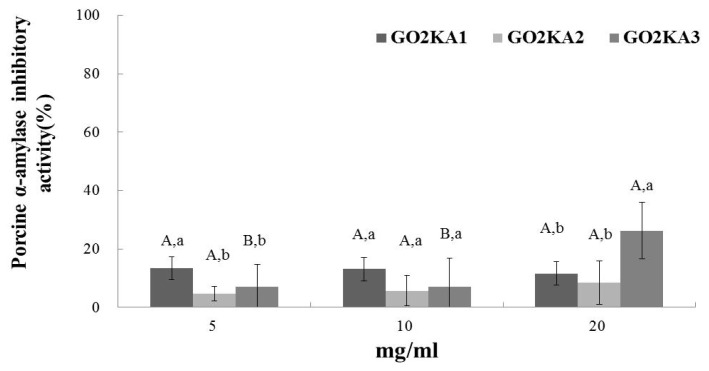
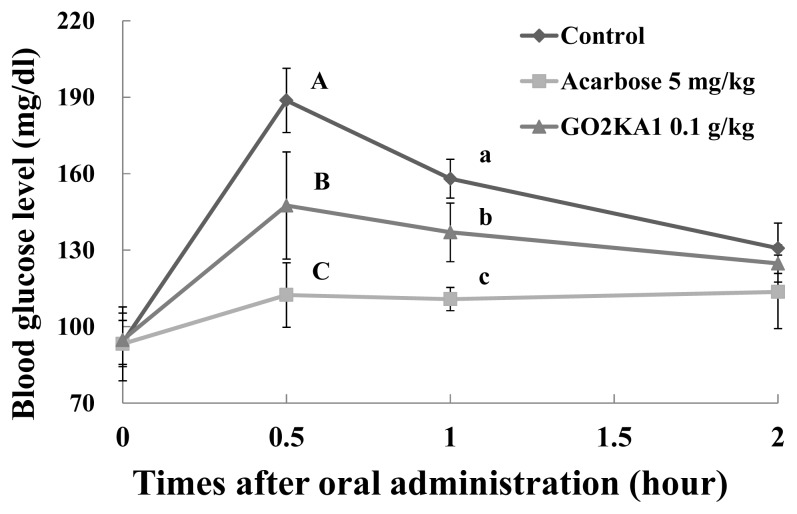
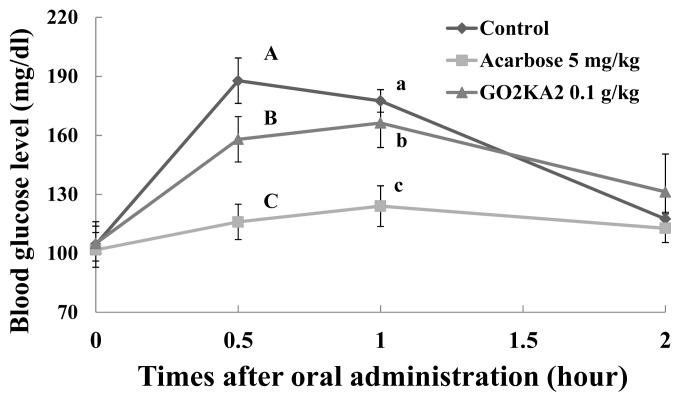
This research investigated the effect of enzymatically digested low molecular weight (MW) chitosan oligosaccharide on type 2 diabetes prevention. Three different chitosan oligosaccharide samples with varying MW were evaluated in vitro for inhibition of rat small intestinal α-glucosidase and porcine pancreatic α-amylase (GO2KA1; <1000 Da, GO2KA2; 1000-10,000 Da, GO2KA3; MW > 10,000 Da). The in vitro results showed that all tested samples had similar rat α-glucosidase inhibitory and porcine α-amylase inhibitory activity. Based on these observations, we decided to further investigate the effect of all three samples at a dose of 0.1 g/kg, on reducing postprandial blood glucose levels in Sprague-Dawley (SD) rat model after sucrose loading test. In the animal trial, all tested samples had postprandial blood glucose reduction effect, when compared to control, however GO2KA1 supplementation had the strongest effect. The glucose peak (Cmax) for GO2KA1 and control was 152 mg/dL and 193 mg/dL, respectively. The area under the blood glucose-time curve (AUC) for GO2KA1 and control was 262 h mg/dL and 305 h mg/dL, respectively. Furthermore, the time of peak plasma concentration of blood glucose (Tmax) for GO2KA1 was significantly delayed (0.9 h) compared to control (0.5 h). These results suggest that GO2KA1 could have a beneficial effect for blood glucose management relevant to diabetes prevention in normal and pre-diabetic individuals. The suggested mechanism of action is via inhibition of the carbohydrate hydrolysis enzyme α-glucosidase and since GO2KA1 (MW < 1000 Da) had higher in vivo effect, we hypothesize that it is more readily absorbed and might exert further biological effect once it is absorbed in the blood stream, relevant to blood glucose management.
本研究调查了酶解低分子量壳寡糖对2型糖尿病预防的作用。对三种不同分子量的壳寡糖样品(GO2KA1;分子量<1000 Da,GO2KA2;分子量1000 - 10,000 Da,GO2KA3;分子量>10,000 Da)进行体外大鼠小肠α-葡萄糖苷酶和猪胰α-淀粉酶抑制活性评估。体外实验结果表明,所有测试样品对大鼠α-葡萄糖苷酶和猪α-淀粉酶的抑制活性相似。基于这些观察结果,我们决定进一步研究所有三种样品在0.1 g/kg剂量下,对蔗糖负荷试验后Sprague-Dawley(SD)大鼠模型餐后血糖水平降低的影响。在动物试验中,与对照组相比,所有测试样品均有餐后血糖降低作用,但补充GO2KA1的效果最强。GO2KA1组和对照组的血糖峰值(Cmax)分别为152 mg/dL和193 mg/dL。GO2KA1组和对照组的血糖-时间曲线下面积(AUC)分别为262 h mg/dL和305 h mg/dL。此外,与对照组(0.5 h)相比,GO2KA1组血糖达峰时间(Tmax)显著延迟(0.9 h)。这些结果表明,GO2KA1可能对正常和糖尿病前期个体预防糖尿病相关的血糖管理有益。推测的作用机制是通过抑制碳水化合物水解酶α-葡萄糖苷酶,由于GO2KA1(分子量<1000 Da)在体内效果更高,我们推测它更容易被吸收,一旦被吸收进入血流,可能会发挥与血糖管理相关的进一步生物学效应。