Cui Liang, Xie Yumeng, Luo Kai, Wang Mingyang, Liu Longzhen, Li Changlin, Tian Xiangli
The Key Laboratory of Mariculture, Ministry of Education, Ocean University of China, Qingdao, China.
The Yellow Sea Fisheries Research Institute, Chinese Academy of Fishery Sciences, Qingdao, China.
Front Microbiol. 2024 Dec 23;15:1528275. doi: 10.3389/fmicb.2024.1528275. eCollection 2024.
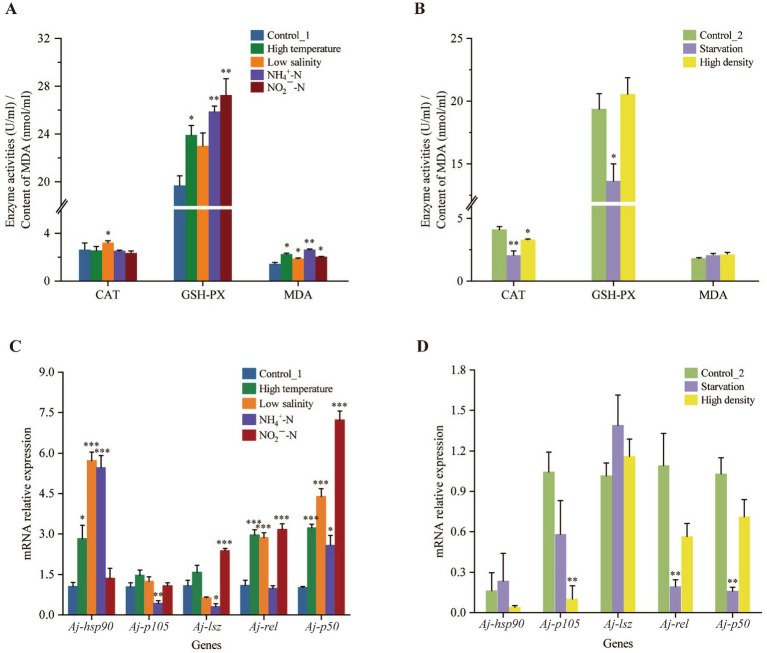
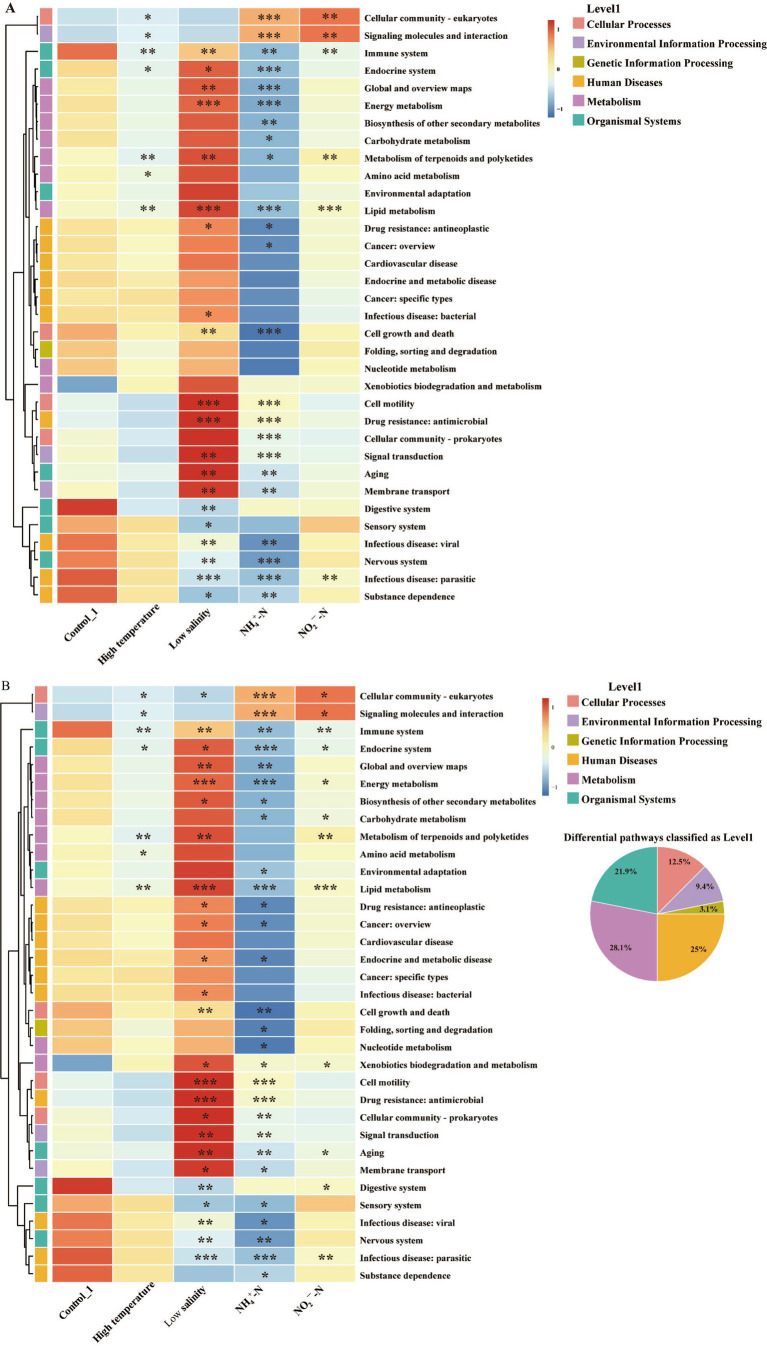
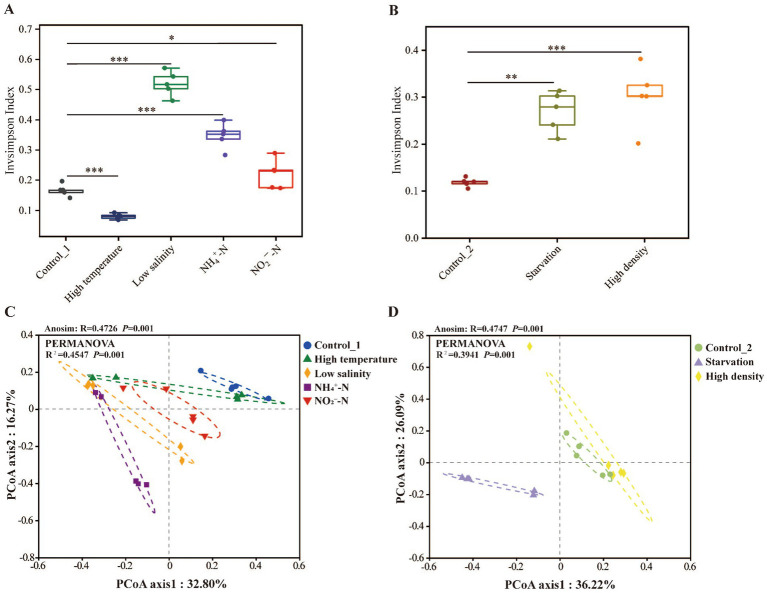
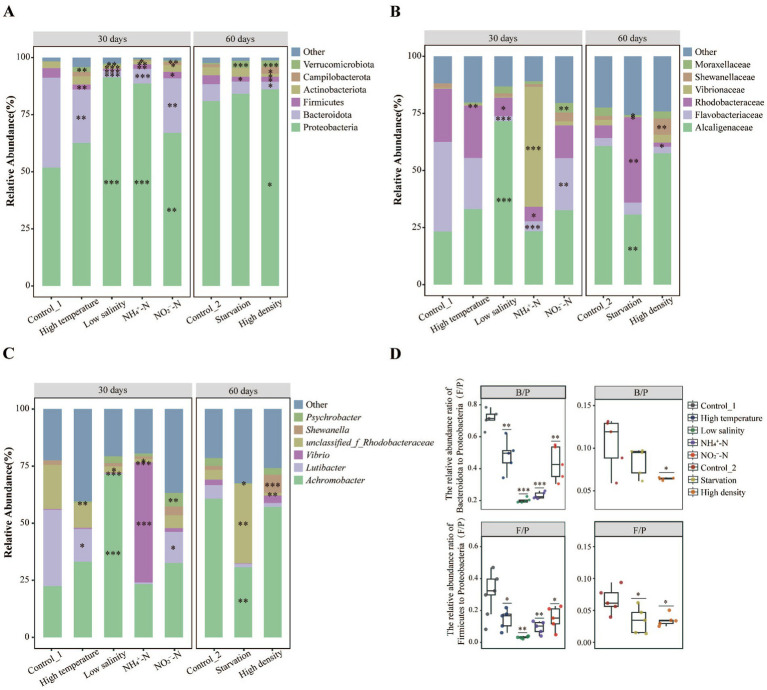
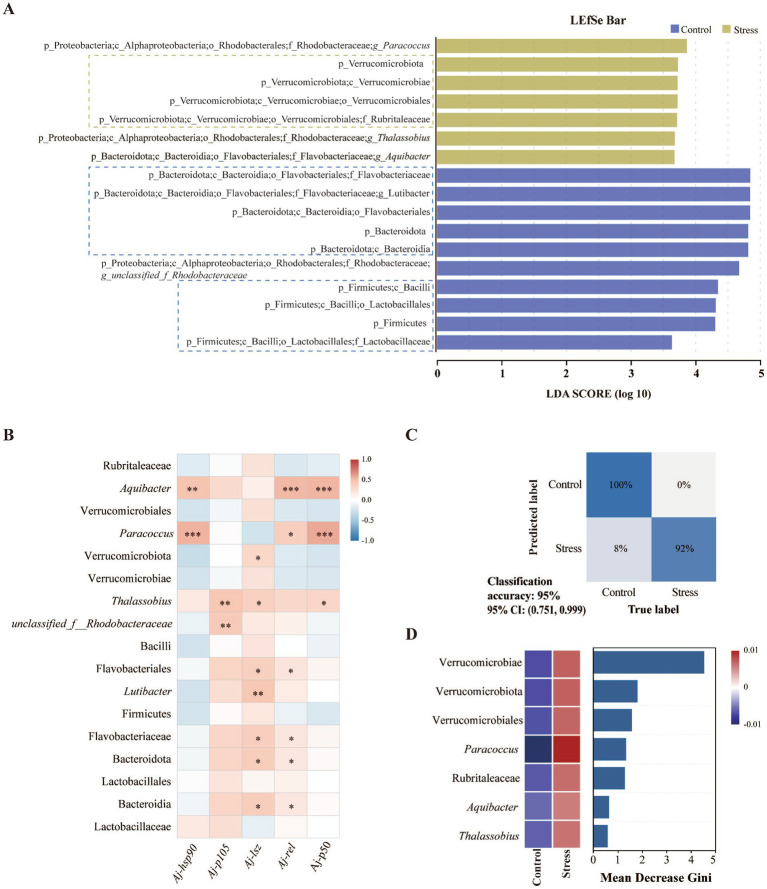
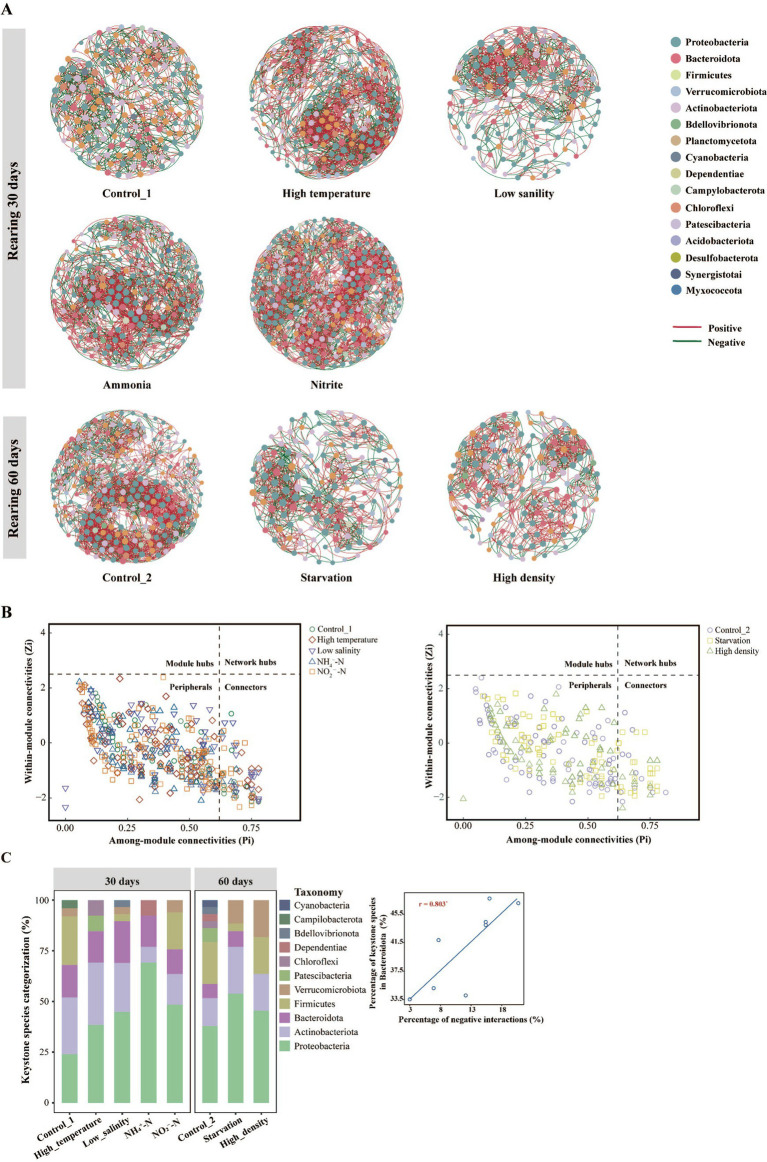
Identifying the signatures of intestinal dysbiosis caused by common stresses is fundamental to establishing efficient health monitoring strategies for sea cucumber. This study investigated the impact of six common stress experienced frequently in aquaculture on the growth performance, intestinal homeostasis and microbiota of sea cucumber, including thermal (23°C), hypoosmotic (22‰ salinity), ammonium (0.5 mg/L NH -N), and nitrite (0.25 mg/L NO -N) stress exposure for 30 days, as well as starvation and crowding (6 kg/m density) stress exposure for 60 days. Results demonstrated that all stress led to reduced growth performance and digestive capacity of sea cucumber, along with varying degrees of oxidative stress and immune responses. Various stresses significantly altered the diversity, community structure (except for crowding stress), and composition of intestinal microbiota. The ratios of Bacteroidota: Proteobacteria (B: P) and Firmicutes: Proteobacteria (F: P) declined markedly compared to the control. Potentially pathogenic bacteria of Shewanellaceae, Vibrionaceae, and Moraxellaceae significantly increased under crowding, ammonium, and nitrite stress, respectively, whereas beneficial microbes of and Rhodobacteraceae were, respectively, enriched under hypoosmotic and starvation stresses. The complexity and stability of microbial ecological networks were further altered by these stresses. KEGG predictions revealed the reduced functional pathways of intestinal microbiota involved in host immunity under different stresses. Correlation analysis further confirmed a strong link between microbiota response and host immunity under different stresses. The increased abundance of Verrucomicrobia species could also be identified as the sensitive indicator for diagnosing whether the host was under stressful pressure by random forest analysis.
识别由常见应激引起的肠道菌群失调特征,是建立海参高效健康监测策略的基础。本研究调查了水产养殖中经常遇到的六种常见应激对海参生长性能、肠道稳态和微生物群的影响,包括30天的热应激(23°C)、低渗应激(盐度22‰)、铵应激(0.5 mg/L NH₃-N)和亚硝酸盐应激(0.25 mg/L NO₂-N),以及60天的饥饿应激和拥挤应激(密度6 kg/m³)。结果表明,所有应激均导致海参生长性能和消化能力下降,同时伴有不同程度的氧化应激和免疫反应。各种应激显著改变了肠道微生物群的多样性、群落结构(拥挤应激除外)和组成。与对照组相比,拟杆菌门:变形菌门(B:P)和厚壁菌门:变形菌门(F:P)的比例显著下降。在拥挤、铵和亚硝酸盐应激下,希瓦氏菌科、弧菌科和莫拉克斯氏菌科的潜在病原菌分别显著增加,而红杆菌科的有益微生物分别在低渗和饥饿应激下富集。这些应激进一步改变了微生物生态网络的复杂性和稳定性。KEGG预测显示,在不同应激下,参与宿主免疫的肠道微生物群功能途径减少。相关性分析进一步证实了不同应激下微生物群反应与宿主免疫之间的紧密联系。通过随机森林分析,疣微菌门物种丰度的增加也可被确定为诊断宿主是否处于应激压力下的敏感指标。