Ocagli Honoria, Zambito Marco, Da Re Filippo, Groppi Vanessa, Zampini Marco, Terrini Alessia, Rigoli Franco, Amoruso Irene, Baldovin Tatjana, Baldo Vincenzo, Russo Francesca, Gregori Dario
Unit of Biostatistics, Epidemiology and Public Health, Department of Cardio-Thoraco-Vascular Sciences and Public Health, University of Padova, Via Loredan 18, Padova, Italy, 39 049 8275384.
Directorate of Prevention, Food Safety and Veterinary Public Health-Veneto Region, Venice, Italy.
JMIR Public Health Surveill. 2025 Jan 14;11:e58862. doi: 10.2196/58862.
As the COVID-19 pandemic has affected populations around the world, there has been substantial interest in wastewater-based epidemiology (WBE) as a tool to monitor the spread of SARS-CoV-2. This study investigates the use of WBE to anticipate COVID-19 trends by analyzing the correlation between viral RNA concentrations in wastewater and reported COVID-19 cases in the Veneto region of Italy.
We aimed to evaluate the effectiveness of the cumulative sum (CUSUM) control chart method in detecting changes in SARS-CoV-2 concentrations in wastewater and its potential as an early warning system for COVID-19 outbreaks. Additionally, we aimed to validate these findings over different time periods to ensure robustness.
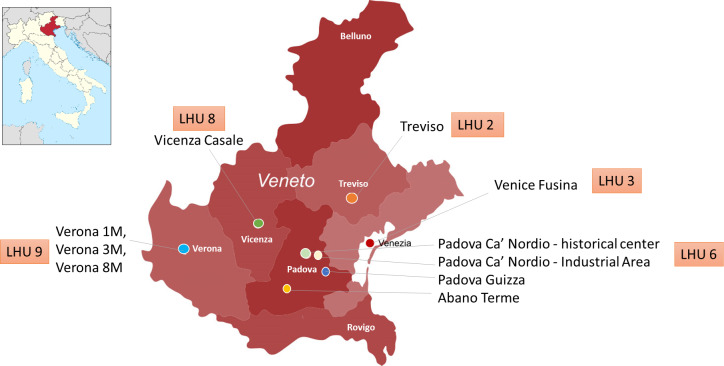
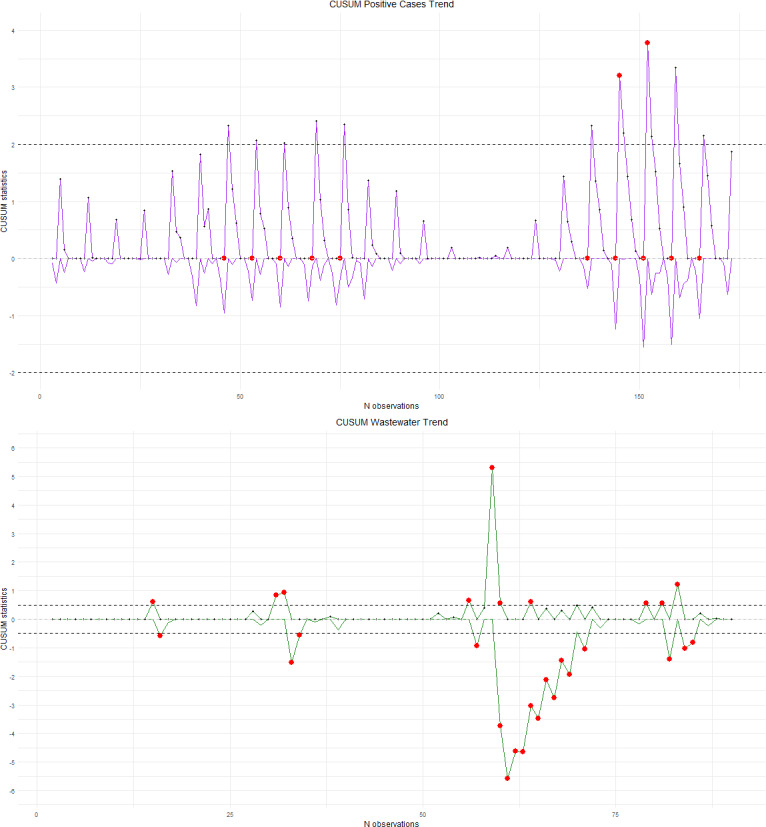
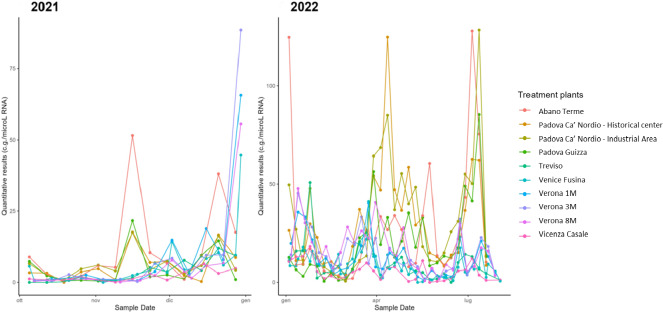
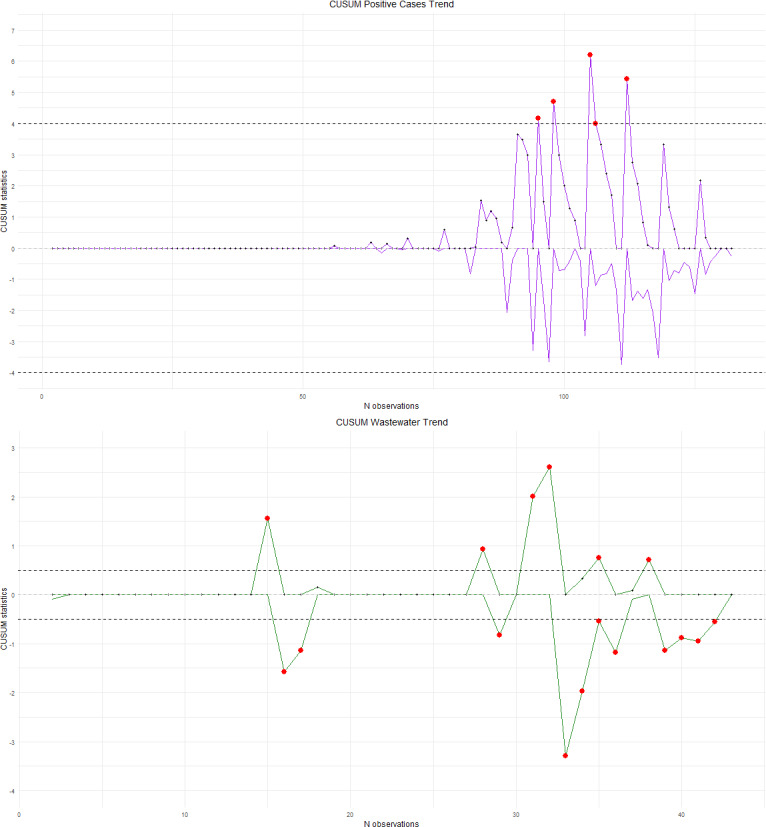
This study analyzed the temporal correlation between SARS-CoV-2 RNA concentrations in wastewater and COVID-19 clinical outcomes, including confirmed cases, hospitalizations, and intensive care unit (ICU) admissions, from October 2021 to August 2022 in the Veneto region, Italy. Wastewater samples were collected weekly from 10 wastewater treatment plants and analyzed using a reverse transcription-quantitative polymerase chain reaction. The CUSUM method was used to detect significant shifts in the data, with an initial analysis conducted from October 2021 to February 2022, followed by validation in a second period from February 2022 to August 2022.
The study found that peaks in SARS-CoV-2 RNA concentrations in wastewater consistently preceded peaks in reported COVID-19 cases by 5.2 days. Hospitalizations followed with a delay of 4.25 days, while ICU admissions exhibited a lead time of approximately 6 days. Notably, certain health care districts exhibited stronger correlations, with notable values in wastewater anticipating ICU admissions by an average of 13.5 and 9.5 days in 2 specific districts. The CUSUM charts effectively identified early changes in viral load, indicating potential outbreaks before clinical cases increased. Validation during the second period confirmed the consistency of these findings, reinforcing the robustness of the CUSUM method in this context.
WBE, combined with the CUSUM method, offers valuable insight into the level of COVID-19 outbreaks in a community, including asymptomatic cases, thus acting as a precious early warning tool for infectious disease outbreaks with pandemic potential.
由于新冠疫情影响了全球人口,基于污水的流行病学(WBE)作为监测严重急性呼吸综合征冠状病毒2(SARS-CoV-2)传播的工具受到了广泛关注。本研究通过分析意大利威尼托地区污水中病毒RNA浓度与报告的新冠病例之间的相关性,调查了WBE用于预测新冠疫情趋势的情况。
我们旨在评估累积和(CUSUM)控制图方法在检测污水中SARS-CoV-2浓度变化方面的有效性及其作为新冠疫情早期预警系统的潜力。此外,我们旨在在不同时间段验证这些发现,以确保其稳健性。
本研究分析了2021年10月至2022年8月意大利威尼托地区污水中SARS-CoV-2 RNA浓度与新冠临床结果之间的时间相关性,包括确诊病例、住院病例和重症监护病房(ICU)收治病例。每周从10个污水处理厂采集污水样本,并使用逆转录定量聚合酶链反应进行分析。CUSUM方法用于检测数据中的显著变化,最初的分析时间为2021年10月至2022年2月,随后在2022年2月至8月的第二个时间段进行验证。
研究发现,污水中SARS-CoV-2 RNA浓度的峰值始终比报告的新冠病例峰值提前5.2天出现。住院病例峰值延迟4.25天出现,而ICU收治病例的提前期约为6天。值得注意的是,某些医疗保健区的相关性更强,在2个特定区,污水中的显著值平均提前13.5天和9.5天预测ICU收治病例。CUSUM图有效地识别了病毒载量的早期变化,表明在临床病例增加之前可能爆发疫情。第二个时间段的验证证实了这些发现的一致性,加强了CUSUM方法在这种情况下的稳健性。
WBE与CUSUM方法相结合,为了解社区中新冠疫情的水平提供了有价值的见解,包括无症状病例,从而成为具有大流行潜力的传染病爆发的宝贵早期预警工具。