Gispert-Llauradó Mariona, Escribano Joaquin, Ferré Natalia, Grote Veit, Koletzko Berthold, Ambrosini Gina, Verduci Elvira, Gruszfeld Dariusz, Xhonneux Annick, Luque Veronica
Paediatrics, Nutrition and Development Research Unit, Universitat Rovira i Virgili. Reus, Tarragona, Spain.
Paediatrics, Nutrition and Development Research Unit, Institut d'Investigació Sanitària Pere Virgili. Reus, Tarragona, Spain.
Nutr J. 2025 Jan 29;24(1):18. doi: 10.1186/s12937-025-01080-1.
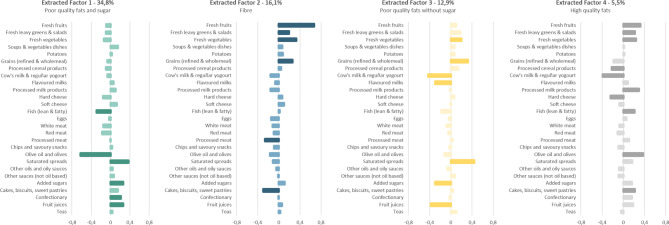
BACKGROUND & AIM: Metabolic and cardiovascular health outcomes are strongly influenced by diet. Dietary habits established in early childhood may persist into adulthood. This study aimed to examine the association between dietary patterns at both 2 and 8 years of age, explaining the maximum variability of high- and low-quality fats, sugars, and fibre, and cardiometabolic markers at age 8 years.
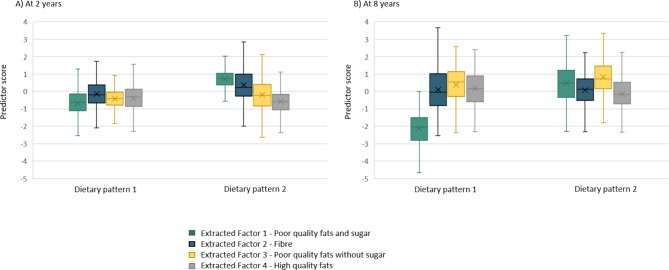
This was a secondary analysis of the European Childhood Obesity Project, formerly a randomized clinical trial across five European countries performed in healthy term newborns. Children in the study were categorized at ages 2 and 8 years into two groups based on cluster analysis of dietary patterns (DP) derived from Reduction Rank Regression (RRR). A cross-sectional and prospective analysis was conducted to evaluate the associations between these DPs and cardiometabolic outcomes, including body mass index (BMI), blood pressure (BP), and biochemical markers. Triglycerides, HDL cholesterol and insulin resistance index (HOMA-IR) were also categorized as altered versus normal values. Asociations between dietary patterns and health outcomes were assessed using linear and logistic regression models, adjusting for covariates based on a step-wise approach.
A total of 336 children were classified based on quality of nutrient intakes into either a "Poor-Quality dietary pattern" (PQ-DP) (48% and 66% of infants at 2 and 8 years, respectively) or the "Health-Conscious dietary pattern" (HC-DP) (52% and 34% of infants at 2 and 8 years, respectively). Following a PQ-DP at both ages 2 and 8 was associated with higher triglycerides (β = 0.061, p = 0.049), systolic and diastolic BP (β = 13.019, p < 0.001 & β = 7.612, p = 0.014, respectively) and altered levels of HOMA-IR (OR = 3.1, p = 0.037, 95% CI = 1.1-9.1) at 8 years, compared to children with an HC-DP at both ages, after adjusting for confounders.
Adherence to a dietary pattern with a poorer nutritional profile in early childhood and school age is associated with worse cardiometabolic risk markers at 8 years old.
代谢和心血管健康结局受饮食的强烈影响。幼儿期形成的饮食习惯可能持续到成年期。本研究旨在探讨2岁和8岁时的饮食模式之间的关联,解释优质和劣质脂肪、糖及纤维的最大变异性,以及8岁时的心脏代谢指标。
这是对欧洲儿童肥胖项目的二次分析,该项目原是一项在五个欧洲国家针对健康足月儿开展的随机临床试验。研究中的儿童在2岁和8岁时,根据降秩回归(RRR)得出的饮食模式聚类分析分为两组。进行横断面和前瞻性分析以评估这些饮食模式与心脏代谢结局之间的关联,包括体重指数(BMI)、血压(BP)和生化指标。甘油三酯、高密度脂蛋白胆固醇和胰岛素抵抗指数(HOMA-IR)也被分类为异常值与正常值得对比。使用线性和逻辑回归模型评估饮食模式与健康结局之间的关联,并基于逐步法对协变量进行调整。
根据营养摄入质量,共有336名儿童被分为“低质量饮食模式”(PQ-DP)(2岁和8岁婴儿分别占48%和66%)或“注重健康饮食模式”(HC-DP)(2岁和8岁婴儿分别占52%和34%)。在调整混杂因素后,与2岁和8岁均采用HC-DP的儿童相比,2岁和8岁均采用PQ-DP与8岁时较高的甘油三酯(β = 0.061,p = 0.049)、收缩压和舒张压(β = 13.019,p < 0.001;β = 7.612,p = 0.014)以及HOMA-IR水平异常(OR = 3.1,p = 0.037,95% CI = 1.1 - 9.1)相关。
幼儿期和学龄期坚持营养状况较差的饮食模式与8岁时较差的心脏代谢风险指标相关。