Smith Parker, Ulrich Rolf
Fachbereich Psychologie, Eberhard Karls Universität Tübingen, Schleichstr. 4, 72076, Tübingen, Germany.
Psychol Res. 2025 Feb 13;89(1):52. doi: 10.1007/s00426-024-02075-z.
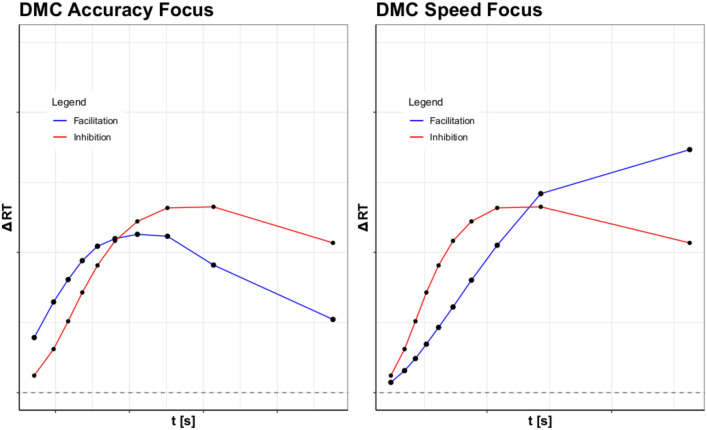
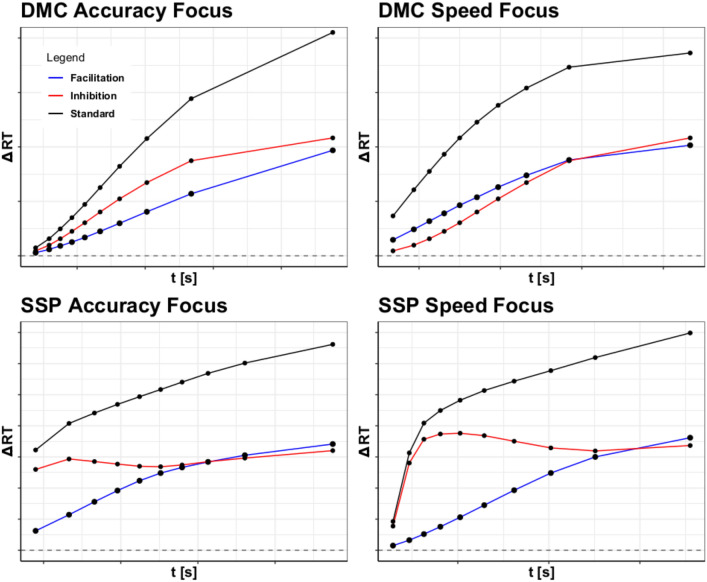
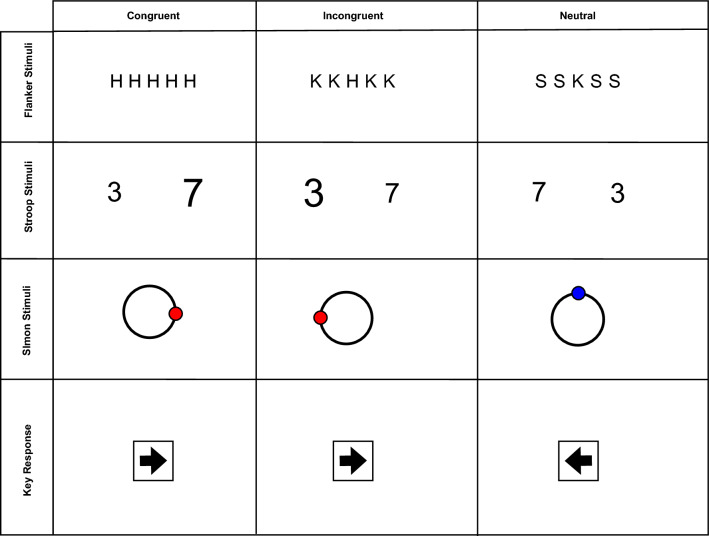
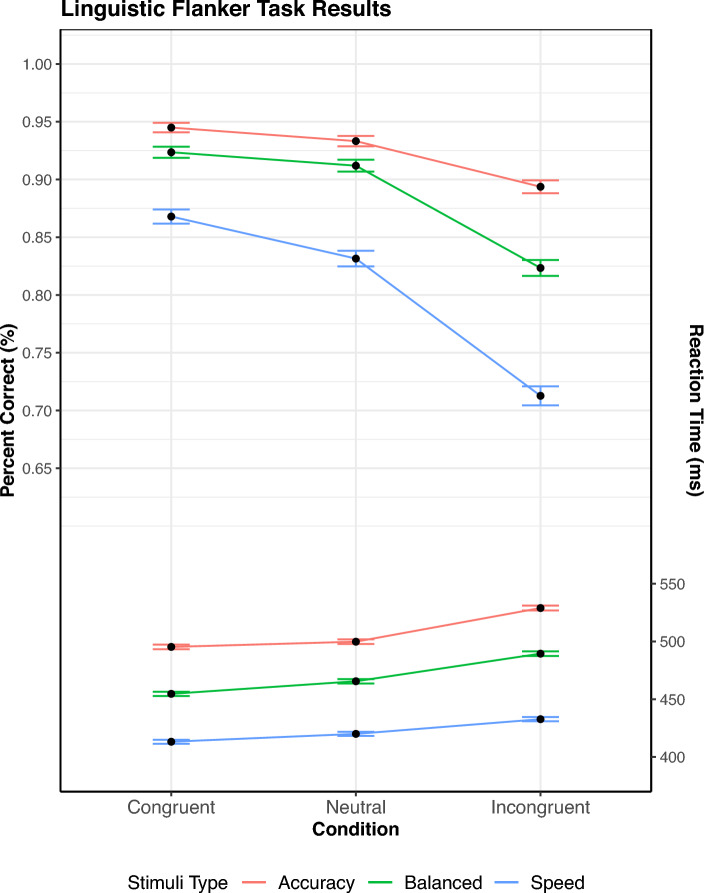
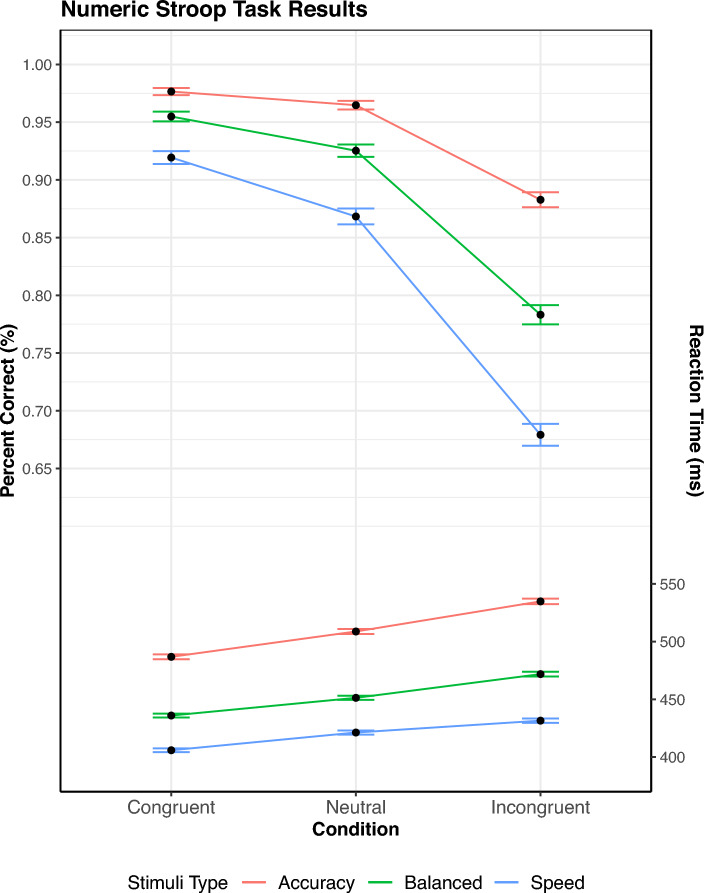
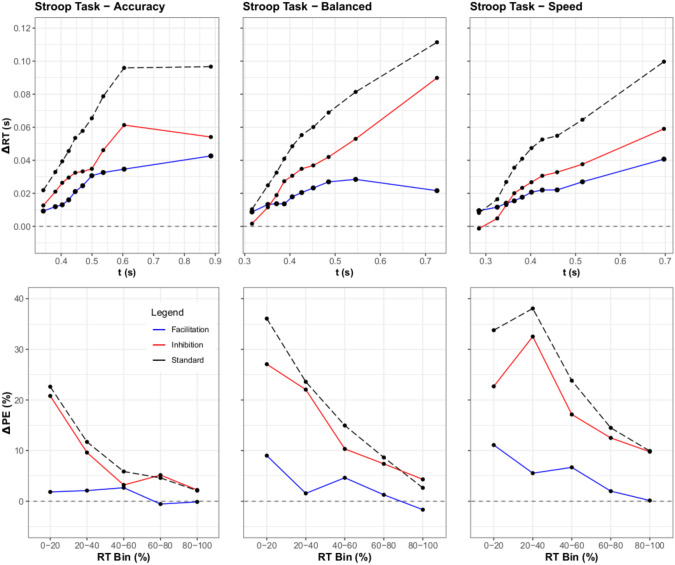
When assessing the time-course of evidence accrual in conflict tasks, delta plots are often employed to show the time course of congruency effects. However, delta plots on reaction time and response errors only capture the differences between the congruent and incongruent conditions, detailing that a pattern or shift is occurring, but not what contributes to creating these changes. To gain a clearer idea of what is causing these trends and shifts, the neutral condition can be added to conflict tasks in order to decompose the congruency effect into two components: facilitation and inhibition. Similarly, the traditional delta plot of the congruency effect can also be decomposed to capture the time-course of facilitation and inhibition in separate curves. Thus, this article endeavored to both assess the utility of inhibition and facilitation curves as a tool for parsing apart the congruency effect, and also to see how the observed patterns changed on a larger time frame. To do this, an exploratory study was conducted on three conflict task experiments (a linguistic flanker task, numeric Stroop task, and symbolic Simon task) that were run with a speed-accuracy tradeoff measure implemented as well. By observing the conflict tasks at various speed stresses, we hoped to evaluate how, or if, inhibition and facilitation change at different response thresholds. The addition of delta functions for facilitation and inhibition provided further insight into base mean RT data. The results also provided evidence for numerous assumptions regarding cognitive control, such as a dominant effect of inhibition driving most of the congruency effect.
在评估冲突任务中证据积累的时间进程时,通常会使用增量图来展示一致性效应的时间进程。然而,反应时间和反应误差的增量图仅捕捉了一致和不一致条件之间的差异,详细说明了一种模式或变化正在发生,但并未说明是什么导致了这些变化。为了更清楚地了解导致这些趋势和变化的原因,可以将中性条件添加到冲突任务中,以便将一致性效应分解为两个成分:促进和抑制。同样,传统的一致性效应增量图也可以分解,以在单独的曲线中捕捉促进和抑制的时间进程。因此,本文致力于评估抑制和促进曲线作为解析一致性效应工具的效用,并观察在更大的时间框架内观察到的模式如何变化。为此,对三个冲突任务实验(语言侧翼任务、数字斯特鲁普任务和符号西蒙任务)进行了一项探索性研究,这些实验也采用了速度-准确性权衡测量。通过在各种速度压力下观察冲突任务,我们希望评估抑制和促进在不同反应阈值下如何变化,或者是否会发生变化。促进和抑制的增量函数的添加为基本平均反应时间数据提供了进一步的见解。结果还为关于认知控制的众多假设提供了证据,例如抑制的主导效应驱动了大部分一致性效应。