Bo-Linn G W, Vendrell D D, Lee E, Fordtran J S
J Clin Invest. 1985 May;75(5):1559-69. doi: 10.1172/JCI111861.
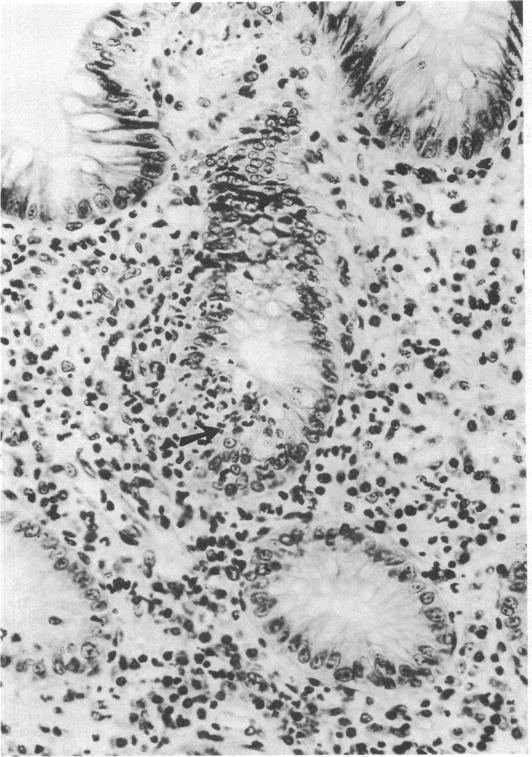
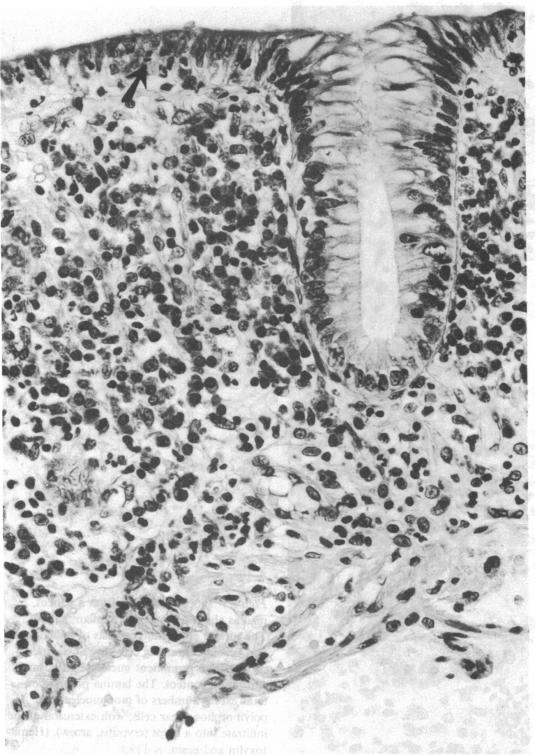
Some patients with chronic idiopathic diarrhea have an apparent nonspecific inflammation of colonic mucosa, even though their colons appear normal by barium enema and colonoscopy. This has been referred to as microscopic colitis. However, the significance of this finding is unclear, because the ability of pathologists to accurately distinguish mild degrees of abnormality has not been established. Furthermore, even if the mucosa of these patients is nonspecifically inflamed, it is not known whether this is associated with deranged colonic function that could contribute to the development of chronic diarrhea. To assess these questions, we first examined colonic biopsy specimens in a blinded fashion, comparing biopsy results from patients with microscopic colitis with biopsy specimens from subjects in two control groups. This analysis revealed that colonic mucosa from six patients with microscopic colitis was in fact abnormal. For example, their mucosa contained an excess of both neutrophiles and round cells in the lamina propria, cryptitis, and reactive changes. These and other differences were statistically significant. Second, colonic absorption, measured by the steady state nonabsorbable marker perfusion method, was severely depressed in the patients. For example, mean water absorption rate was 159 ml/h in normal subjects and was reduced to only 26 ml/h in six patients with microscopic colitis. Results of net and unidirectional electrolyte fluxes and of electrical potential difference suggested that colonic fluid absorption was abnormal because of reduced active and passive sodium and chloride absorption and because of reduced Cl/HCO3 exchange. Small intestinal fluid and electrolyte absorption was abnormally reduced in two of the six patients, suggesting the possibility of coexistent small intestinal involvement in some of these patients. We conclude that nonspecific inflammation of colonic mucosa is associated with a severe reduction of colonic fluid absorption, and that the latter probably contributes to the development of chronic diarrhea.
一些患有慢性特发性腹泻的患者,其结肠黏膜存在明显的非特异性炎症,尽管通过钡灌肠和结肠镜检查其结肠外观正常。这被称为显微镜下结肠炎。然而,这一发现的意义尚不清楚,因为病理学家准确区分轻度异常的能力尚未得到证实。此外,即使这些患者的黏膜存在非特异性炎症,也不清楚这是否与可能导致慢性腹泻发生的结肠功能紊乱有关。为了评估这些问题,我们首先以盲法检查结肠活检标本,将显微镜下结肠炎患者的活检结果与两个对照组受试者的活检标本进行比较。该分析显示,6例显微镜下结肠炎患者的结肠黏膜实际上是异常的。例如,他们的黏膜固有层、隐窝炎和反应性改变中嗜中性粒细胞和圆形细胞均增多。这些以及其他差异具有统计学意义。其次,通过稳态非吸收性标记物灌注法测量的结肠吸收在患者中严重降低。例如,正常受试者的平均水吸收率为159毫升/小时,而6例显微镜下结肠炎患者的平均水吸收率仅降至26毫升/小时。净电解质通量、单向电解质通量和电位差的结果表明,结肠液体吸收异常是由于主动和被动钠及氯吸收减少以及Cl/HCO3交换减少所致。6例患者中有2例小肠液体和电解质吸收异常减少,这表明其中一些患者可能同时存在小肠受累的情况。我们得出结论,结肠黏膜的非特异性炎症与结肠液体吸收的严重减少有关,后者可能促成了慢性腹泻的发生。