Navalho Sofia, Ferrer-Ledo Narcis, Barbosa Maria J, Varela João
GreenCoLab-Associação Oceano Verde, University of Algarve, Campus de Gambelas, 8005-139 Faro, Portugal.
Bioprocess Engineering, AlgaePARC, Wageningen University and Research, P.O. Box 16, 6700 AA Wageningen, The Netherlands.
Mar Drugs. 2025 Mar 15;23(3):128. doi: 10.3390/md23030128.
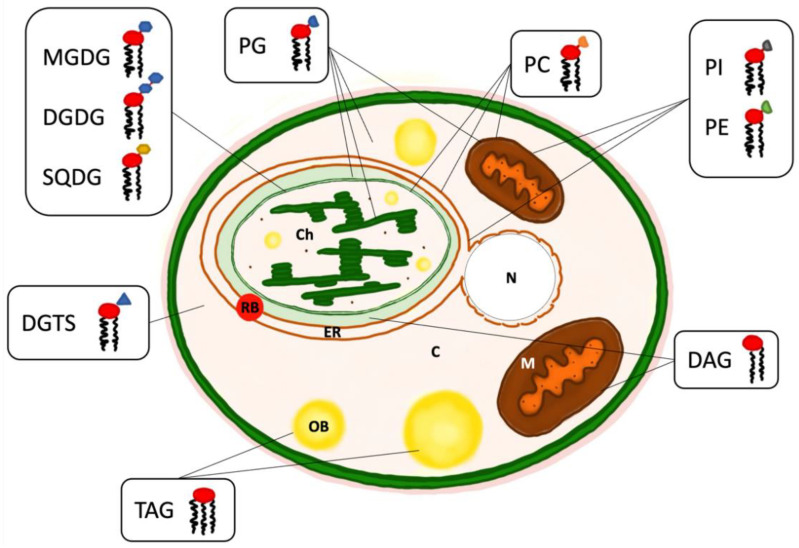
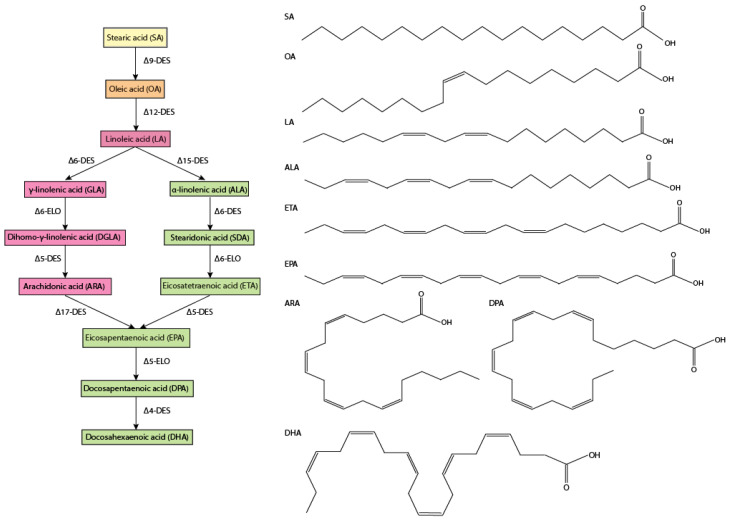
The genus comprises a group of oleaginous microalgae that accumulate polyunsaturated fatty acids (PUFAs), especially eicosapentaenoic acid (EPA). These molecules are essential for the correct development and health of humans and animals. Thanks to their attractive lipid profile, is mainly marketed as a feed ingredient in aquaculture. In microalgae of this genus, contents and cellular location of PUFAs are affected by the growth conditions and gene expression. Strain improvement through non-recombinant approaches can generate more productive strains and efficient bioprocesses for PUFA production. Nevertheless, the lack of specific markers, detection methods, and selective pressure for isolating such mutants remains a bottleneck in classical mutagenesis approaches or lipid quality assessment during cultivation. This review encompasses the importance of PUFAs and lipid classes from species and their potential applications. Additionally, a revision of the different ways to increase PUFA content in sp. by using classical mutagenesis and adaptive laboratory evolution is also presented, as well as various methods to label and quantify lipids and PUFAs from microalgae.
该属包括一组积累多不饱和脂肪酸(PUFAs)的产油微藻,尤其是二十碳五烯酸(EPA)。这些分子对人类和动物的正常发育及健康至关重要。由于其诱人的脂质特性,主要作为水产养殖中的饲料成分进行销售。在该属微藻中,多不饱和脂肪酸的含量和细胞定位受生长条件和基因表达的影响。通过非重组方法进行菌株改良可以产生更高产的菌株和用于多不饱和脂肪酸生产的高效生物工艺。然而,在经典诱变方法或培养过程中的脂质质量评估中,缺乏用于分离此类突变体的特异性标记、检测方法和选择压力仍然是一个瓶颈。本综述涵盖了该属物种中多不饱和脂肪酸和脂质类别的重要性及其潜在应用。此外,还介绍了通过经典诱变和适应性实验室进化增加该属微藻中多不饱和脂肪酸含量的不同方法,以及标记和定量该属微藻中脂质和多不饱和脂肪酸的各种方法。