Sadanov Amankeldi K, Baimakhanova Baiken B, Orasymbet Saltanat E, Ratnikova Irina A, Turlybaeva Zere Z, Baimakhanova Gul B, Amitova Aigul A, Omirbekova Anel A, Aitkaliyeva Gulzat S, Kossalbayev Bekzhan D, Belkozhayev Ayaz M
LLP "Research and Production Center for Microbiology and Virology", Almaty 050010, Kazakhstan.
Department of Chemical and Biochemical Engineering, Geology and Oil-Gas Business Institute Named After K. Turyssov, Satbayev University, Almaty 050043, Kazakhstan.
Microorganisms. 2025 Mar 5;13(3):599. doi: 10.3390/microorganisms13030599.
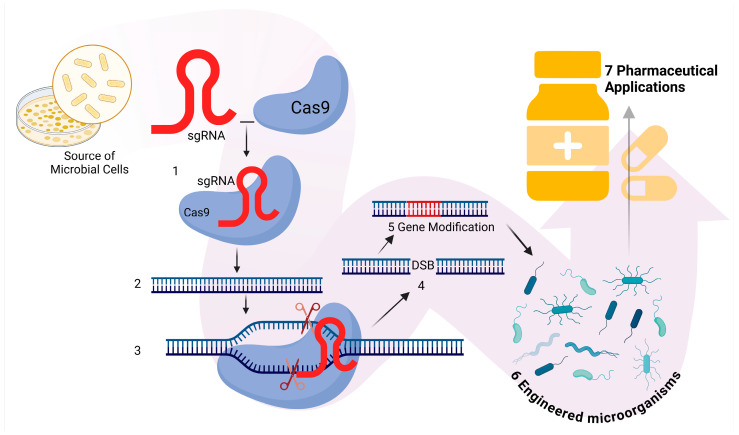
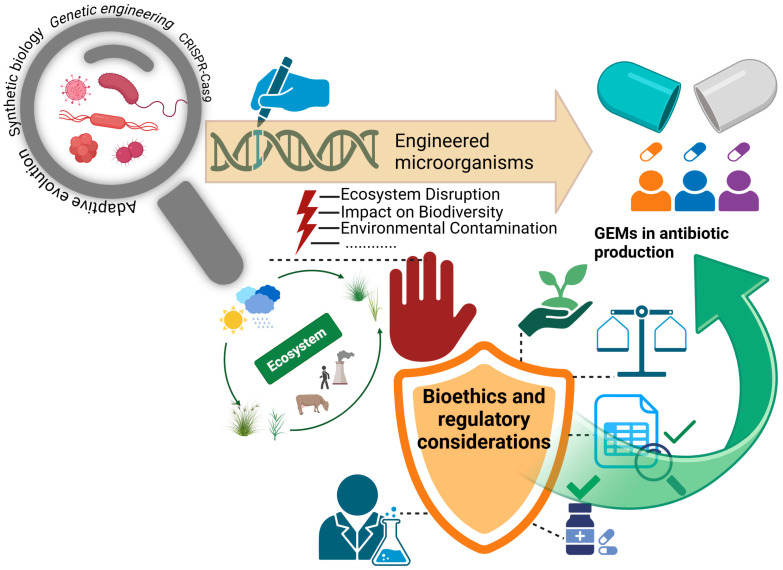
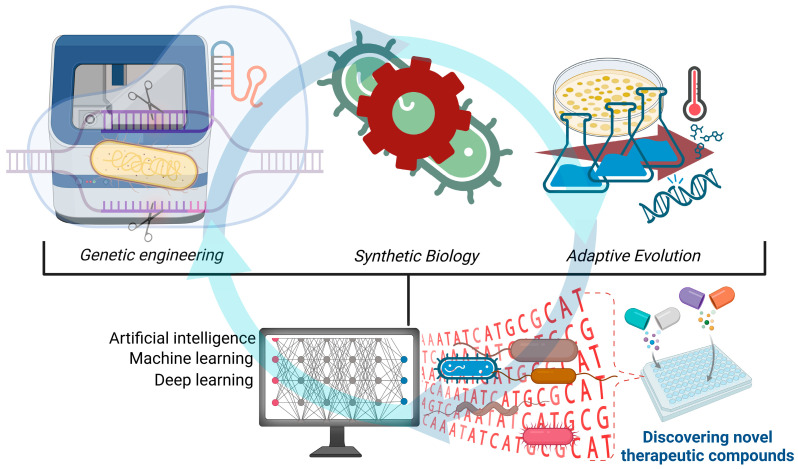
Microbial engineering has made a significant breakthrough in pharmaceutical biotechnology, greatly expanding the production of biologically active compounds, therapeutic proteins, and novel drug candidates. Recent advancements in genetic engineering, synthetic biology, and adaptive evolution have contributed to the optimization of microbial strains for pharmaceutical applications, playing a crucial role in enhancing their productivity and stability. The CRISPR-Cas system is widely utilized as a precise genome modification tool, enabling the enhancement of metabolite biosynthesis and the activation of synthetic biological pathways. Additionally, synthetic biology approaches allow for the targeted design of microorganisms with improved metabolic efficiency and therapeutic potential, thereby accelerating the development of new pharmaceutical products. The integration of artificial intelligence (AI) and machine learning (ML) plays a vital role in further advancing microbial engineering by predicting metabolic network interactions, optimizing bioprocesses, and accelerating the drug discovery process. However, challenges such as the efficient optimization of metabolic pathways, ensuring sustainable industrial-scale production, and meeting international regulatory requirements remain critical barriers in the field. Furthermore, to mitigate potential risks, it is essential to develop stringent biocontainment strategies and implement appropriate regulatory oversight. This review comprehensively examines recent innovations in microbial engineering, analyzing key technological advancements, regulatory challenges, and future development perspectives.
微生物工程在药物生物技术领域取得了重大突破,极大地扩展了生物活性化合物、治疗性蛋白质和新型候选药物的生产。基因工程、合成生物学和适应性进化方面的最新进展有助于优化用于制药应用的微生物菌株,在提高其生产力和稳定性方面发挥着关键作用。CRISPR-Cas系统被广泛用作精确的基因组编辑工具,能够增强代谢物生物合成并激活合成生物学途径。此外,合成生物学方法允许对微生物进行有针对性的设计,以提高代谢效率和治疗潜力,从而加速新药品的开发。人工智能(AI)和机器学习(ML)的整合通过预测代谢网络相互作用、优化生物过程和加速药物发现过程,在进一步推动微生物工程方面发挥着至关重要的作用。然而,诸如代谢途径的高效优化、确保可持续的工业规模生产以及满足国际监管要求等挑战仍然是该领域的关键障碍。此外,为了降低潜在风险,制定严格的生物遏制策略并实施适当的监管监督至关重要。本综述全面审视了微生物工程的最新创新,分析了关键技术进展、监管挑战和未来发展前景。