Pereira Cláudio Antônio de Moura, Mendes Renata Pessôa Germano, Silva Poliana Gomes da, Chaves Elton José Ferreira, Pena Lindomar José
Laboratory of Virology and Experimental Therapy (Lavite), Department of Virology, Aggeu Magalhães Institute (IAM), Oswaldo Cruz Foundation (Fiocruz), 50670-420 Recife, Brazil.
Viruses. 2025 Mar 6;17(3):382. doi: 10.3390/v17030382.
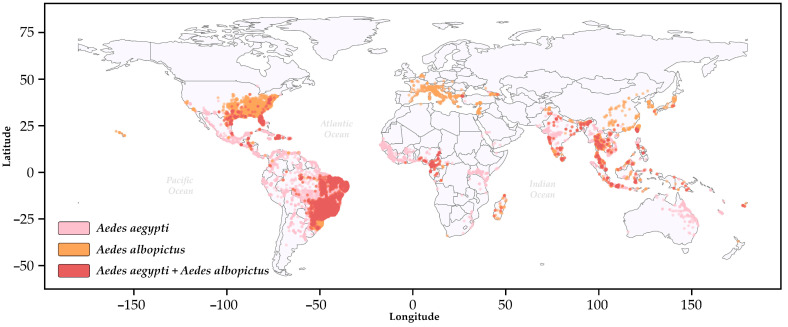
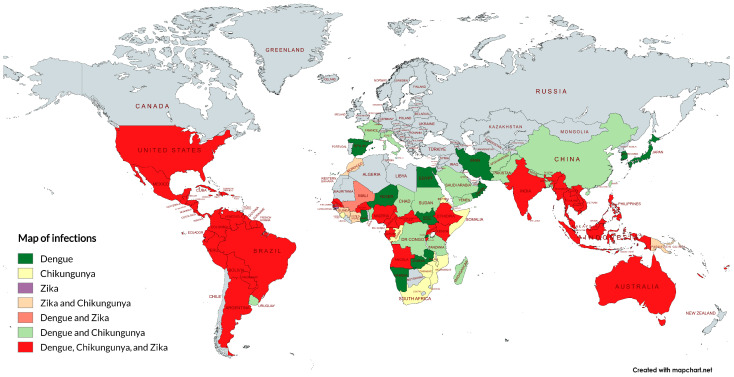
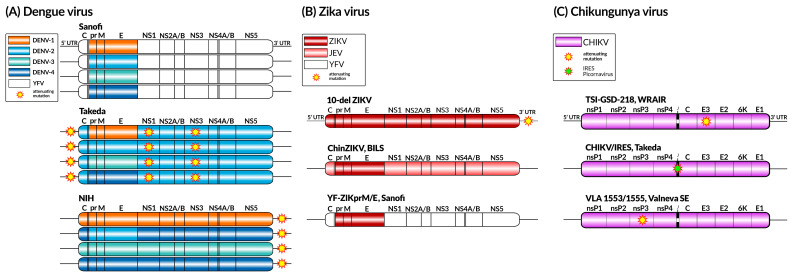
Arboviruses represent a contemporary global challenge, prompting coordinated efforts from health organizations and governments worldwide. Dengue, chikungunya, and Zika viruses have become endemic in the tropics, resulting in the so-called "triple arbovirus epidemic". These viruses are transmitted typically through the bites of infected mosquitoes, especially and . These mosquito species are distributed across all continents and exhibit a high adaptive capacity in diverse environments. When combined with unplanned urbanization, uncontrolled population growth, and international travel-the so-called "triad of the modern world"-the maintenance and spread of these pathogens to new areas are favored. This review provides updated information on vaccine candidates targeting dengue, chikungunya, and Zika viruses. Additionally, we discuss the challenges, perspectives, and issues associated with their successful production, testing, and deployment within the context of public health.
虫媒病毒是当代全球面临的一项挑战,促使全球卫生组织和各国政府共同做出努力。登革热、基孔肯雅热和寨卡病毒已在热带地区成为地方病,导致了所谓的“虫媒病毒三重疫情”。这些病毒通常通过受感染蚊子的叮咬传播,尤其是 和 。这些蚊种分布于各大洲,并且在各种环境中都表现出很高的适应能力。当与无规划的城市化、不受控制的人口增长以及国际旅行(即所谓的“现代世界三要素”)相结合时,这些病原体在新地区的存续和传播就更为容易。本综述提供了有关针对登革热、基孔肯雅热和寨卡病毒的候选疫苗的最新信息。此外,我们还讨论了在公共卫生背景下,这些疫苗在成功生产、测试和部署方面所面临的挑战、前景及相关问题。