Huo Junming, Chen Song, Qin Yanran, Xu Feng, Liu Chenjun
Department of Critical Care Medicine, National Clinical Research Center for Child Health and Disorders, Ministry of Education Key Laboratory of Child Development and Disorders, Chongqing Key Laboratory of Pediatrics Metabolism and Inflammatorydiseases, Children'S Hospital of Chongqing Medical University, 136 Zhongshan 2 Road, Yuzhong District, Chongqing, 400014, China.
Ital J Pediatr. 2025 Apr 7;51(1):108. doi: 10.1186/s13052-025-01951-7.
Although multiple risk factors have been reported for adverse outcomes in children with severe pertussis, their predictive values and the benefits of interventions such as exchange transfusion remain poorly understood. Therefore, we aimed to comprehensively evaluate the risk factors associated with mortality in children with severe pertussis and assess the potential benefits of exchange transfusion therapy.
A retrospective analysis of 170 pertussis patients admitted to the Pediatric Intensive Care Unit (PICU) between January 2018 and June 2024 was performed.
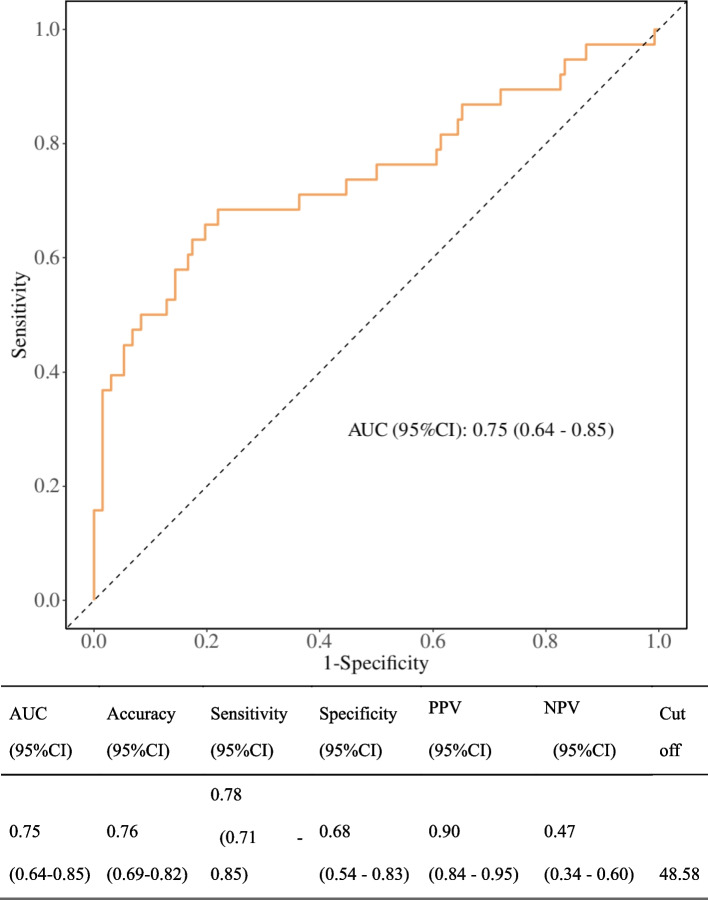
Among the 170 patients, 38 (22.35%) died. The death group exhibited significantly higher white blood cell (WBC) counts (67.31 vs. 28.41 × 10^9/L, P < 0.001), neutrophils (29.95 vs. 11.61 × 10^9/L, P < 0.001), and C-reactive protein (CRP) (29 vs. 8 mg/L, P < 0.001). Additionally, sepsis (39.47% vs. 9.09%, P < 0.001), shock (63.16% vs. 6.06%, P < 0.001), ARDS (23.68% vs. 2.27%, P < 0.001), and acute kidney injury (21.05% vs. 0.76%, P < 0.001) were more prevalent in the death group. ROC analysis showed that WBC counts had a predictive value for mortality (AUC = 0.75, sensitivity = 0.78, specificity = 0.68), with an optimal cutoff of 48.58 × 10^9/L.
High WBC counts are significantly correlated with increased mortality risk in severe pertussis children, with a threshold of 48.58 × 10^9/L marking high risk. Although exchange transfusion can reduce WBC counts and improve symptoms, its benefit is limited in patients with severe secondary infections, necessitating tailored treatment strategies.
尽管已有多项危险因素被报道与重症百日咳患儿的不良结局相关,但其预测价值以及诸如换血疗法等干预措施的益处仍知之甚少。因此,我们旨在全面评估重症百日咳患儿死亡的相关危险因素,并评估换血疗法的潜在益处。
对2018年1月至2024年6月间收治入儿科重症监护病房(PICU)的170例百日咳患者进行回顾性分析。
170例患者中,38例(22.35%)死亡。死亡组的白细胞(WBC)计数(67.31对28.41×10^9/L,P<0.001)、中性粒细胞(29.95对11.61×10^9/L,P<0.001)和C反应蛋白(CRP)(29对8mg/L,P<0.001)显著更高。此外,脓毒症(39.47%对9.09%,P<0.001)、休克(63.16%对6.06%,P<0.001)、急性呼吸窘迫综合征(ARDS)(23.68%对2.27%,P<0.001)和急性肾损伤(21.05%对0.76%,P<0.001)在死亡组中更常见。ROC分析显示,WBC计数对死亡率有预测价值(AUC=0.75,敏感性=0.78,特异性=0.68),最佳截断值为48.58×10^9/L。
高WBC计数与重症百日咳患儿死亡风险增加显著相关,阈值为48.58×10^9/L表示高风险。尽管换血可降低WBC计数并改善症状,但其在继发严重感染的患者中的益处有限,需要制定个性化的治疗策略。