You Peimeng, Li Qiaxuan, Lei Yu, Xu Chuhao, Xie Daipeng, Yao Lintong, Yuan Jiaxin, Li Junyu, Zhou Haiyu
Department of Biomedical Engineering, Capital Medical University, Beijing, China.
Department of Lung Transplantation, School of Medicine, The Second Affiliated Hospital Zhejiang University, Zhejiang Province, China.
Respir Res. 2025 Apr 11;26(1):134. doi: 10.1186/s12931-025-03202-z.
The varying degrees of radiotherapy sensitivity of tumors limit the efficacy of tumor radiotherapy. In this research, based on single cell sequence data we used radiomics to help identify and screen feature signatures to distinguish varying radiosensitivity in different regions of the target area of non-small cell lung cancer can provide a new pattern to assess sensitivity of radiotherapy and assist in clinical decision-making.
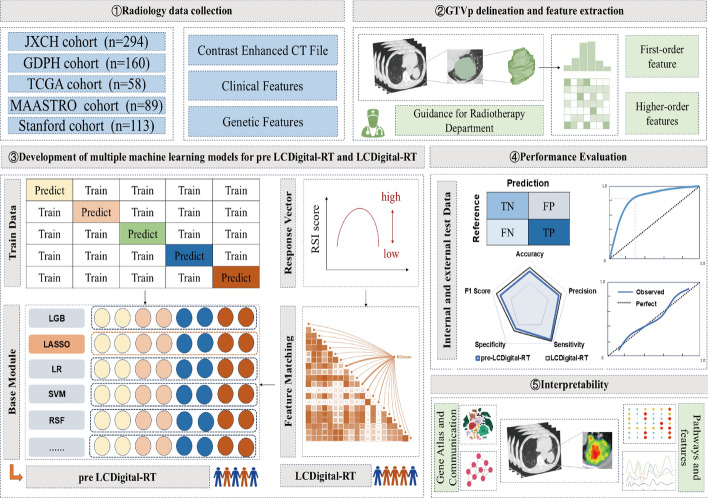
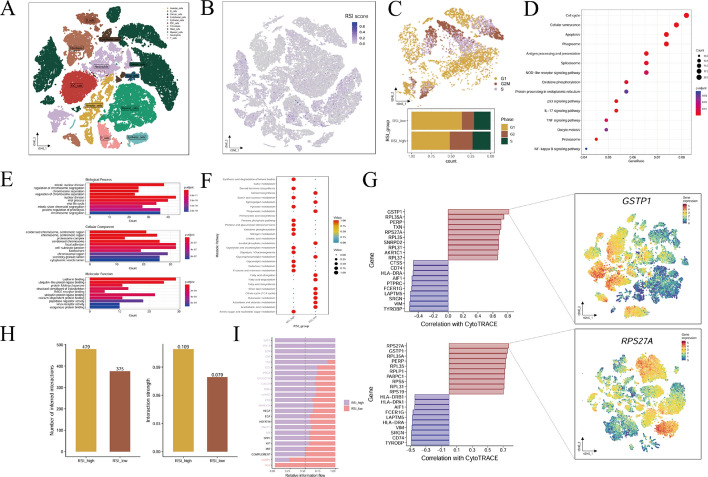
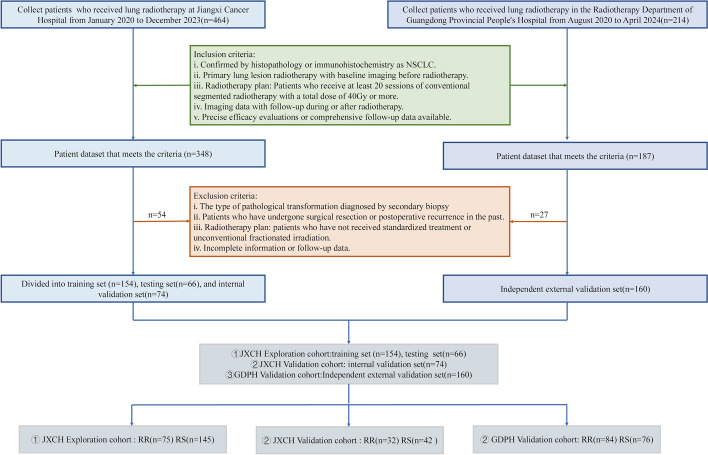
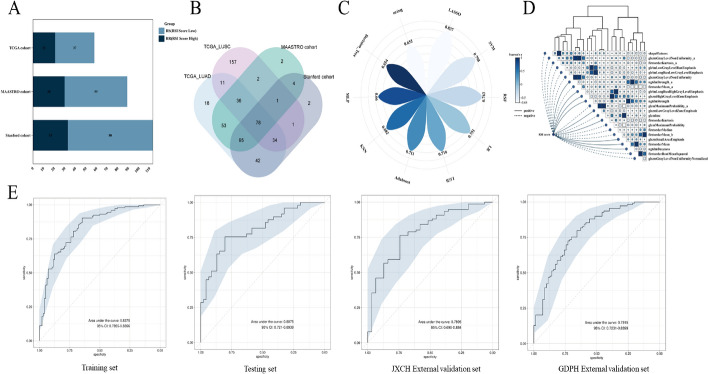
This retrospective study included CT radiology data from 454 patients diagnosed with non-small cell lung cancer in multiple real-world cohorts prior to radiotherapy. The tumor primary target area was delineated on a training set (n = 154) and segmented to obtain a radiogenomic single signature. The radiogenomic signature LCDigital-RT, which can predict radiosensitivity, was developed by combining transcriptome sequencing signature radiosensitivity index and validated on two independent external validation sets (n = 74) and (n = 160). Besides, we also described the single-cell landscape of non-small cell lung cancer with different radiosensitivity, attempting to explain the potential biological mechanism at the single-cell level.
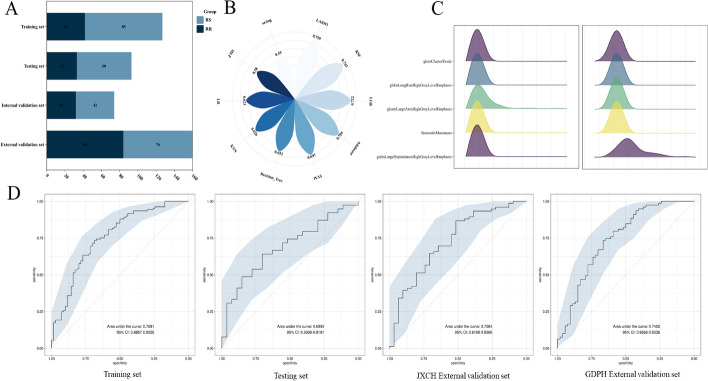
By constructing solely from the single radiomics feature signature, pre LCDigital-RT can effectively identify populations with differences in radiation sensitivity in non-small cell lung cancer, with AUCs of 0.759, 0.728 and 0.745 for the training and two external validation sets, respectively. However, LCDigital-RT has a greater advantage, with a training set AUC of 0.837, which has been well validated in the JXCH cohort (AUC = 0.789) and GDPH cohort (AUC = 0.791). With the help of LCDigital-RT, patients can be divided into radiation sensitive and radiation resistant groups, and there is a significant difference in the characteristics of primary tumor lesions between the two groups. We have also enriched the interpretability of our radiogenomic features in biology at the single-cell level, demonstrating their enormous value in clinical translational research.
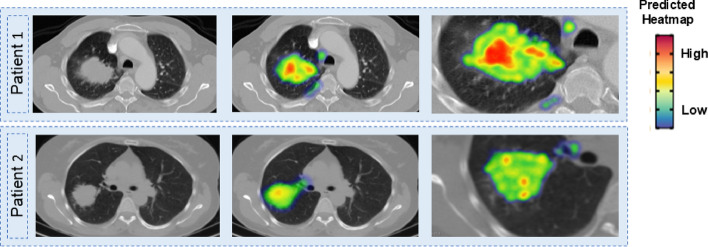
We have developed an LCDigital RT prediction tool that will help predict populations at risk of radiation sensitivity differences. By visualizing the thermal map of the primary tumor area, we can assist in the development of radiotherapy plans, reduce the occurrence of radiation toxicity events, and improve radiotherapy efficacy. At the same time, it provides a reference basis for evaluating radiation sensitivity from imaging, genetics, and other aspects.
肿瘤放疗敏感性的差异限制了肿瘤放疗的疗效。在本研究中,基于单细胞序列数据,我们运用放射组学来帮助识别和筛选特征标志物,以区分非小细胞肺癌靶区不同区域的不同放射敏感性,可为评估放疗敏感性提供新模式并辅助临床决策。
这项回顾性研究纳入了454例在放疗前于多个真实世界队列中被诊断为非小细胞肺癌患者的CT放射学数据。在训练集(n = 154)上勾勒出肿瘤原发靶区并进行分割,以获得放射基因组单一特征。通过结合转录组测序敏感性指数开发出可预测放射敏感性的放射基因组特征LCDigital-RT,并在两个独立的外部验证集(n = 74)和(n = 160)上进行验证。此外,我们还描绘了具有不同放射敏感性的非小细胞肺癌的单细胞图谱,试图在单细胞水平解释潜在的生物学机制。
仅通过构建单一放射组学特征标志物,预LCDigital-RT就能有效识别非小细胞肺癌中具有放射敏感性差异的人群,训练集及两个外部验证集的曲线下面积(AUC)分别为0.759、0.728和0.745。然而,LCDigital-RT具有更大优势,训练集AUC为0.837,在JXCH队列(AUC = 0.789)和GDPH队列(AUC = 0.791)中得到了很好的验证。借助LCDigital-RT,可将患者分为放射敏感组和放射抵抗组,两组之间原发肿瘤病灶特征存在显著差异。我们还在单细胞水平丰富了放射基因组特征在生物学方面的可解释性,证明了它们在临床转化研究中的巨大价值。
我们开发了一种LCDigital RT预测工具,有助于预测存在放射敏感性差异风险的人群。通过可视化原发肿瘤区域的热图,我们可以辅助放疗计划的制定,减少放射毒性事件的发生,提高放疗疗效。同时,它为从影像学、遗传学等方面评估放射敏感性提供了参考依据。