Kuzik Nicholas, Duncan Markus J, Beshara Natalie, MacDonald Matthew, Silva Diego Augusto Santos, Tremblay Mark S
Healthy Active Living and Obesity Research Group, Children's Hospital of Eastern Ontario Research Institute, 401 Smyth Road, Ottawa, ON, K1H 8L1, Canada.
, ParticipACTION, 4 New Street, Toronto, ON, M5R 1P6, Canada.
J Act Sedentary Sleep Behav. 2025 Mar 27;4(1):4. doi: 10.1186/s44167-025-00076-w.
Movement behaviours (e.g., sleep, sedentary behaviour, light physical activity [LPA], moderate to vigorous physical activity [MVPA]) are associated with numerous health and well-being outcomes. Compositional data analyses (CoDA) accounts for the interdependent nature of movement behaviours. This systematic review and meta-analysis provides a timely synthesis of the first decade of CoDA research examining the association between movement behaviours, health, and well-being in school-aged children.
Databases were systematically searched for peer-reviewed studies examining CoDA associations between movement behaviours and health or well-being in school-aged children (5.0-17.9 years). All health and well-being outcomes were eligible for inclusion, as were all methods of reporting CoDA results. Where possible meta-analyses were conducted.
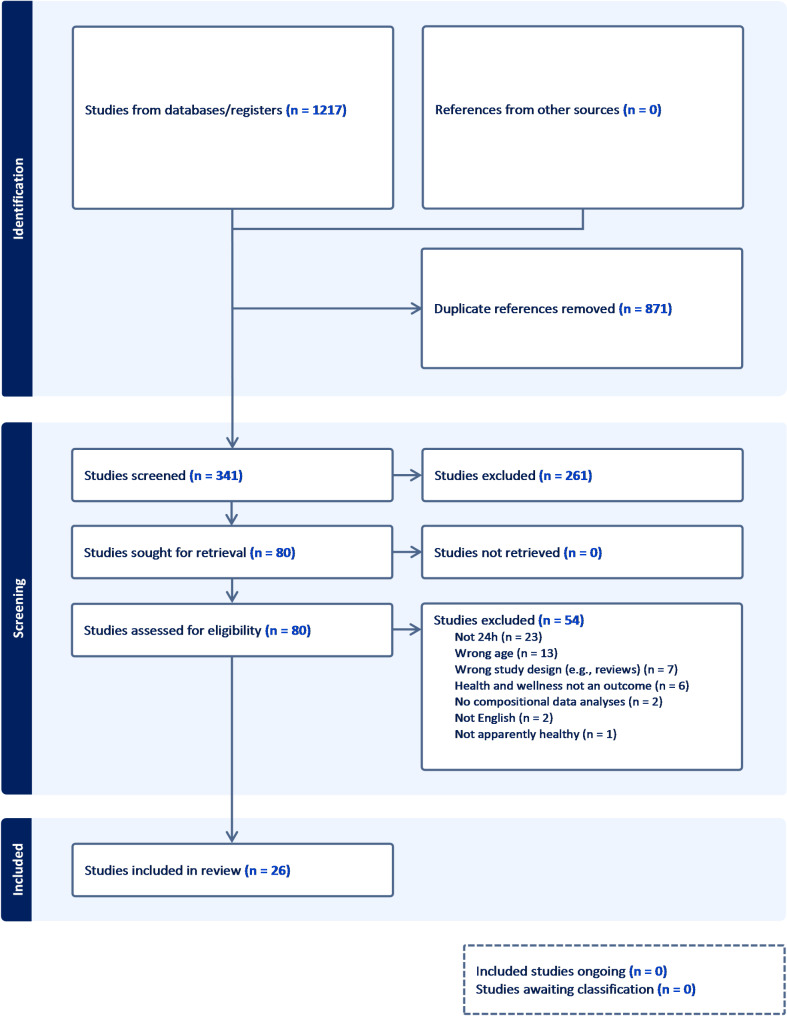
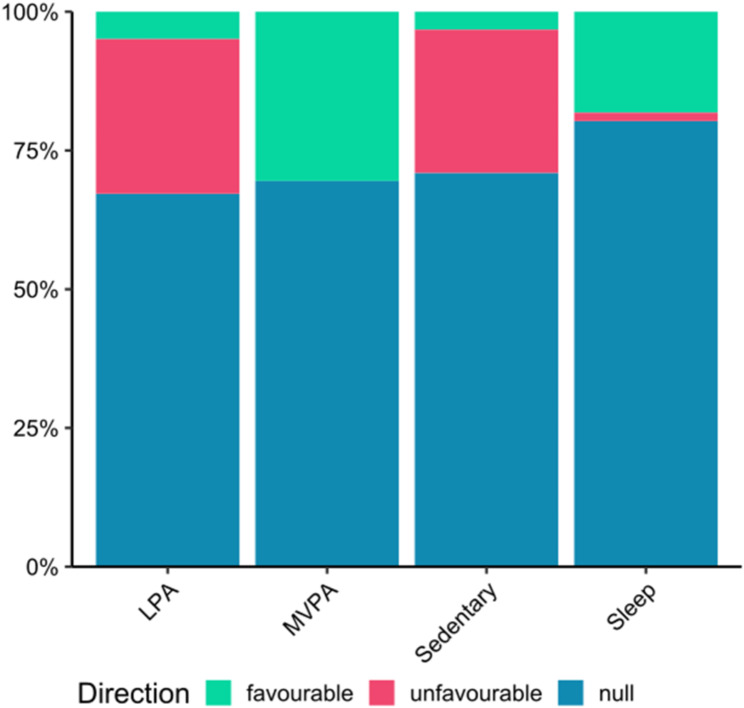
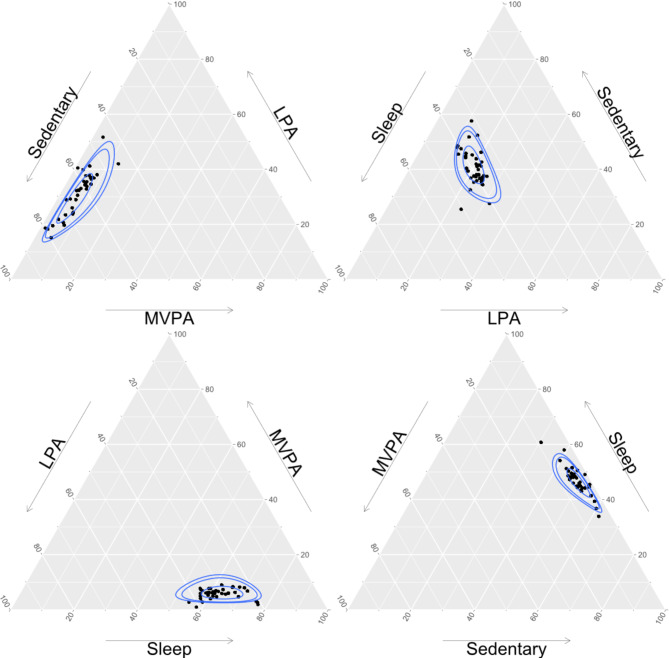
Twenty-six studies were included in the review. Sample sizes ranged from 88 - 5,828 (median = 387) participants and the mean ages ranged from 8 to 16 years. Regression parameters (k=16) were the most common method of reporting results, followed by substitution effects (k=12), optimal compositions (k=3), and movement behaviour clusters (k =1). Weighted compositional means of movement behaviours were calculated (e.g., 49.8 min/day of MVPA). For regression analyses, results were generally null, though some favourable trends were observed for MVPA and unfavourable trends for LPA and sedentary behaviour within individual health and well-being outcomes categories. Meta-analyses of substitutions supported the benefits of MVPA, with the risks of reducing MVPA for other movement behaviours being double the magnitude compared to the benefits of adding MVPA.
The most consistent conclusions within this review align with previous reviews that support the benefits of MVPA. Further, some evidence supported 24-hour movement behaviour guideline recommendations of increasing sleep and decreasing sedentary behaviour. This review also quantified not only the need to promote MVPA, but perhaps more importantly the urgency needed to preserve the limited MVPA children currently accumulate. Findings reinforce the "more/less is better" messages for movement behaviours, but do not allow us to recommend more specific balances of movement behaviours. As CoDA of movement behaviours progresses and accumulates further research, the methods and discussion points within the current review can aide future meta-analyses aimed at advancing the precision health guidance needed for optimizing children's health and well-being.
运动行为(如睡眠、久坐行为、轻度身体活动[LPA]、中度至剧烈身体活动[MVPA])与众多健康和幸福指标相关。成分数据分析(CoDA)考虑了运动行为的相互依存性质。本系统综述和荟萃分析及时综合了CoDA研究的第一个十年,该研究考察了学龄儿童运动行为、健康和幸福之间的关联。
系统检索数据库,查找关于学龄儿童(5.0 - 17.9岁)运动行为与健康或幸福之间CoDA关联的同行评审研究。所有健康和幸福指标均符合纳入标准,所有报告CoDA结果的方法也符合标准。在可能的情况下进行荟萃分析。
该综述纳入了26项研究。样本量从88名至5828名参与者不等(中位数 = 387),平均年龄从8岁至16岁。回归参数(k = 16)是最常见的结果报告方法,其次是替代效应(k = 12)、最优成分(k = 3)和运动行为聚类(k = 1)。计算了运动行为的加权成分均值(例如,MVPA为每天49.8分钟)。对于回归分析,结果通常无显著差异,不过在各个健康和幸福指标类别中,观察到MVPA有一些有利趋势,而LPA和久坐行为有不利趋势。替代效应的荟萃分析支持MVPA的益处,减少MVPA对其他运动行为的风险是增加MVPA益处的两倍。
本综述中最一致的结论与之前支持MVPA益处的综述一致。此外,一些证据支持24小时运动行为指南中增加睡眠和减少久坐行为的建议。本综述不仅量化了促进MVPA的必要性,或许更重要的是量化了保护儿童目前积累的有限MVPA的紧迫性。研究结果强化了运动行为“越多/越少越好”的信息,但不允许我们推荐更具体的运动行为平衡。随着运动行为CoDA的进展和进一步研究的积累,当前综述中的方法和讨论要点可帮助未来的荟萃分析,以推进优化儿童健康和幸福所需的精准健康指导。