Chaudhary Raj K, Ali Obaid, Kumar Amrendra, Kumar Abilesh, Pervez Anjum
Department of Medicine, Jawaharlal Nehru Medical College, Bhagalpur, IND.
Cureus. 2025 Mar 12;17(3):e80495. doi: 10.7759/cureus.80495. eCollection 2025 Mar.
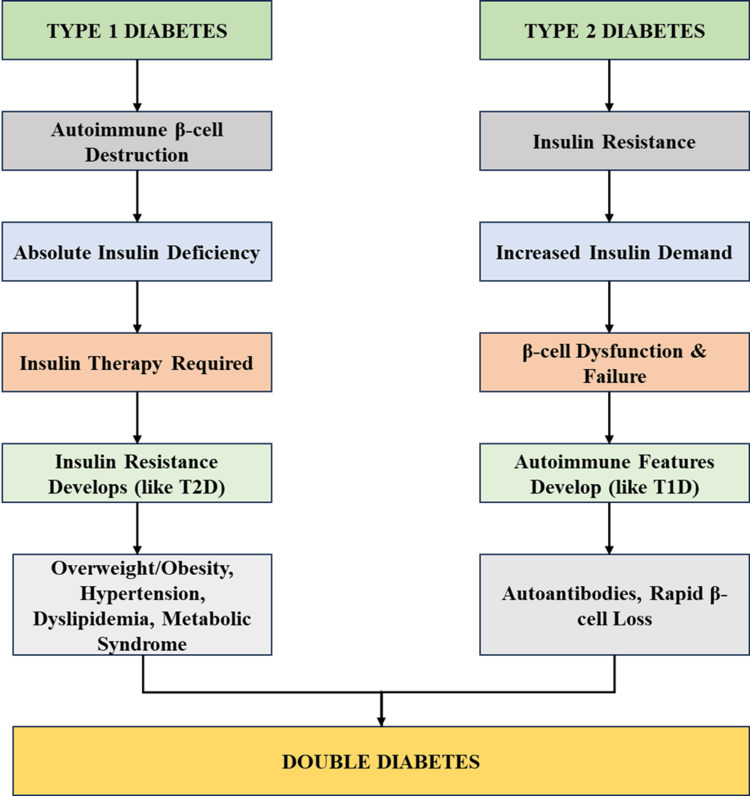
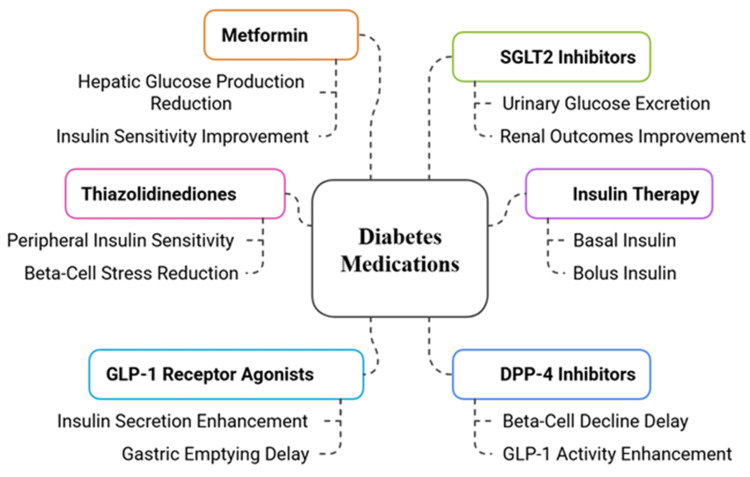
This review explores the pathophysiology, clinical implications, and management of double diabetes. The increasing prevalence of obesity, sedentary lifestyles, and genetic predisposition has blurred the difference between type 1 and type 2 diabetes, leading to diagnostic and therapeutic challenges. Double diabetes presents with overlapping symptoms from both diabetes types, making accurate diagnosis crucial. Biomarkers, such as C-peptide levels, autoantibody testing, and insulin resistance markers, help differentiate double diabetes from classic diabetes subtypes. Early intervention is necessary because of the condition's elevated risk of microvascular and macrovascular consequences, such as retinopathy, nephropathy, and cardiovascular disease. Effective management integrates pharmacological and lifestyle approaches. Metformin, sodium-glucose cotransporter 2 (SGLT2) inhibitors, glucagon-like peptide-1 (GLP-1) receptor agonists, and insulin therapy adjustments all boost glycemic control and metabolic results. Additionally, structured exercise, dietary modifications, and weight management are essential for reducing insulin resistance and preserving beta-cell activity. The potential of precision medicine, artificial intelligence (AI)-driven healthcare, and continuous glucose monitoring (CGM) offers promising advancements for personalized treatment strategies. Future research should focus on targeted immunotherapies, genetic profiling, and refined clinical guidelines to improve early detection and individualized treatment, with long-term outcomes. The review emphasizes the need for a multidisciplinary approach in managing double diabetes, ensuring early diagnosis, optimized treatment, and improved metabolic health to mitigate long-term complications.
本综述探讨了双重糖尿病的病理生理学、临床意义及管理。肥胖、久坐不动的生活方式和遗传易感性的日益普遍,模糊了1型和2型糖尿病之间的区别,带来了诊断和治疗挑战。双重糖尿病呈现出两种糖尿病类型的重叠症状,因此准确诊断至关重要。生物标志物,如C肽水平、自身抗体检测和胰岛素抵抗标志物,有助于将双重糖尿病与经典糖尿病亚型区分开来。由于该病症引发微血管和大血管并发症(如视网膜病变、肾病和心血管疾病)的风险升高,早期干预很有必要。有效的管理整合了药物治疗和生活方式干预方法。二甲双胍、钠-葡萄糖协同转运蛋白2(SGLT2)抑制剂、胰高血糖素样肽-1(GLP-1)受体激动剂以及胰岛素治疗调整,均有助于提高血糖控制和代谢效果。此外,有组织的运动、饮食调整和体重管理对于降低胰岛素抵抗和维持β细胞活性至关重要。精准医学、人工智能驱动的医疗保健以及持续葡萄糖监测(CGM)的潜力为个性化治疗策略带来了有前景的进展。未来的研究应聚焦于靶向免疫疗法、基因分析以及完善的临床指南,以改善早期检测和个体化治疗及长期预后。该综述强调在管理双重糖尿病时需要采取多学科方法,确保早期诊断、优化治疗并改善代谢健康,以减轻长期并发症。