Sun Qilei, Ma Jiatao, Craig Paul, Dai Linjun, Lim Eng Gee
Xi'an Jiaotong-Liverpool University, School of Advanced Technology, Suzhou, 215123, China.
Suzhou Hospital of Traditional Chinese Medicine, Specialty of Acupuncture, Suzhou, 215009, China.
Sci Data. 2025 Apr 15;12(1):625. doi: 10.1038/s41597-025-04934-9.
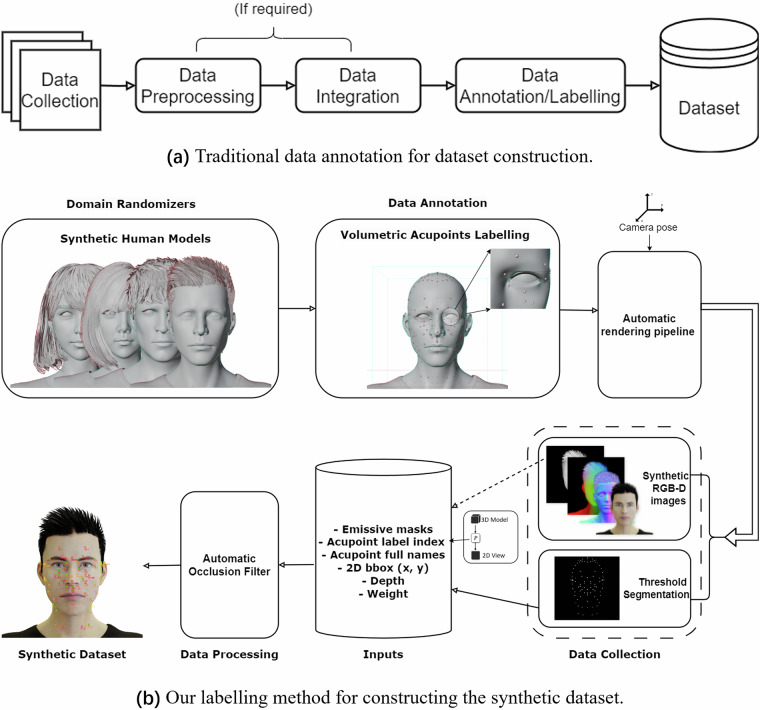
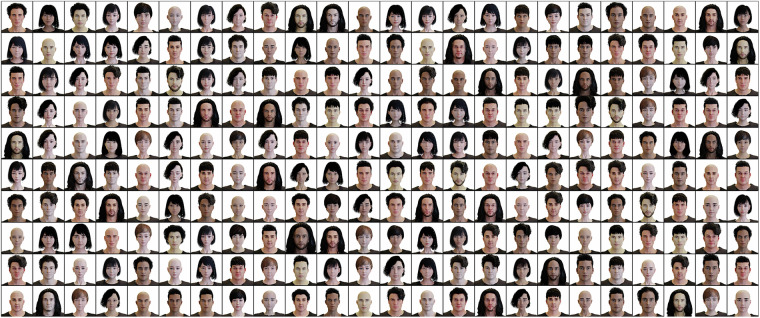
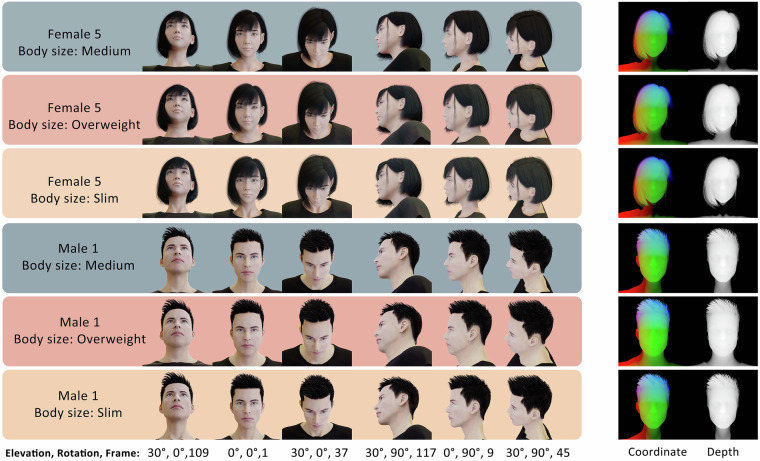
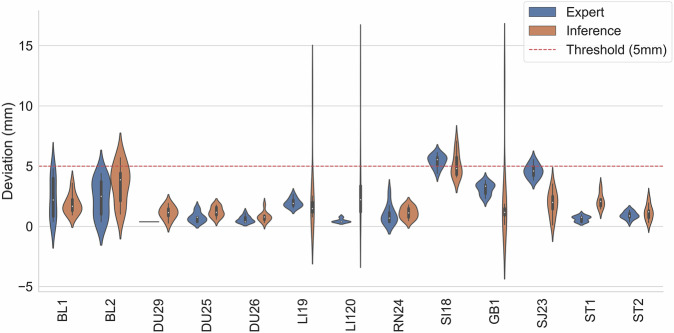
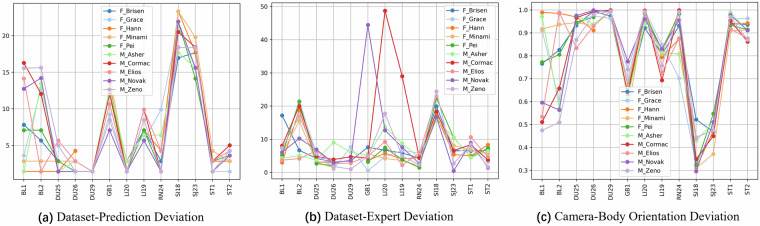
The locations of acupuncture points (acupoints) differ among human individuals due to variations in factors such as height, weight and fat proportions. However, acupoint annotation is expert-dependent, labour-intensive, and highly expensive, which limits the data size and detection accuracy. In this paper, we introduce the "AcuSim" dataset as a new synthetic dataset for the task of localising points on the human cervicocranial area from an input image using an automatic render and labelling pipeline during acupuncture treatment. It includes a creation of 63,936 RGB-D images and 504 synthetic anatomical models with 174 volumetric acupoints annotated, to capture the variability and diversity of human anatomies. The study validates a convolutional neural network (CNN) on the proposed dataset with an accuracy of 99.73% and shows that 92.86% of predictions in validation set align within a 5mm threshold of margin error when compared to expert-annotated data. This dataset addresses the limitations of prior datasets and can be applied to applications of acupoint detection and visualization, further advancing automation in Traditional Chinese Medicine (TCM).
由于身高、体重和脂肪比例等因素的差异,人体穴位的位置因人而异。然而,穴位标注依赖专家,劳动强度大且成本高昂,这限制了数据规模和检测准确性。在本文中,我们引入“AcuSim”数据集,这是一个新的合成数据集,用于在针灸治疗过程中通过自动渲染和标注管道从输入图像中定位人体头颈区域穴位的任务。它包括创建63936张RGB-D图像和504个合成解剖模型,标注了174个三维穴位,以捕捉人体解剖结构的变异性和多样性。该研究在所提出的数据集中验证了一个卷积神经网络(CNN),准确率达到99.73%,并且表明与专家标注数据相比,验证集中92.86%的预测在5毫米误差范围内对齐。这个数据集解决了先前数据集的局限性,可应用于穴位检测和可视化应用,进一步推动中医自动化进程。