Wu Xiao, Sha JiangMing, Yin QuanZhong, Gu YiHang, He XueMing
Department of General Medicine, Jiangyin People's Hospital, The Affiliated Hospital of Nantong University Medical College, Jiangyin, 214400, China.
Department of Geriatrics Medicine, Jiangyin People's Hospital, The Affiliated Hospital of Nantong University Medical College, Jiangyin, 214400, China.
Sci Rep. 2025 Apr 26;15(1):14594. doi: 10.1038/s41598-025-99358-1.
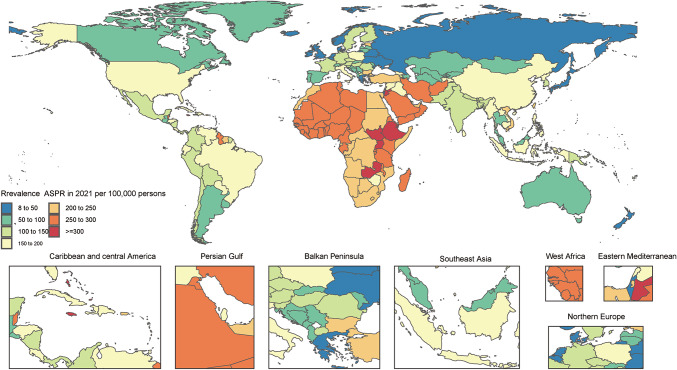
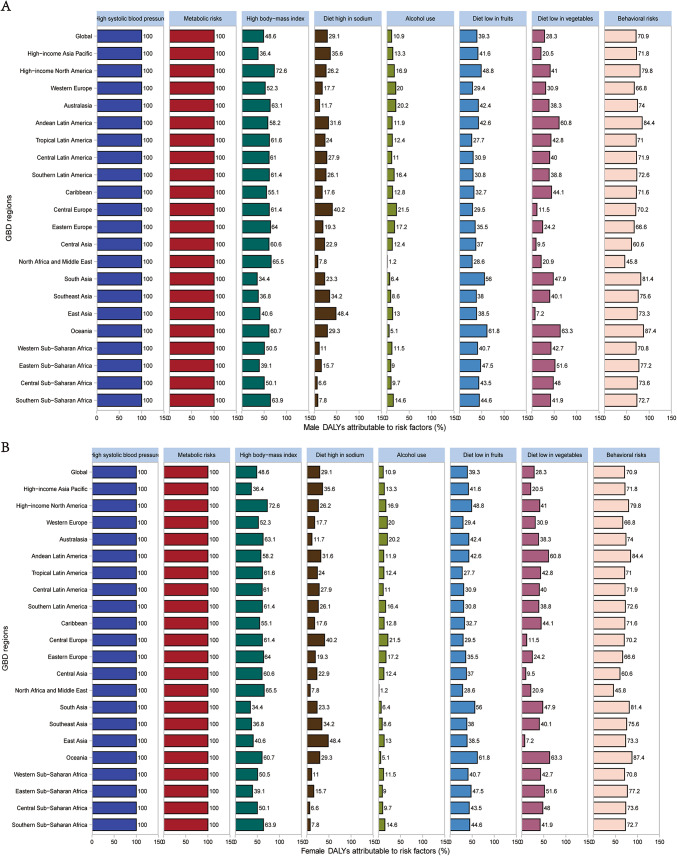
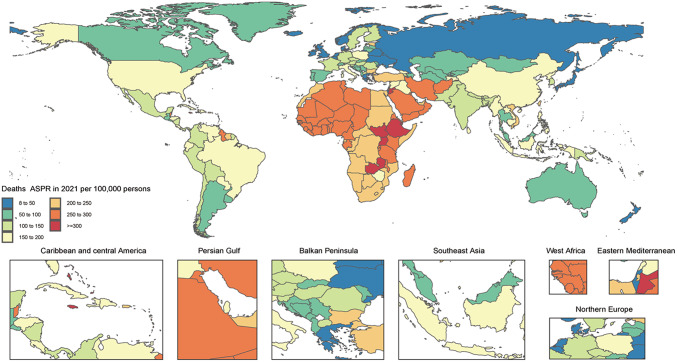
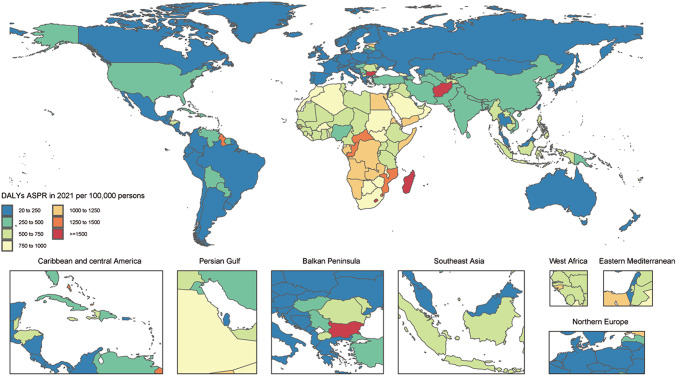
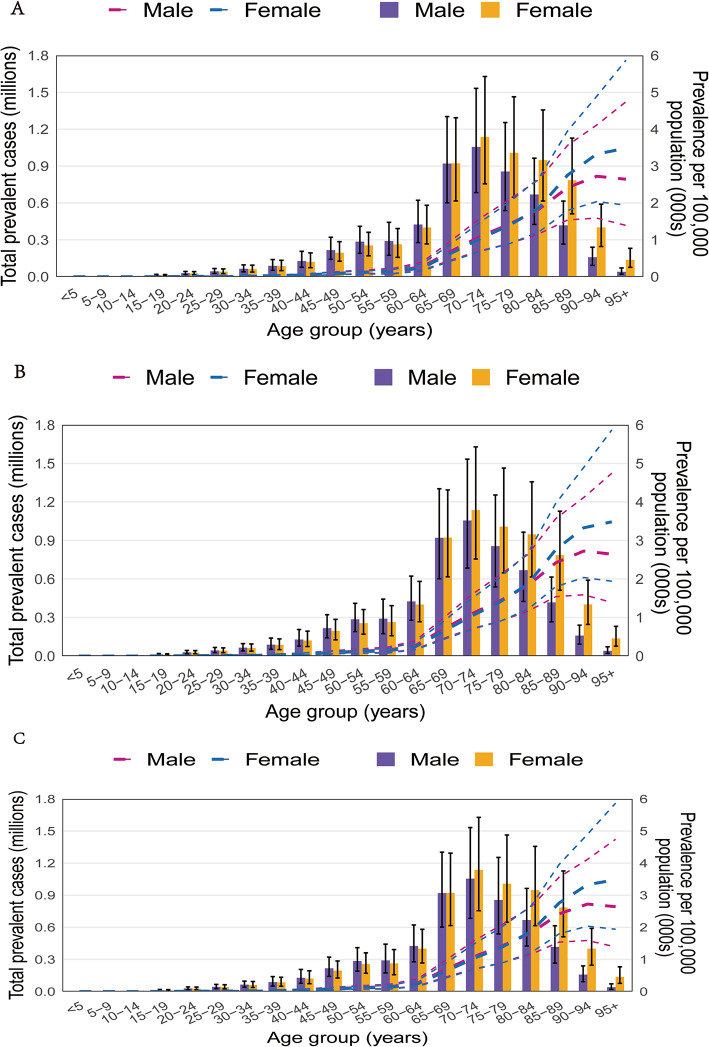
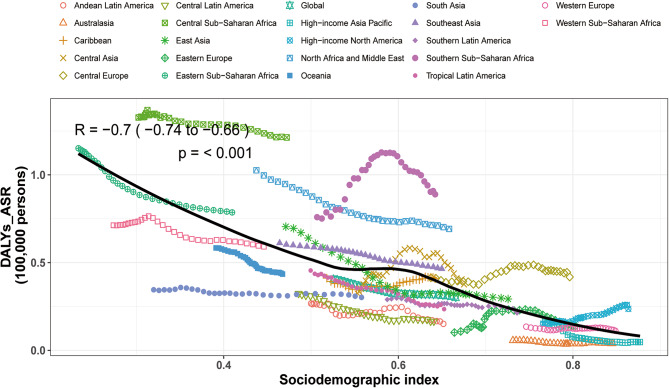
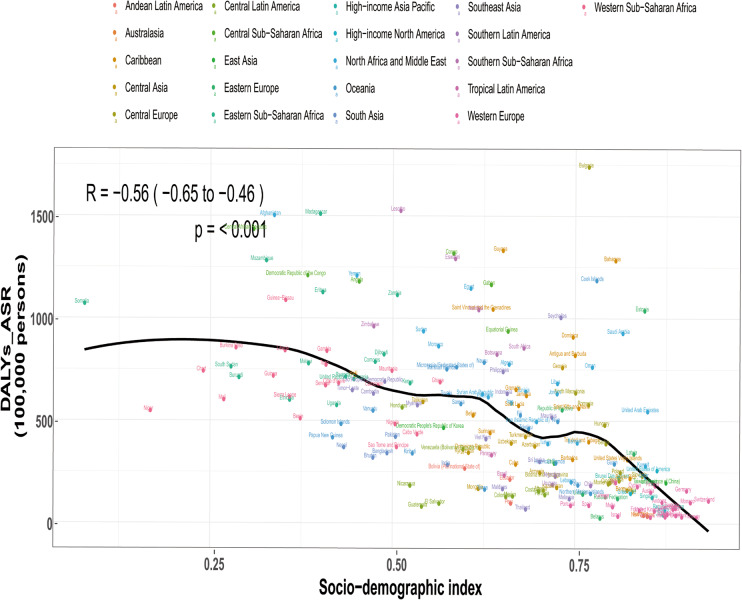
Hypertensive heart disease (HHD) significantly contributes to global morbidity and mortality, worsened by rising hypertension rates. This study aims to assess the burden of HHD from 1990 to 2021, analyzing prevalence, mortality, and disability-adjusted life years (DALYs) stratified by age, sex, and Sociodemographic Index (SDI). Utilizing data from the Global Burden of Disease 2021 project across 204 countries and 21 regions, the study calculated age-standardized rates and evaluated risk factors for prevention priorities. In 2021, there were 12.5 million HHD cases globally, resulting in 1.332 million deaths and 25.4622 million DALYs. Age-standardized rates were 148.3 for prevalence, 16.3 for deaths, and 301.6 for DALYs per 100,000 people, reflecting increases of 18.2% for prevalence but decreases for deaths (- 22%) and DALYs (- 25.8%) since 1990. Eastern Sub-Saharan Africa recorded the highest prevalence (291.8), while Bulgaria had the highest mortality (103.4) and DALY rates (1739.3). Age-specific trends showed that prevalence, deaths, and DALYs increased with age across genders, and at regional levels, DALYs decreased with higher SDI. Major contributing factors included high systolic blood pressure, metabolic risks, high body-mass index, unhealthy diet, alcohol use, and low fruit and vegetable intake. Despite advances in management, HHD remains a global health concern, especially in low-SDI areas. Efforts focused on modifiable risks, like hypertension control and dietary improvements, are essential to mitigate the burden of HHD.
高血压性心脏病(HHD)对全球发病率和死亡率有重大影响,而高血压发病率的上升使情况更加恶化。本研究旨在评估1990年至2021年期间HHD的负担,分析按年龄、性别和社会人口指数(SDI)分层的患病率、死亡率和伤残调整生命年(DALYs)。该研究利用来自全球204个国家和21个地区的2021年全球疾病负担项目的数据,计算了年龄标准化率,并评估了预防重点的风险因素。2021年,全球有1250万例HHD病例,导致133.2万人死亡和2546.22万DALYs。年龄标准化率分别为每10万人中患病率148.3、死亡率16.3和DALYs 301.6,表明自1990年以来患病率上升了18.2%,而死亡率(-22%)和DALYs(-25.8%)有所下降。撒哈拉以南非洲东部地区的患病率最高(291.8),而保加利亚的死亡率(103.4)和DALY率(1739.3)最高。特定年龄趋势表明,各性别中患病率、死亡率和DALYs均随年龄增长而增加,在区域层面,DALYs随SDI升高而下降。主要促成因素包括高收缩压、代谢风险、高体重指数、不健康饮食、饮酒以及低水果和蔬菜摄入量。尽管在管理方面取得了进展,但HHD仍然是一个全球健康问题,尤其是在低SDI地区。专注于可改变风险(如控制高血压和改善饮食)的努力对于减轻HHD的负担至关重要。