Lin Boyang, Alexander Robin, Fritzen Remi, Mills Sarah, Stewart Alan J, McCowan Colin
School of Medicine, University of St. Andrews, St. Andrews KY16 9TF, UK.
Nutrients. 2025 Apr 25;17(9):1447. doi: 10.3390/nu17091447.
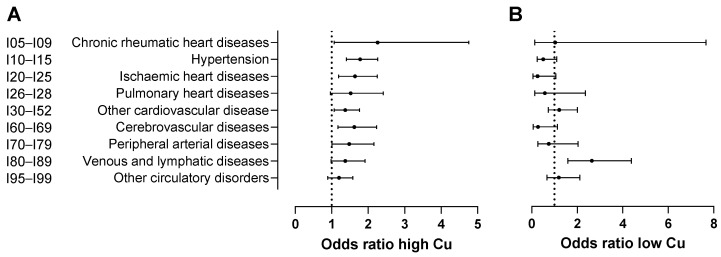
: Cardiovascular diseases (CVDs) are the leading cause of global mortality. Major adverse cardiovascular events (MACEs)-such as acute myocardial infarction, stroke, and heart failure-are critical endpoints in the clinical research. The existing research has shown metal ions are important regulators of cardiovascular functioning, and defective metal handling may be associated with an increased risk of CVD. This study examines the association of the plasma/serum levels of magnesium, copper, and zinc with MACE incidence and the prevalence of circulatory system diseases, by using electronic health records from a subset of the Scottish population. : We categorised individuals by high, low, or normal plasma/serum metal levels, and calculated the percentage of those who subsequently developed a MACE, identified using related International Classification of Diseases, 10th Revision codes from hospital admission records. Logistic regression was employed to analyse the association between pre-event metal ion levels and the development of specific circulatory system disease subgroups. : This study found abnormal magnesium, high copper, and low zinc were associated with a higher risk of developing MACEs. Low magnesium, high copper, or low zinc were associated with increased risks of various circulatory diseases, with specific variations, like low copper increasing venous and lymphatic disease risk. : Our findings suggest abnormal plasma metal profiles are associated with the development of MACEs and circulatory disease events, underscoring the importance of monitoring plasma metal levels for cardiovascular risk management and prevention.
心血管疾病(CVDs)是全球死亡的主要原因。主要不良心血管事件(MACEs)——如急性心肌梗死、中风和心力衰竭——是临床研究中的关键终点。现有研究表明,金属离子是心血管功能的重要调节因子,而金属处理缺陷可能与心血管疾病风险增加有关。本研究通过使用苏格兰部分人群的电子健康记录,考察血浆/血清中镁、铜和锌水平与MACE发生率及循环系统疾病患病率之间的关联。:我们根据血浆/血清金属水平高、低或正常对个体进行分类,并计算随后发生MACE的人群百分比,MACE通过医院入院记录中相关的国际疾病分类第十版代码来确定。采用逻辑回归分析事件前金属离子水平与特定循环系统疾病亚组发生之间的关联。:本研究发现,镁异常、铜高和锌低与发生MACE的较高风险相关。低镁、高铜或低锌与各种循环系统疾病风险增加相关,存在特定差异,如低铜会增加静脉和淋巴疾病风险。:我们的研究结果表明,异常的血浆金属谱与MACE和循环系统疾病事件的发生相关,强调了监测血浆金属水平对心血管风险管理和预防的重要性。