Serna-Galvis Efraím A, Celis-Llamoca Kevin P, Collantes-Díaz Ingrit E, Torres-Palma Ricardo A, Nieto-Juárez Jessica I
Grupo de Investigación en Remediación Ambiental y Biocatálisis (GIRAB), Instituto de Química, Facultad de Ciencias Exactas y Naturales, Universidad de Antioquia UdeA, Calle 70 No. 52-21, Medellín, Colombia.
Research Group in Environmental Quality and Bioprocesses (GICAB), Faculty of Chemical and Textile Engineering, Universidad Nacional de Ingeniería (UNI), Av. Túpac Amaru No. 210, Rímac, Lima, Peru.
Ultrason Sonochem. 2025 Aug;119:107379. doi: 10.1016/j.ultsonch.2025.107379. Epub 2025 May 6.
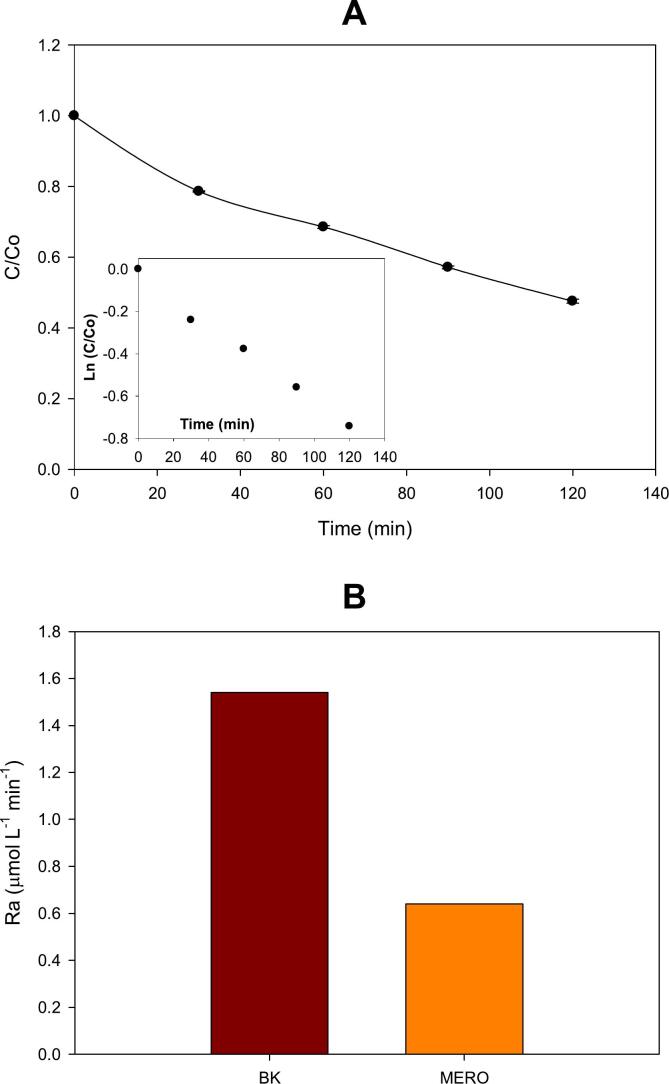
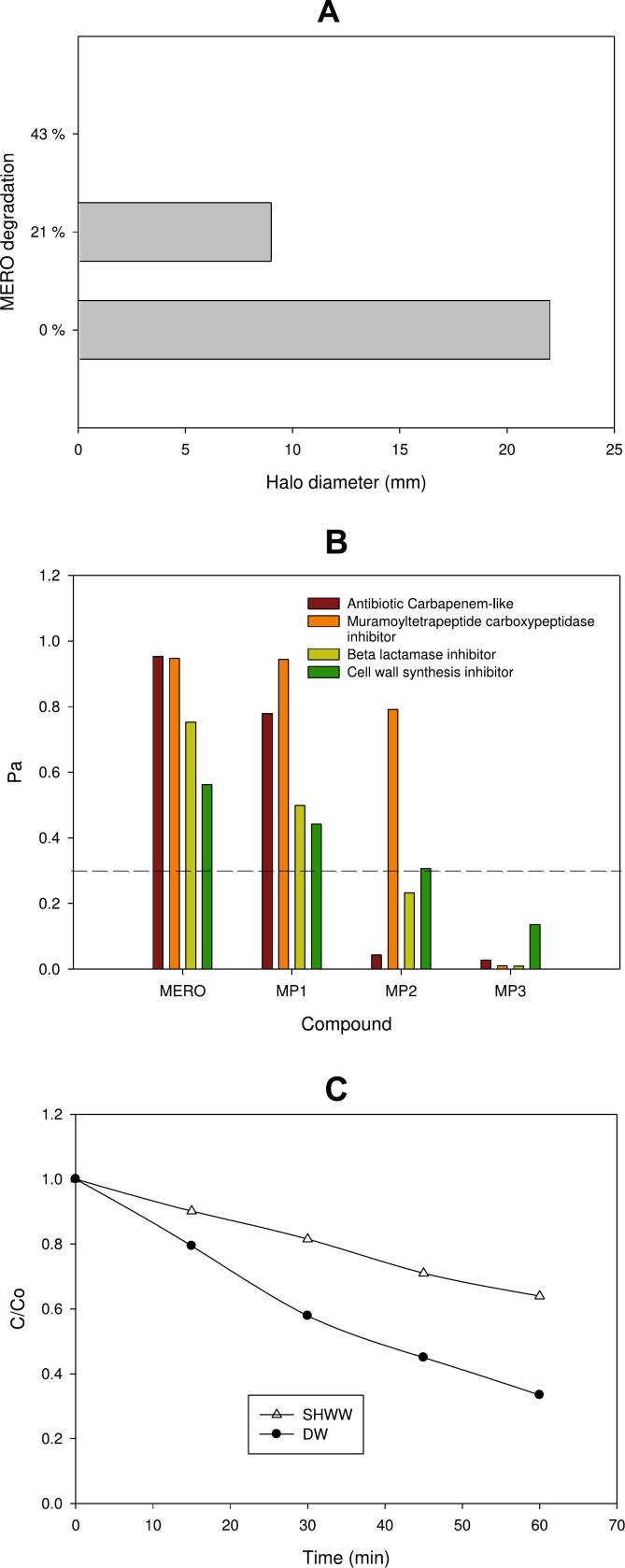
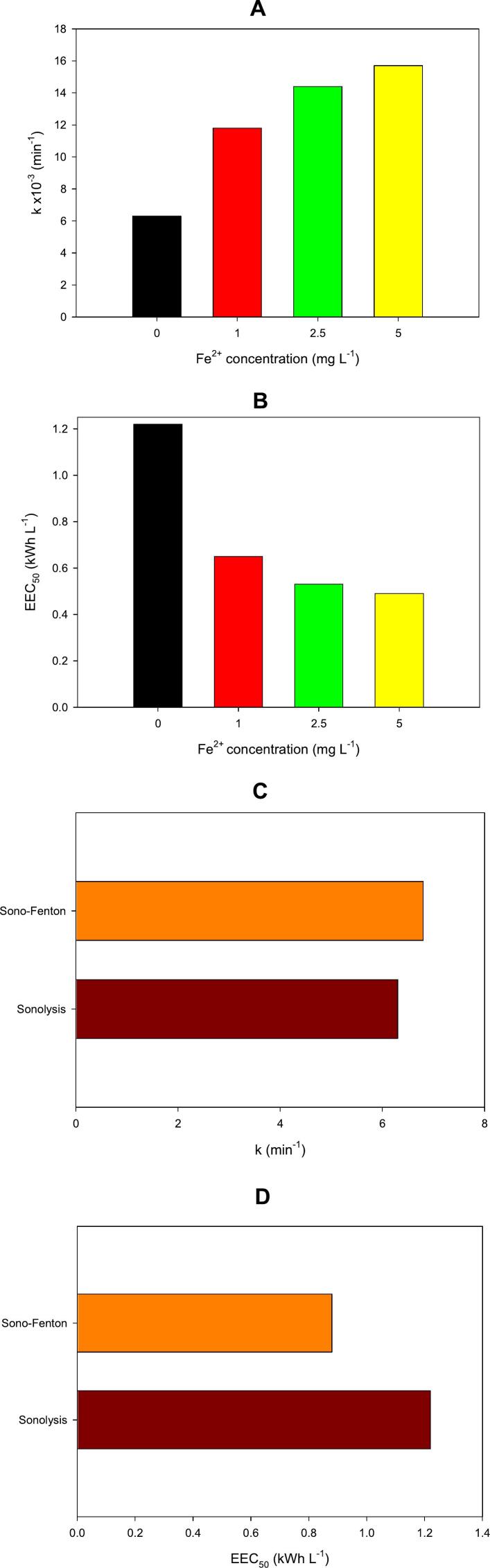
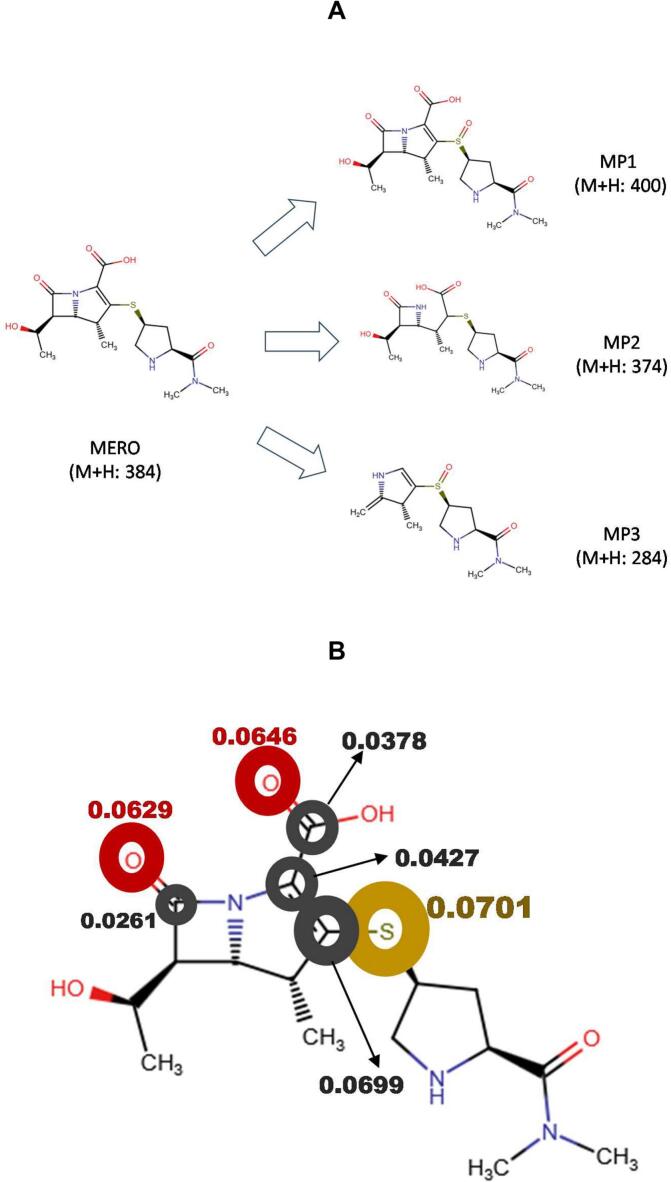
Carbapenems are potent antibiotics that reach sewage systems and then the environment, causing negative impacts. Thus, research on degrading processes to limit the carbapenem discharge in sewage systems is needed. Herein, fundamental aspects of high-frequency ultrasound alone and hybridized with the (photo)Fenton process to deal with a representative carbapenem antibiotic (meropenem, MERO) in water were considered. Initially, the action of ultrasound alone (at 578 kHz) on MERO in distilled water was tested for degradation, resulting in a partial removal (∼53 % after 120 min) and a moderate pseudo-first-order-kinetics (k: 6.3 × 10 min). Then, to enhance the MERO elimination ferrous ions were added to the ultrasound system, forming the sono-Fenton process. The increase in the ferrous ions concentration from 0 to 5 mg L augmented the rate of MERO degradation (k changed from 6.3 to 15.7 × 10 min) and diminished the electric energy consumption from 1.22 to 0.49 kWh L. Afterward, the MERO treatment by the hybridized sono-photo-Fenton process (i.e., ultrasound combined with Fe and UVA light) was evaluated, showing that the degradation efficiency was higher than by the sono-Fenton or photolysis (indeed, a synergistic index of 1.11 was obtained). Moreover, the sono-photo-Fenton process decreased the antimicrobial activity (against Staphylococcus aureus) after 30 min of treatment, indicating that the by-products did not have antimicrobial activity. The structures of primary by-products, at 50 % of MERO degradation, were elucidated through Fukui indices and LC-MS, finding that the pyrroline ring, β-lactam core, and thioether group on MERO were susceptible to the attacks of generated hydroxyl radicals (HO) and the primary transformations occurred on such moieties of the antibiotic. Finally, the treatment of MERO in synthetic hospital wastewater by the action of the sono-photo-Fenton process was assessed, degrading 36 % of MERO at 60 min of treatment. The results from this research indicated that the hybridized processes could be an alternative to be used in niche applications for treating carbapenem antibiotics even in complex matrices, transforming them into less problematic compounds.
碳青霉烯类是强效抗生素,会进入污水系统进而影响环境,造成负面影响。因此,需要开展降解工艺研究以限制碳青霉烯类在污水系统中的排放。本文研究了单独使用高频超声以及将其与(光)芬顿工艺联用处理水中代表性碳青霉烯类抗生素(美罗培南,MERO)的基本情况。首先,测试了单独超声(578 kHz)对蒸馏水中MERO的降解作用,结果实现了部分去除(120分钟后约为53%),且符合中度伪一级动力学(k:6.3×10⁻³ min⁻¹)。然后,为提高MERO的去除效果,向超声系统中添加亚铁离子,形成超声芬顿工艺。亚铁离子浓度从0增加到5 mg/L时,MERO的降解速率提高(k从6.3×10⁻³变为15.7×10⁻³ min⁻¹),电能消耗从1.22降低到0.49 kWh/L。随后,评估了超声光芬顿联用工艺(即超声与铁和UVA光结合)对MERO的处理效果,结果表明其降解效率高于超声芬顿工艺或光解工艺(实际上,协同指数为1.11)。此外,超声光芬顿工艺处理30分钟后降低了(对金黄色葡萄球菌的)抗菌活性,这表明副产物没有抗菌活性。通过福井指数和液相色谱 - 质谱联用技术阐明了MERO降解50%时主要副产物的结构,发现MERO上的吡咯啉环、β - 内酰胺核心及硫醚基团易受生成的羟基自由基(·OH)攻击,抗生素的主要转化发生在这些基团上。最后,评估了超声光芬顿工艺对合成医院废水中MERO的处理效果,处理60分钟时降解了36%的MERO。本研究结果表明,联用工艺可作为一种替代方法,用于处理碳青霉烯类抗生素的特定应用,即使在复杂基质中也能将其转化为问题较小的化合物。