Sun Yaoyao, Zhao Mingwei, Miao Heng, Qi Huijun
Department of Ophthalmology, Peking University People's Hospital, Beijing, China.
Lasers Med Sci. 2025 May 17;40(1):225. doi: 10.1007/s10103-025-04473-0.
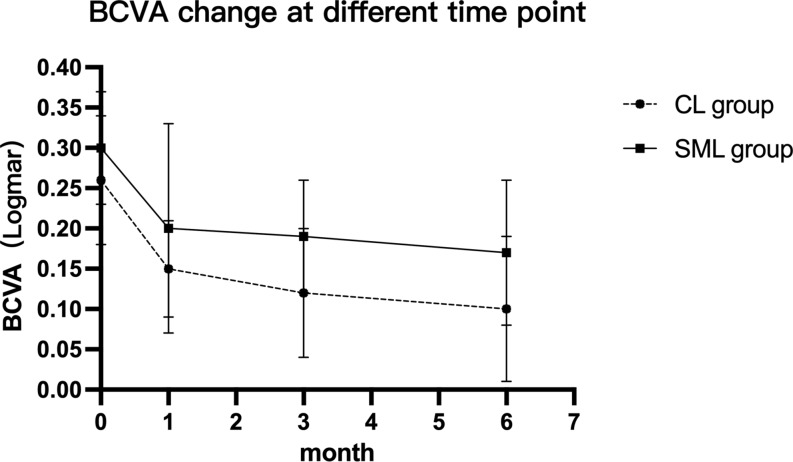
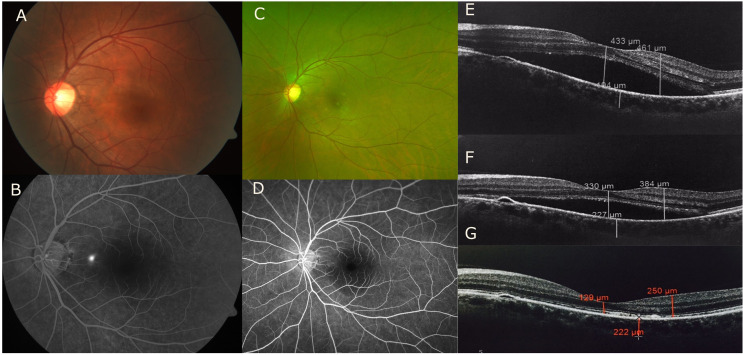
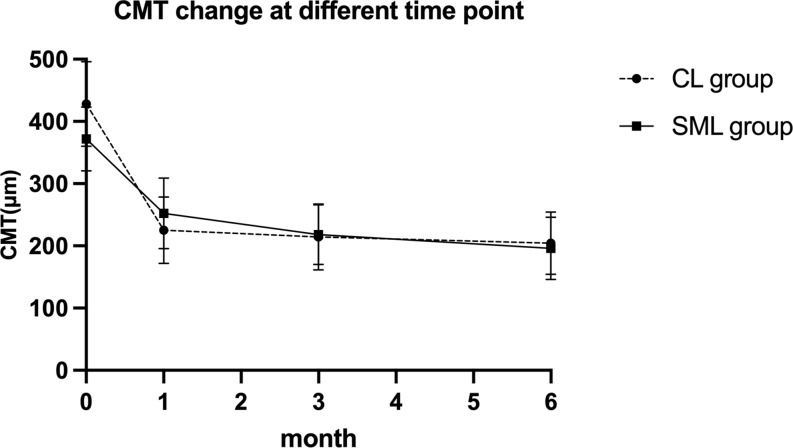
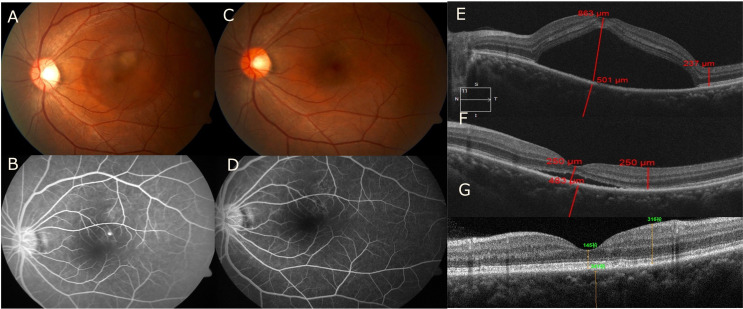
Subthreshold micropulse laser (SML) and conventional laser photocoagulation (CLP) have established efficacy in treating central serous chorioretinopathy (CSC), but systematic comparisons of their effectiveness, safety, and long-term outcomes remain lacking.We carried out this retrospective study. A total of 109 eyes from 109 CSC patients were included, with 53 eyes in the conventional laser group and 56 eyes in the SML group. The SML group was treated with a 577-nm wavelength laser, targeting areas of leakage and subretinal fluid (SRF). For patients without identifiable leakage points, the treatment area covered the SRF region. The conventional laser group received single-spot laser treatment with a laser spot reaction of ≤ grade 1, targeting leakage points identified by early-phase fluorescein angiography (FFA). Disease duration, leakage points on FFA, best-corrected visual acuity (BCVA) during follow-up, central macular thickness (CMT), SRF resolution, and safety were analyzed. The mean follow-up duration was 6.90 ± 2.77 months. The conventional laser group had a shorter mean disease duration compared to the SML group (P = 0.002), and there was a significant difference in the distribution of leakage points between the two groups (P = 0.000). At 6 months post-treatment, compared to baseline, the BCVA change was 0.24 ± 0.28 in the CL group (P = 0.02) and 0.19 ± 0.18 in the SML group (P = 0.04). There were no significant differences in BCVA between the two groups at any follow-up time point, though. CMT changes from baseline to final follow-up demonstrated a mean reduction of 228.00 ± 181.01 μm in the CL group versus 176.97 ± 143.39 μm in the SML group (both P < 0.001). No significant differences were observed in mean CMT or final OCT changes between the two groups at any follow-up time point. The complete SRF resolution rates were 83.01% in the conventional laser group and 87.50% in the SML group (P = 0.59).Both SML and CL treatments are safe and effective for CSC. CL therapy is a safe and effective option for patients with acute disease, clearly identifiable leakage points located > 250 μm from the foveal center, while SML is preferable for patients with longer disease duration, unclear leakage points, or leakage points located within 250 μm of the foveal center. Clinical trial number: Not applicable.
阈下微脉冲激光(SML)和传统激光光凝术(CLP)在治疗中心性浆液性脉络膜视网膜病变(CSC)方面已证实具有疗效,但它们在有效性、安全性和长期预后方面的系统比较仍然缺乏。我们开展了这项回顾性研究。共纳入109例CSC患者的109只眼,其中传统激光组53只眼,SML组56只眼。SML组采用波长577nm的激光治疗,靶向渗漏区域和视网膜下液(SRF)。对于无法确定渗漏点的患者,治疗区域覆盖SRF区域。传统激光组采用单点激光治疗,激光光斑反应≤1级,靶向早期荧光素血管造影(FFA)确定的渗漏点。分析疾病持续时间、FFA上的渗漏点、随访期间的最佳矫正视力(BCVA)、中心黄斑厚度(CMT)、SRF消退情况和安全性。平均随访时间为6.90±2.77个月。传统激光组的平均疾病持续时间比SML组短(P = 0.002),两组之间渗漏点的分布存在显著差异(P = 0.000)。治疗后6个月,与基线相比,CL组的BCVA变化为0.24±0.28(P = 0.02),SML组为0.19±0.18(P = 0.04)。不过,在任何随访时间点,两组之间的BCVA均无显著差异。从基线到最终随访的CMT变化显示,CL组平均降低228.00±181.01μm,SML组为176.97±143.39μm(均P<0.001)。在任何随访时间点,两组之间的平均CMT或最终OCT变化均未观察到显著差异。传统激光组的SRF完全消退率为83.01%,SML组为87.50%(P = 0.59)。SML和CL治疗对CSC均安全有效。CL疗法对于患有急性疾病、渗漏点清晰可辨且位于距黄斑中心>250μm的患者是一种安全有效的选择,而SML对于疾病持续时间较长、渗漏点不明确或渗漏点位于距黄斑中心250μm以内的患者更可取。临床试验编号:不适用。