Teng Teng, Huang Fang, Xu Ming, Li Xuemei, Zhang Lige, Yin Bangmin, Cai Yuping, Chen Fei, Zhang Luman, Zhang Jushuang, Geng Aoyi, Chen Chengzhi, Yu Xiaofei, Sui Jing, Zhu Zheng-Jiang, Guo Kai, Zhang Chenhong, Zhou Xinyu
Department of Psychiatry, Key Laboratory of Major Brain Disease and Aging Research (Ministry of Education), The First Affiliated Hospital of Chongqing Medical University, Chongqing, 400014, China.
Institute for Brain Science and Disease, Chongqing Medical University, Chongqing, 400016, China.
Microbiome. 2025 May 19;13(1):128. doi: 10.1186/s40168-025-02122-w.
Major depressive disorder (MDD) in children and adolescents is a growing global public health concern. Metabolic alterations in the microbiota-gut-brain (MGB) axis have been implicated in MDD pathophysiology, but their specific role in pediatric populations remains unclear.
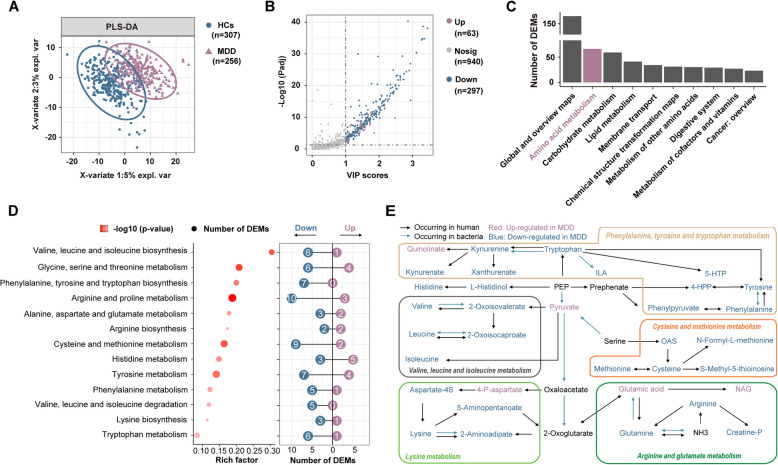
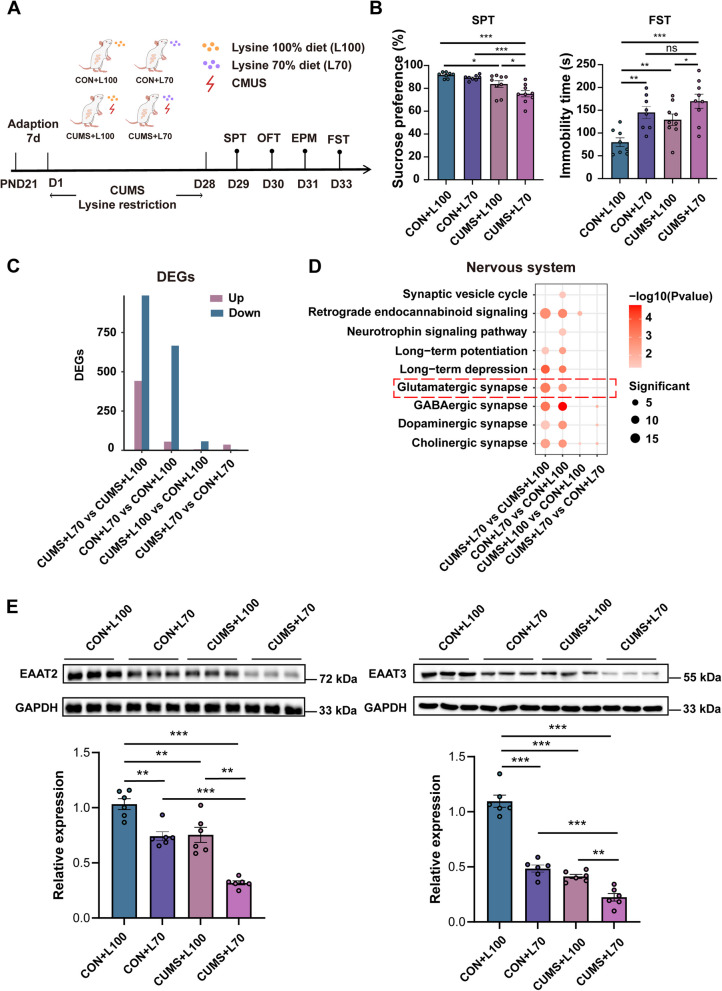
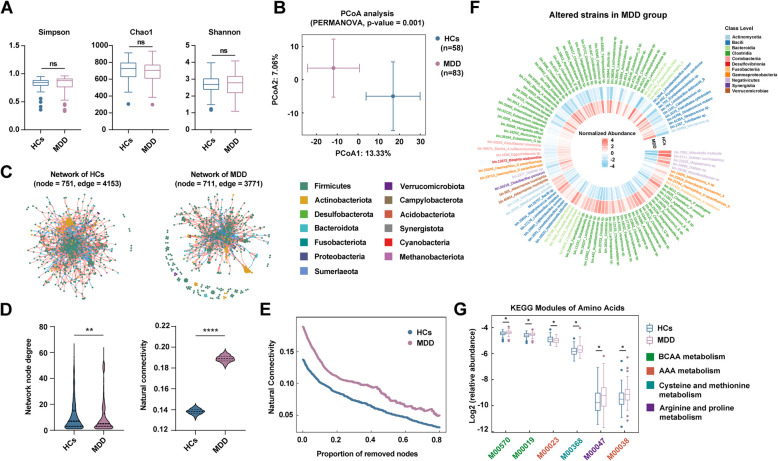
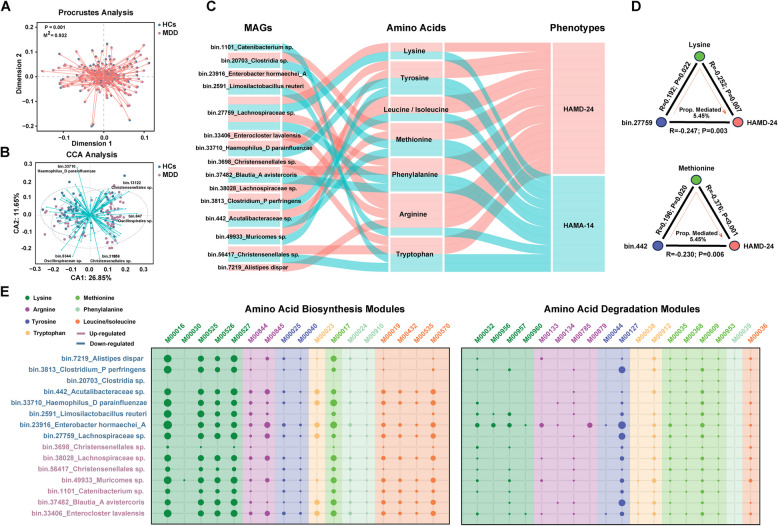
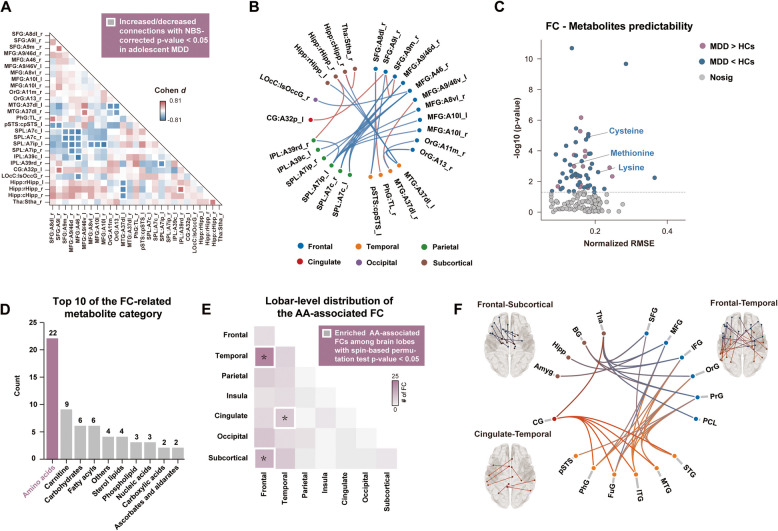
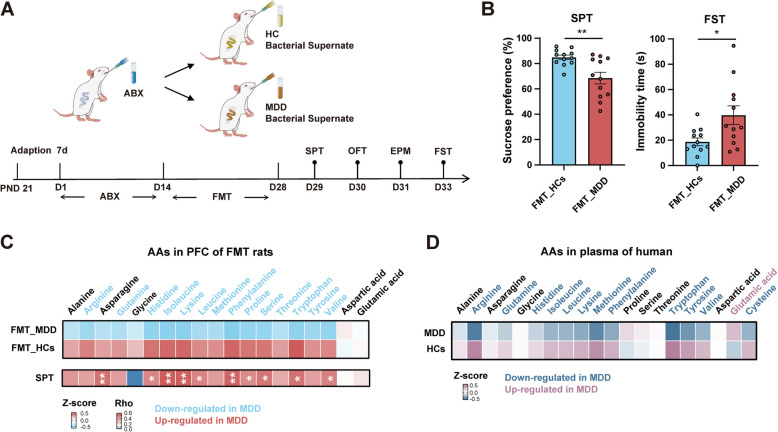
We conducted a multi-omics study on 256 MDD patients and 307 healthy controls in children and adolescents, integrating plasma metabolomics, fecal metagenomics, and resting-state functional magnetic resonance imaging (rs-fMRI) of the brain. KEGG enrichment analysis of 360 differential expressed metabolites (DEMs) indicated significant plasma amino acid (AA) metabolism deficiencies (p-value < 0.0001). We identified 58 MDD-enriched and 46 MDD-depleted strains, as well as 6 altered modules in amino acid metabolism in fecal metagenomics. Procrustes analysis revealed the association between the altered gut microbiome and circulating AA metabolism (p-value = 0.001, M = 0.932). Causal analyses suggested that plasma AAs might mediate the impact of altered gut microbiota on depressive and anxious symptoms. Additionally, rs-fMRI revealed that connectivity deficits in the frontal lobe are associated with depression and 22 DEMs in AA metabolism. Furthermore, transplantation of fecal microbiota from MDD patients to adolescent rats induced depressive-like behaviors and 14 amino acids deficiency in the prefrontal cortex (PFC). Moreover, the dietary lysine restriction increased depression susceptibility in adolescent rats by reducing the expression of excitatory amino acid transporters in the PFC.
Our findings highlight that gut microbiota alterations contribute to AAs deficiency, particularly lysine, which plays a crucial role in MDD pathogenesis in children and adolescents. Targeting AA metabolism may offer novel therapeutic strategies for pediatric depression. Video Abstract.
儿童和青少年的重度抑郁症(MDD)是一个日益受到全球关注的公共卫生问题。微生物群-肠道-脑(MGB)轴的代谢改变与MDD的病理生理学有关,但其在儿科人群中的具体作用仍不清楚。
我们对256名儿童和青少年MDD患者及307名健康对照者进行了一项多组学研究,整合了血浆代谢组学、粪便宏基因组学和大脑静息态功能磁共振成像(rs-fMRI)。对360种差异表达代谢物(DEM)的KEGG富集分析表明血浆氨基酸(AA)代谢存在显著缺陷(p值<0.0001)。我们在粪便宏基因组学中鉴定出58种MDD富集菌株和46种MDD缺失菌株,以及氨基酸代谢中的6个改变模块。Procrustes分析揭示了肠道微生物群改变与循环AA代谢之间的关联(p值 = 0.001,M = 0.932)。因果分析表明血浆AA可能介导肠道微生物群改变对抑郁和焦虑症状的影响。此外,rs-fMRI显示额叶的连接缺陷与抑郁症以及AA代谢中的22种DEM相关。此外,将MDD患者的粪便微生物群移植到青春期大鼠中会诱导出抑郁样行为和前额叶皮质(PFC)中14种氨基酸缺乏。此外,饮食中赖氨酸限制通过降低PFC中兴奋性氨基酸转运体的表达增加了青春期大鼠的抑郁易感性。
我们的研究结果强调肠道微生物群改变导致AA缺乏,尤其是赖氨酸,其在儿童和青少年MDD发病机制中起关键作用。针对AA代谢可能为儿童抑郁症提供新的治疗策略。视频摘要。