Bae Hosung, Nguyen Christy M, Ruiz-Orera Jorge, Mills Nicholas L, Snyder Michael P, Jang Cholsoon, Shah Svati H, Hübner Norbert, Seldin Marcus
Department of Biological Chemistry and Center of Epigenetics and Metabolism, School of Medicine, University of California Irvine School of Medicine (H.B., C.M.N., C.J., M.S.).
Cardiovascular and Metabolic Sciences, Max Delbrück Center for Molecular Medicine in the Helmholtz Association (MDC), Berlin, Germany (J.R.-O., N.H.).
Circ Res. 2025 May 23;136(11):1494-1506. doi: 10.1161/CIRCRESAHA.125.325515. Epub 2025 May 22.
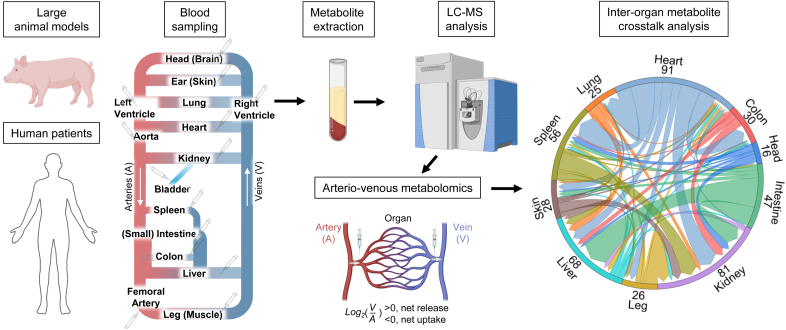
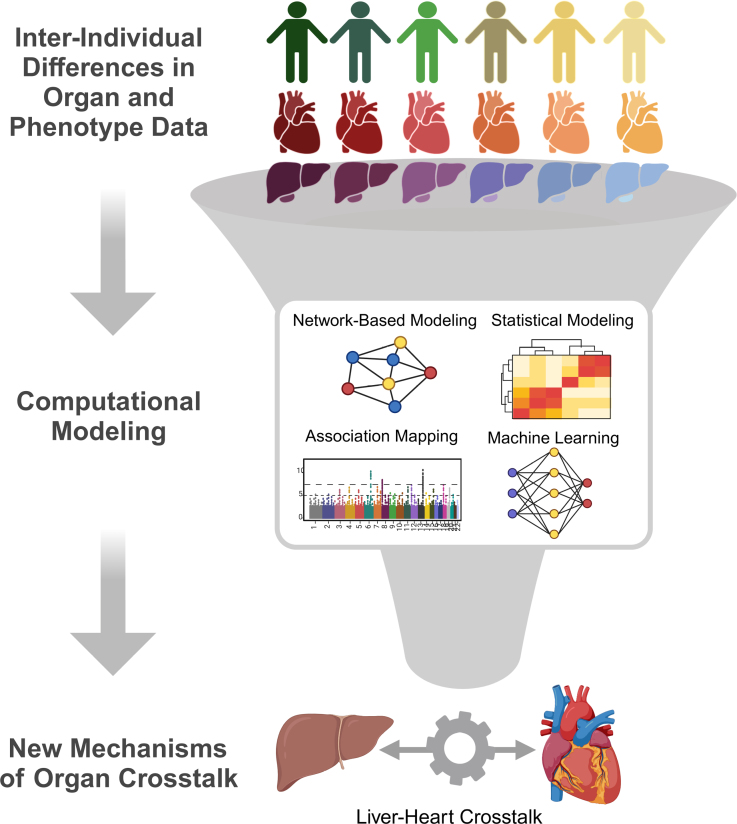
The heart does not work in isolation, with cardiac health and disease occurring through complex interactions between the heart with multiple organs. Furthermore, the integration of organ-specific lipid metabolism, blood pressure, insulin sensitivity, and inflammation involves a complex network of signaling pathways between many organs. Dysregulation in these communications is now recognized as a key contributor to many manifestations of cardiovascular disease. Mechanistic characterization of specific molecules mediating interorgan signaling has been pivotal in advancing our understanding of cardiovascular disease. The discovery of insulin, glucagon, and other hormones in the early 20th century illustrated the importance of communication between organs in maintaining physiological homeostasis. For example, elegant studies evaluating insulin signaling and its role in regulating glucose metabolism have shed light on its broader impact on cardiovascular health, hypertension, atherosclerosis, and other cardiovascular disease risks. Recent technological advances have revolutionized our understanding of interorgan signaling. Global approaches such as proteomics and metabolomics applications to blood have enabled the simultaneous profiling of thousands of circulating factors, revealing previously unknown signaling molecules and pathways. These large-scale studies have identified biomarkers linked to early stages of heart disease and offered new therapeutic targets. By understanding how specific cells in the heart interact with cells in other organs, such as the kidney or liver, researchers can identify key pathways that, when disrupted, lead to cardiovascular pathology. The ability to capture a more holistic view of the cardiovascular system positions interorgan signaling at the forefront of cardiovascular research. As we continue to refine our tools for mapping these complex networks, the insights gained hold the potential to not only improve early diagnosis but also to develop more targeted and effective treatments for cardiovascular disease. In this review, we discuss current approaches used to enhance our understanding of organ crosstalk with a specific emphasis on cardiac and cardiovascular physiology.
心脏并非独立运作,心脏的健康与疾病是通过心脏与多个器官之间复杂的相互作用而发生的。此外,器官特异性脂质代谢、血压、胰岛素敏感性和炎症的整合涉及多个器官之间复杂的信号通路网络。现在人们认识到,这些通讯的失调是心血管疾病许多表现的关键因素。介导器官间信号传导的特定分子的机制表征对于推进我们对心血管疾病的理解至关重要。20世纪初胰岛素、胰高血糖素和其他激素的发现说明了器官间通讯在维持生理稳态中的重要性。例如,评估胰岛素信号及其在调节葡萄糖代谢中作用的精妙研究揭示了其对心血管健康、高血压、动脉粥样硬化和其他心血管疾病风险的更广泛影响。最近的技术进步彻底改变了我们对器官间信号传导的理解。蛋白质组学和代谢组学等应用于血液的全局方法能够同时对数千种循环因子进行分析,揭示以前未知的信号分子和通路。这些大规模研究已经确定了与心脏病早期阶段相关的生物标志物,并提供了新的治疗靶点。通过了解心脏中的特定细胞如何与其他器官(如肾脏或肝脏)中的细胞相互作用,研究人员可以识别出关键通路,这些通路一旦被破坏就会导致心血管病理变化。能够更全面地了解心血管系统使器官间信号传导处于心血管研究的前沿。随着我们不断完善绘制这些复杂网络的工具,所获得的见解不仅有可能改善早期诊断,还有可能开发出更有针对性和更有效的心血管疾病治疗方法。在这篇综述中,我们讨论了目前用于增进我们对器官间相互作用理解的方法,特别强调心脏和心血管生理学。