• 文献检索
  • 文档翻译
  • 深度研究
  • 学术资讯
  • Suppr Zotero 插件Zotero 插件
  • 邀请有礼
  • 套餐&价格
  • 历史记录
应用&插件
Suppr Zotero 插件Zotero 插件浏览器插件Mac 客户端Windows 客户端微信小程序
定价
高级版会员购买积分包购买API积分包
服务
文献检索文档翻译深度研究API 文档MCP 服务
关于我们
关于 Suppr公司介绍联系我们用户协议隐私条款
关注我们

Suppr 超能文献

核心技术专利:CN118964589B侵权必究
粤ICP备2023148730 号-1Suppr @ 2026

文献检索

告别复杂PubMed语法,用中文像聊天一样搜索,搜遍4000万医学文献。AI智能推荐,让科研检索更轻松。

立即免费搜索

文件翻译

保留排版,准确专业,支持PDF/Word/PPT等文件格式,支持 12+语言互译。

免费翻译文档

深度研究

AI帮你快速写综述,25分钟生成高质量综述,智能提取关键信息,辅助科研写作。

立即免费体验

中国通过增加水生食物消费实现温室气体减排的潜力

Greenhouse gas emissions reduction potential by increasing aquatic food consumption in China.

作者信息

Chen Yixin, Wu Feng, Zeng Hui

机构信息

School of Urban Planning and Design, Shenzhen Graduate School, Peking University, Shenzhen, China.

出版信息

NPJ Sci Food. 2025 May 24;9(1):85. doi: 10.1038/s41538-025-00457-0.

DOI:10.1038/s41538-025-00457-0
PMID:40413185
原文链接:https://pmc.ncbi.nlm.nih.gov/articles/PMC12103600/
Abstract

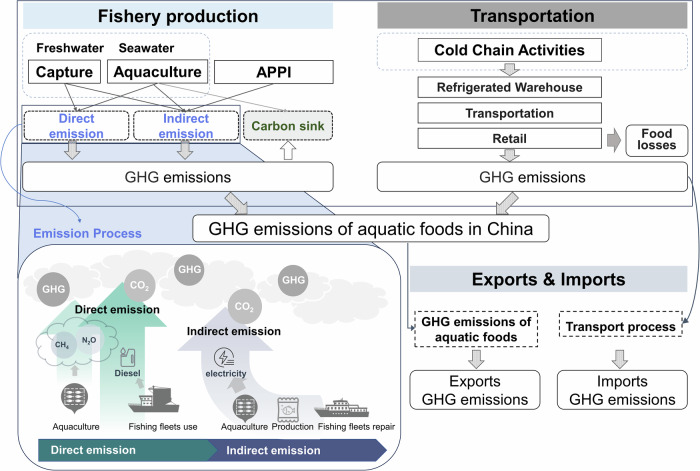
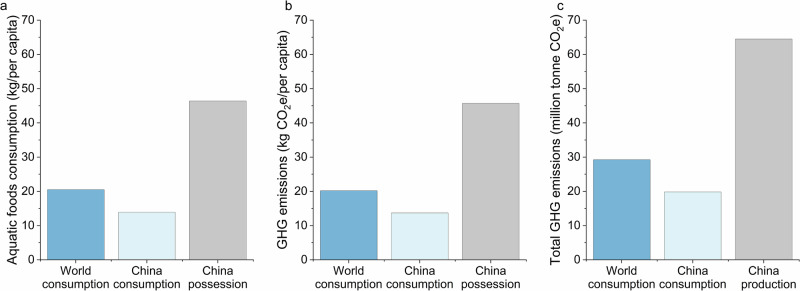
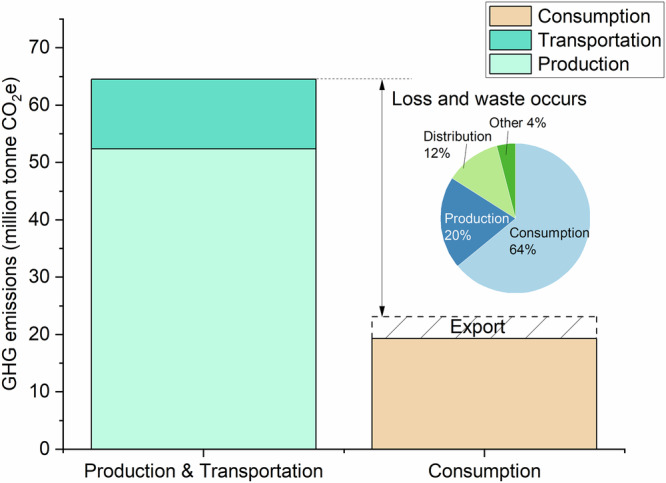
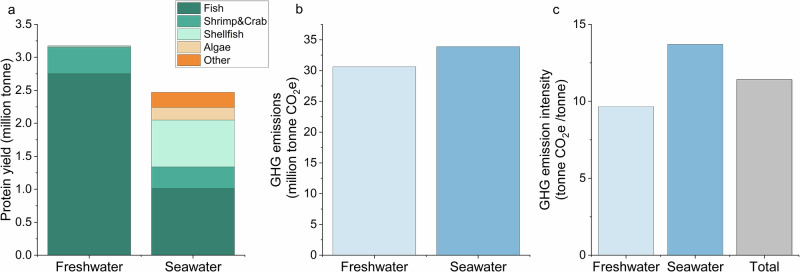
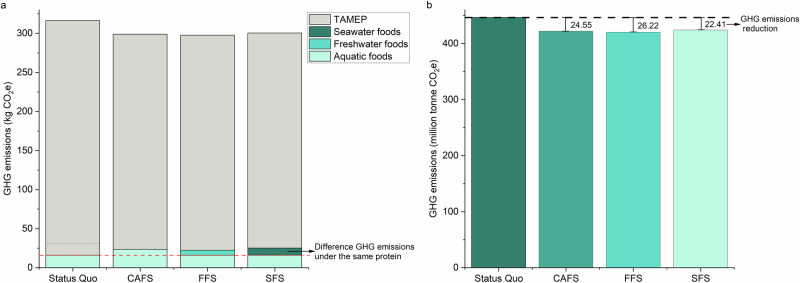
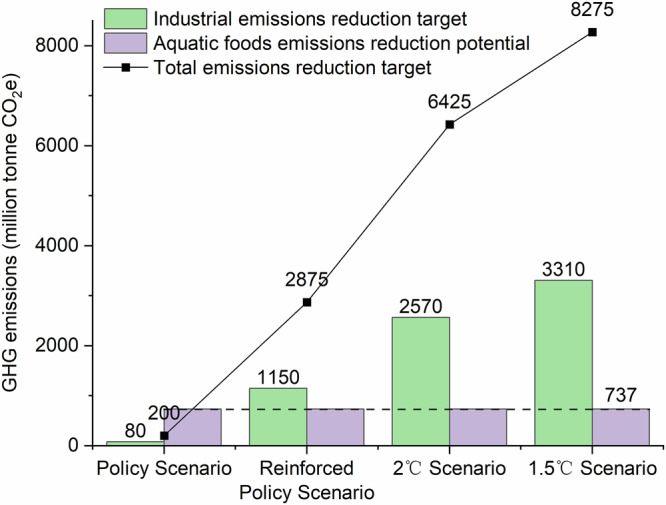
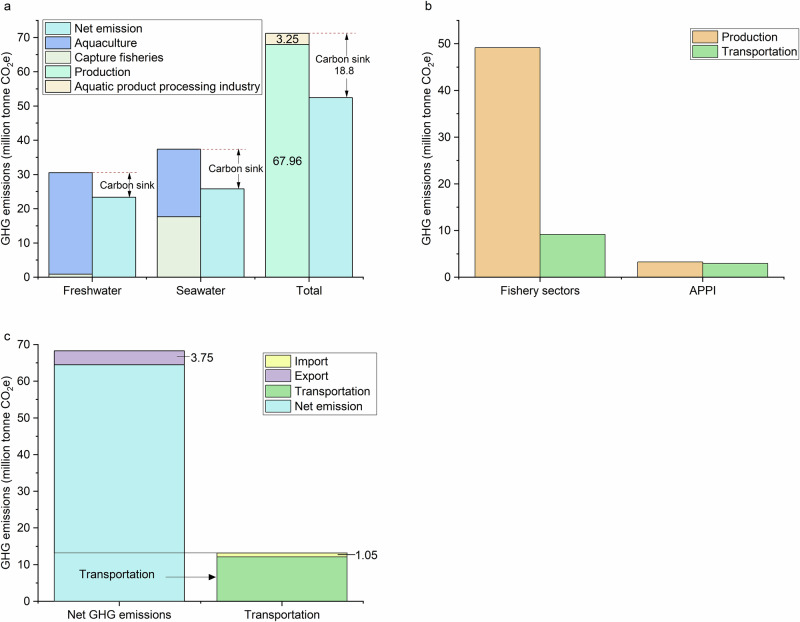
Aquatic food production plays a crucial role in ensuring global food security, improving the quality of life, and reducing greenhouse gas (GHG) emissions. In this study, we have comprehensively evaluated the GHG emissions associated with China's fisheries, considering both production and consumption. Scenario analysis was used to compare the potential of GHG emissions reduction under two conditions: maintaining current protein intake levels, and increasing the consumption of aquatic foods to align with global average. Our findings reveal that in 2020, the total GHG emissions from aquatic foods in China reached approximately 64.51 million tonnes COe (45.69 kg COe/per capita). However, when calculated from the consumption side, emissions amounted to just 19.32 million tonnes COe (13.69 kg COe/per capita). Increasing the consumption of aquatic foods could reduce GHG emissions by 24.55 million tonnes COe (17.39 kg COe/per capita). Effective strategies to achieve these reductions include minimizing waste in production and consumption, modifying dietary habits, and substituting terrestrial animal meat with aquatic foods.

摘要

水产食品生产在确保全球粮食安全、提高生活质量和减少温室气体(GHG)排放方面发挥着关键作用。在本研究中,我们全面评估了与中国渔业相关的温室气体排放,同时考虑了生产和消费两个方面。情景分析用于比较两种情况下的温室气体减排潜力:维持当前蛋白质摄入量水平,以及增加水产食品消费以达到全球平均水平。我们的研究结果显示,2020年中国水产食品的温室气体排放总量约为6451万吨二氧化碳当量(人均45.69千克二氧化碳当量)。然而,从消费端计算,排放量仅为1932万吨二氧化碳当量(人均13.69千克二氧化碳当量)。增加水产食品消费可减少2455万吨二氧化碳当量(人均17.39千克二氧化碳当量)的温室气体排放。实现这些减排的有效策略包括尽量减少生产和消费中的浪费、改变饮食习惯,以及用水产食品替代陆生动物肉类。
https://cdn.ncbi.nlm.nih.gov/pmc/blobs/f770/12103600/c1c72481b82f/41538_2025_457_Fig7_HTML.jpg
https://cdn.ncbi.nlm.nih.gov/pmc/blobs/f770/12103600/8d4d58b4d1aa/41538_2025_457_Fig1_HTML.jpg
https://cdn.ncbi.nlm.nih.gov/pmc/blobs/f770/12103600/12c176ec5c01/41538_2025_457_Fig2_HTML.jpg
https://cdn.ncbi.nlm.nih.gov/pmc/blobs/f770/12103600/a16a28fd0c4d/41538_2025_457_Fig3_HTML.jpg
https://cdn.ncbi.nlm.nih.gov/pmc/blobs/f770/12103600/36ca27dfdc9d/41538_2025_457_Fig4_HTML.jpg
https://cdn.ncbi.nlm.nih.gov/pmc/blobs/f770/12103600/db8e3ab864da/41538_2025_457_Fig5_HTML.jpg
https://cdn.ncbi.nlm.nih.gov/pmc/blobs/f770/12103600/1da1f0f19e37/41538_2025_457_Fig6_HTML.jpg
https://cdn.ncbi.nlm.nih.gov/pmc/blobs/f770/12103600/c1c72481b82f/41538_2025_457_Fig7_HTML.jpg
https://cdn.ncbi.nlm.nih.gov/pmc/blobs/f770/12103600/8d4d58b4d1aa/41538_2025_457_Fig1_HTML.jpg
https://cdn.ncbi.nlm.nih.gov/pmc/blobs/f770/12103600/12c176ec5c01/41538_2025_457_Fig2_HTML.jpg
https://cdn.ncbi.nlm.nih.gov/pmc/blobs/f770/12103600/a16a28fd0c4d/41538_2025_457_Fig3_HTML.jpg
https://cdn.ncbi.nlm.nih.gov/pmc/blobs/f770/12103600/36ca27dfdc9d/41538_2025_457_Fig4_HTML.jpg
https://cdn.ncbi.nlm.nih.gov/pmc/blobs/f770/12103600/db8e3ab864da/41538_2025_457_Fig5_HTML.jpg
https://cdn.ncbi.nlm.nih.gov/pmc/blobs/f770/12103600/1da1f0f19e37/41538_2025_457_Fig6_HTML.jpg
https://cdn.ncbi.nlm.nih.gov/pmc/blobs/f770/12103600/c1c72481b82f/41538_2025_457_Fig7_HTML.jpg

相似文献

1
Greenhouse gas emissions reduction potential by increasing aquatic food consumption in China.中国通过增加水生食物消费实现温室气体减排的潜力
NPJ Sci Food. 2025 May 24;9(1):85. doi: 10.1038/s41538-025-00457-0.
2
Trends in greenhouse gas emissions from consumption and production of animal food products - implications for long-term climate targets.动物食品消费和生产导致温室气体排放的趋势-对长期气候目标的影响。
Animal. 2013 Feb;7(2):330-40. doi: 10.1017/S1751731112001498. Epub 2012 Jul 13.
3
Comparative lifecycle greenhouse gas emissions and their reduction potential for typical petrochemical enterprises in China.中国典型石化企业生命周期温室气体排放比较及减排潜力。
J Environ Sci (China). 2022 Jun;116:125-138. doi: 10.1016/j.jes.2021.05.031. Epub 2022 Jan 11.
4
Aging Increases Global Annual Food Greenhouse Gas Emissions up to 300 Million Tonnes by 2100.到 2100 年,老龄化将使全球年度食物温室气体排放量增加多达 3 亿吨。
Environ Sci Technol. 2024 Apr 2;58(13):5784-5795. doi: 10.1021/acs.est.3c06268. Epub 2024 Mar 20.
5
A half-century of production-phase greenhouse gas emissions from food loss & waste in the global food supply chain.全球食品供应链中食物损失和浪费的生产阶段温室气体排放长达半个世纪。
Sci Total Environ. 2016 Nov 15;571:721-9. doi: 10.1016/j.scitotenv.2016.07.041. Epub 2016 Jul 16.
6
Pressure on Global Forests: Implications of Rising Vegetable Oils Consumption Under the EAT-Lancet Diet.全球森林面临的压力:EAT-柳叶刀饮食模式下植物油消费上升的影响
Glob Chang Biol. 2025 Feb;31(2):e70077. doi: 10.1111/gcb.70077.
7
The Minderoo-Monaco Commission on Plastics and Human Health.美诺集团-摩纳哥基金会塑料与人体健康委员会
Ann Glob Health. 2023 Mar 21;89(1):23. doi: 10.5334/aogh.4056. eCollection 2023.
8
Cities' Role in Mitigating United States Food System Greenhouse Gas Emissions.城市在减轻美国食品系统温室气体排放中的作用。
Environ Sci Technol. 2018 May 15;52(10):5545-5554. doi: 10.1021/acs.est.7b02600. Epub 2018 May 2.
9
Potential reduction of greenhouse gas emissions from pig production in China on the basis of households' pork consumption.基于家庭猪肉消费,减少中国生猪养殖温室气体排放的潜力。
Environ Int. 2023 Jul;177:108008. doi: 10.1016/j.envint.2023.108008. Epub 2023 Jun 3.
10
Galyean appreciation club review: a holistic perspective of the societal relevance of beef production and its impacts on climate change.加利恩欣赏俱乐部评论:从整体角度看待牛肉生产的社会相关性及其对气候变化的影响。
J Anim Sci. 2023 Jan 3;101. doi: 10.1093/jas/skad024.

本文引用的文献

1
A Decision Framework for Selecting Critically Important Nutrients from Aquatic Foods.从水产食物中选择极重要营养素的决策框架。
Curr Environ Health Rep. 2023 Jun;10(2):172-183. doi: 10.1007/s40572-023-00397-5. Epub 2023 May 25.
2
Assessment of greenhouse gases emissions and intensity from Chinese marine aquaculture in the past three decades.评估过去三十年中国海水养殖业的温室气体排放及其强度。
J Environ Manage. 2023 Mar 1;329:117025. doi: 10.1016/j.jenvman.2022.117025. Epub 2022 Dec 21.
3
Current and Future Potential of Shellfish and Algae Mariculture Carbon Sinks in China.
贝类和海藻养殖碳汇在中国的现状和未来潜力。
Int J Environ Res Public Health. 2022 Jul 21;19(14):8873. doi: 10.3390/ijerph19148873.
4
The Carbon Catalogue, carbon footprints of 866 commercial products from 8 industry sectors and 5 continents.《碳足迹目录》,涵盖来自 5 大洲 8 个行业的 866 种商业产品的碳足迹。
Sci Data. 2022 Mar 16;9(1):87. doi: 10.1038/s41597-022-01178-9.
5
The contribution of fisheries and aquaculture to the global protein supply.渔业和水产养殖对全球蛋白质供应的贡献。
Food Secur. 2022;14(3):805-827. doi: 10.1007/s12571-021-01246-9. Epub 2022 Jan 20.
6
Environmental performance of blue foods.蓝色食物的环境表现。
Nature. 2021 Sep;597(7876):360-365. doi: 10.1038/s41586-021-03889-2. Epub 2021 Sep 15.
7
Blue food demand across geographic and temporal scales.蓝色食物在地理和时间尺度上的需求。
Nat Commun. 2021 Sep 15;12(1):5413. doi: 10.1038/s41467-021-25516-4.
8
Quantifying greenhouse gas emissions from global aquaculture.量化全球水产养殖的温室气体排放。
Sci Rep. 2020 Jul 15;10(1):11679. doi: 10.1038/s41598-020-68231-8.
9
Global warming has increased global economic inequality.全球变暖加剧了全球经济不平等。
Proc Natl Acad Sci U S A. 2019 May 14;116(20):9808-9813. doi: 10.1073/pnas.1816020116. Epub 2019 Apr 22.
10
Food in the Anthropocene: the EAT-Lancet Commission on healthy diets from sustainable food systems.人类世的食物:EAT-柳叶刀可持续食物系统健康饮食委员会
Lancet. 2019 Feb 2;393(10170):447-492. doi: 10.1016/S0140-6736(18)31788-4. Epub 2019 Jan 16.