Stanford University, Stanford, CA, USA.
International Food Policy Research Institute (IFPRI), New Delhi, India.
Nat Commun. 2021 Sep 15;12(1):5413. doi: 10.1038/s41467-021-25516-4.
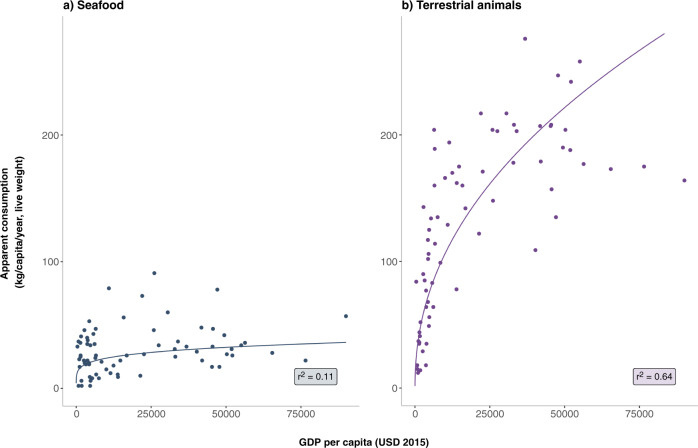
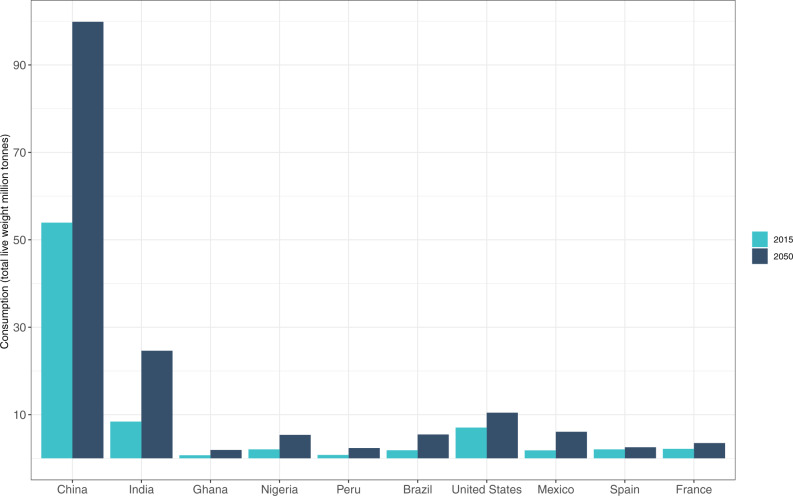
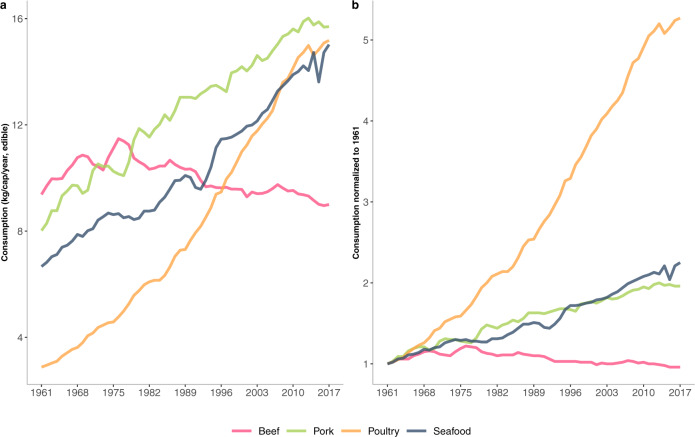
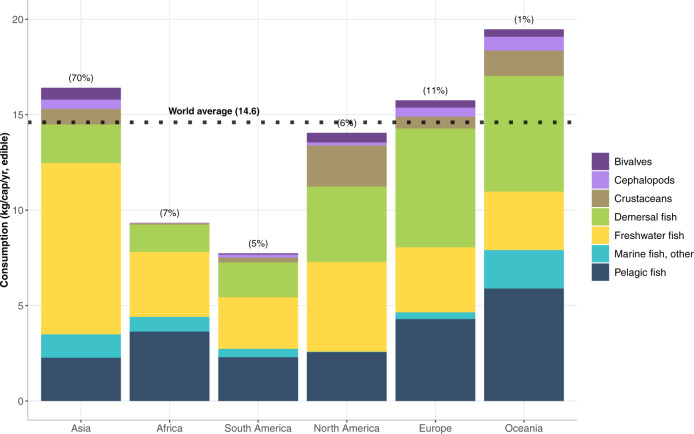
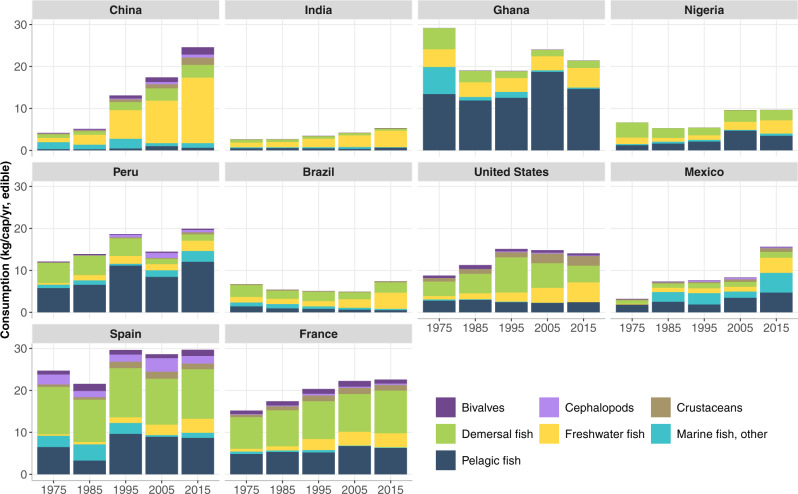
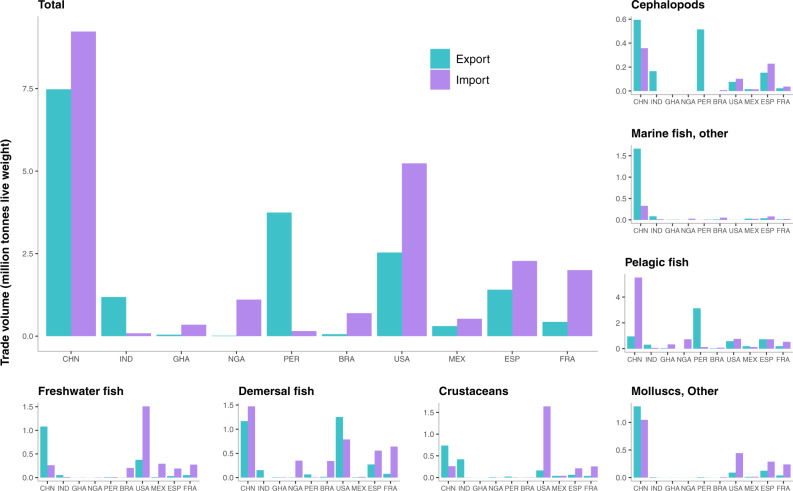
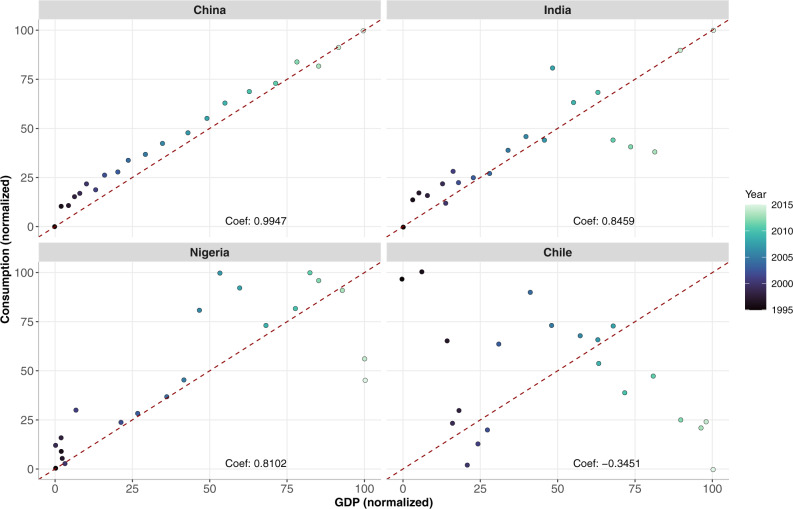
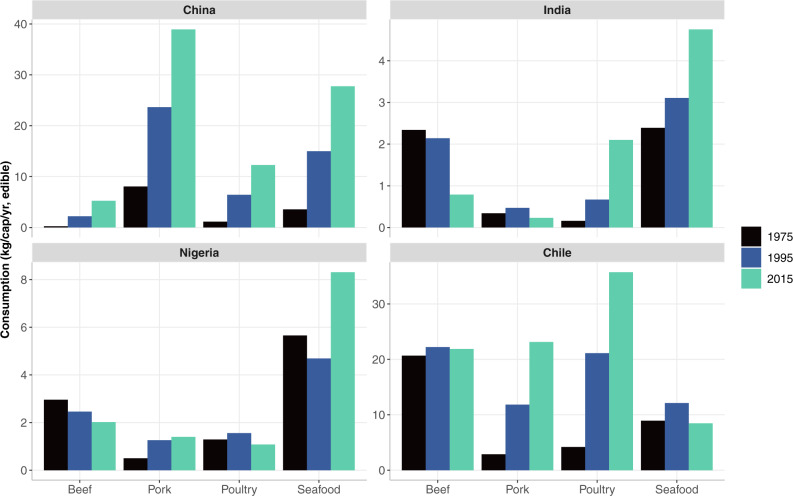
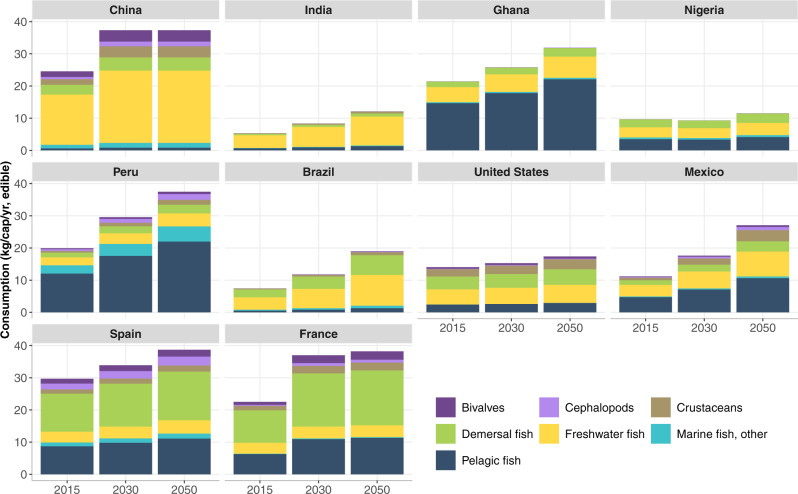
Numerous studies have focused on the need to expand production of 'blue foods', defined as aquatic foods captured or cultivated in marine and freshwater systems, to meet rising population- and income-driven demand. Here we analyze the roles of economic, demographic, and geographic factors and preferences in shaping blue food demand, using secondary data from FAO and The World Bank, parameters from published models, and case studies at national to sub-national scales. Our results show a weak cross-sectional relationship between per capita income and consumption globally when using an aggregate fish metric. Disaggregation by fish species group reveals distinct geographic patterns; for example, high consumption of freshwater fish in China and pelagic fish in Ghana and Peru where these fish are widely available, affordable, and traditionally eaten. We project a near doubling of global fish demand by mid-century assuming continued growth in aquaculture production and constant real prices for fish. Our study concludes that nutritional and environmental consequences of rising demand will depend on substitution among fish groups and other animal source foods in national diets.
许多研究都集中在需要扩大“蓝色食品”的生产上,蓝色食品是指在海洋和淡水系统中捕获或养殖的水生食品,以满足人口增长和收入驱动的需求。在这里,我们使用粮农组织和世界银行的二手数据、已发表模型中的参数以及国家到国家以下各级别的案例研究,分析了经济、人口和地理因素以及偏好在塑造蓝色食品需求方面的作用。我们的研究结果表明,当使用鱼类总量指标时,全球人均收入与消费之间的横截面关系较弱。按鱼类物种组进行细分则揭示了不同的地理模式;例如,中国对淡水鱼的消费较高,加纳和秘鲁对海洋鱼类的消费也较高,因为这些鱼类在这些国家广泛供应、价格实惠且传统上被食用。假设水产养殖产量持续增长且鱼类实际价格保持不变,我们预计到本世纪中叶,全球鱼类需求将接近翻一番。我们的研究结论是,需求增长带来的营养和环境后果将取决于各国饮食中鱼类群体和其他动物源食品的替代情况。