Bioinformatics Division, TNLIST and Department of Automation, Tsinghua University, Beijing 100084, China.
Sci Rep. 2012;2:936. doi: 10.1038/srep00936. Epub 2012 Dec 6.
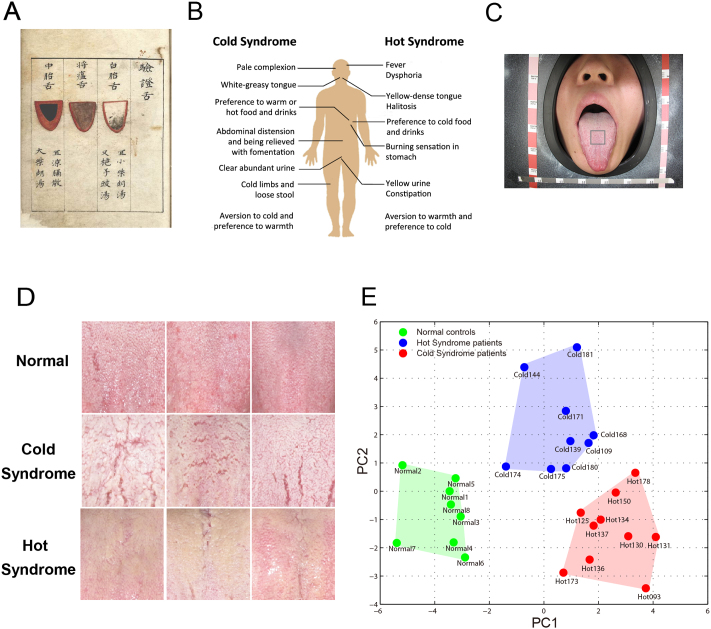
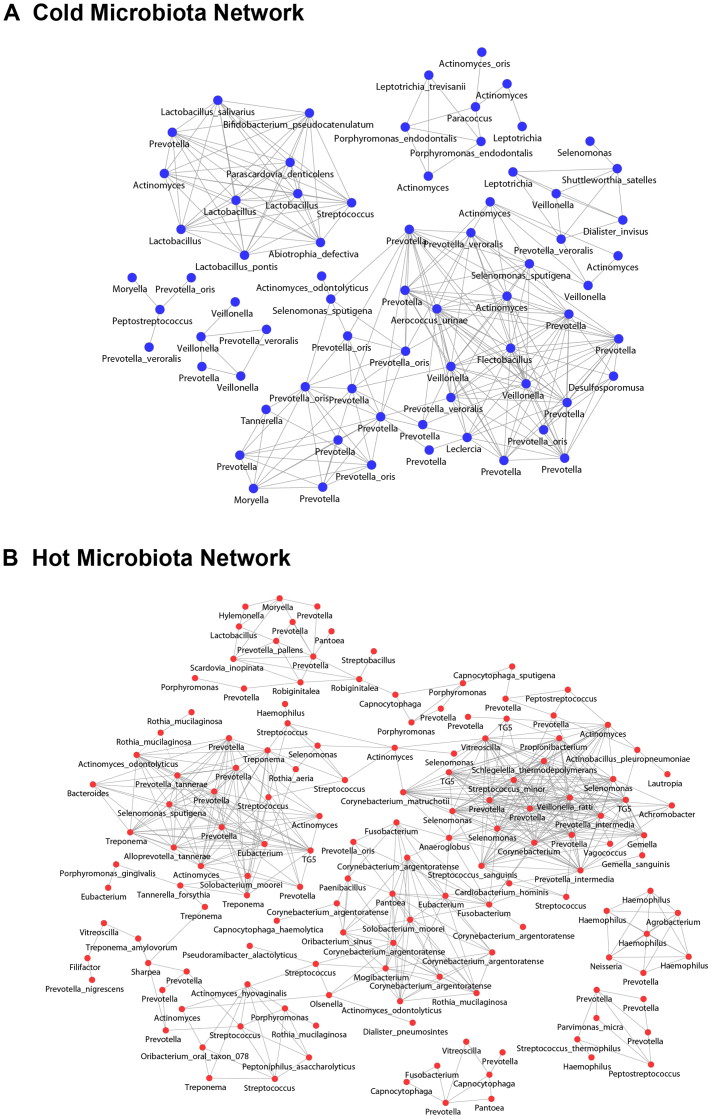
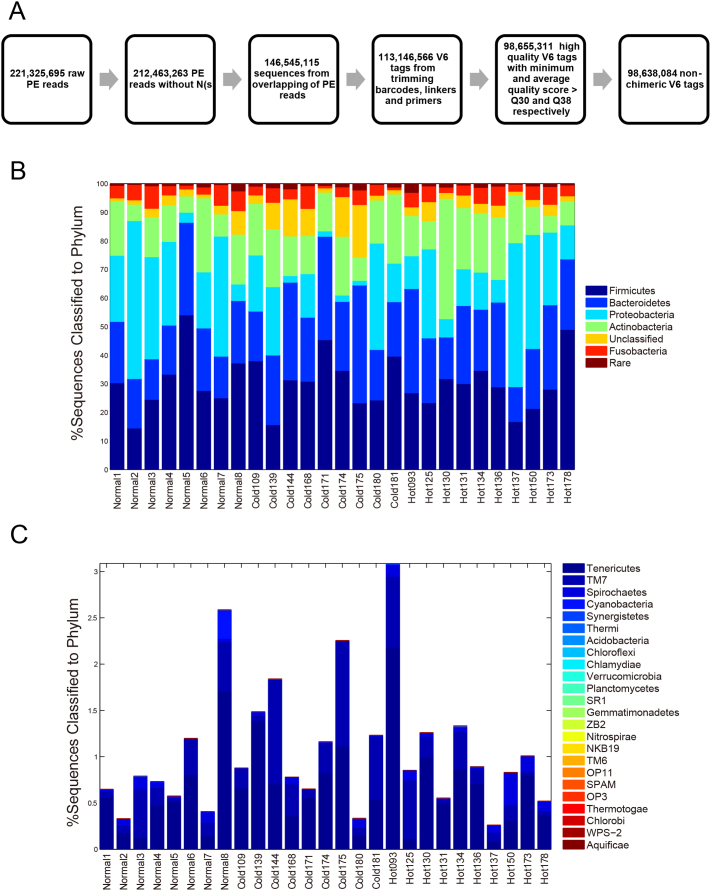
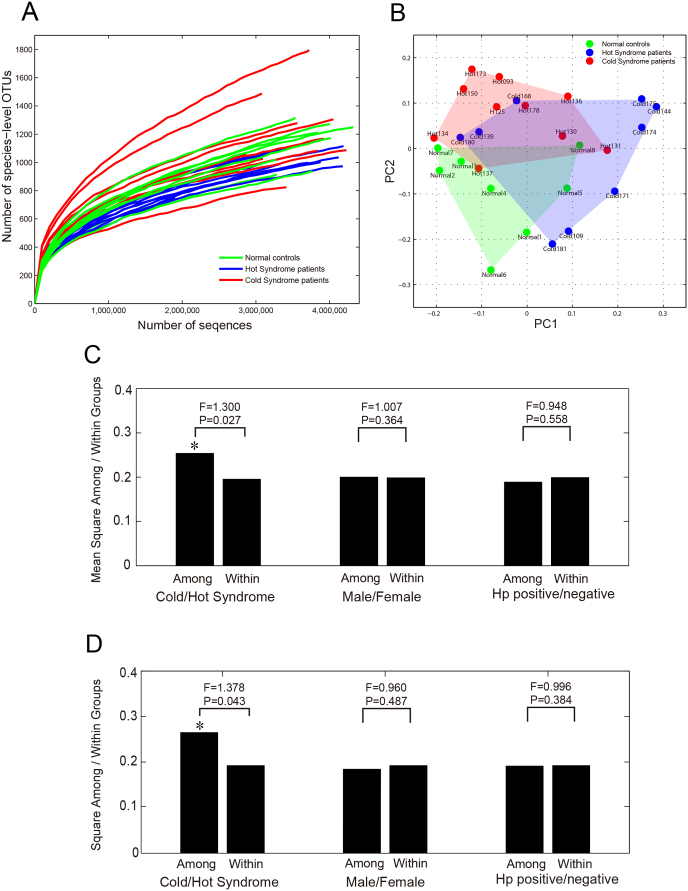
Tongue diagnosis is a unique method in traditional Chinese medicine (TCM). This is the first investigation on the association between traditional tongue diagnosis and the tongue coating microbiome using next-generation sequencing. The study included 19 gastritis patients with a typical white-greasy or yellow-dense tongue coating corresponding to TCM Cold or Hot Syndrome respectively, as well as eight healthy volunteers. An Illumina paired-end, double-barcode 16S rRNA sequencing protocol was designed to profile the tongue-coating microbiome, from which approximately 3.7 million V6 tags for each sample were obtained. We identified 123 and 258 species-level OTUs that were enriched in patients with Cold/Hot Syndromes, respectively, representing "Cold Microbiota" and "Hot Microbiota". We further constructed the tongue microbiota-imbalanced networks associated with Cold/Hot Syndromes. The results reveal an important connection between the tongue-coating microbiome and traditional tongue diagnosis, and illustrate the potential of the tongue-coating microbiome as a novel holistic biomarker for characterizing patient subtypes.
舌诊是中医(TCM)的一种独特方法。本研究首次采用下一代测序技术研究传统舌诊与舌涂层微生物组之间的关联。该研究纳入了 19 名胃炎患者,他们的舌涂层分别对应中医的寒证或热证,具有典型的白腻或黄厚舌苔,以及 8 名健康志愿者。我们设计了一个 Illumina 配对末端、双条码 16S rRNA 测序方案来分析舌涂层微生物组,每个样本大约获得 370 万个 V6 标签。我们分别在寒证/热证患者中鉴定到 123 和 258 个种水平的 OTUs,分别代表“寒菌群”和“热菌群”。我们进一步构建了与寒证/热证相关的舌微生物失衡网络。研究结果揭示了舌涂层微生物组与传统舌诊之间的重要联系,并说明了舌涂层微生物组作为一种新型整体生物标志物来描述患者亚型的潜力。