Department of College of Traditional Chinese Medicine, Shanghai University of Traditional Chinese Medicine, Shanghai, China.
School of Computer Science, Fudan University, Shanghai, China.
Front Cell Infect Microbiol. 2024 Nov 4;14:1477638. doi: 10.3389/fcimb.2024.1477638. eCollection 2024.
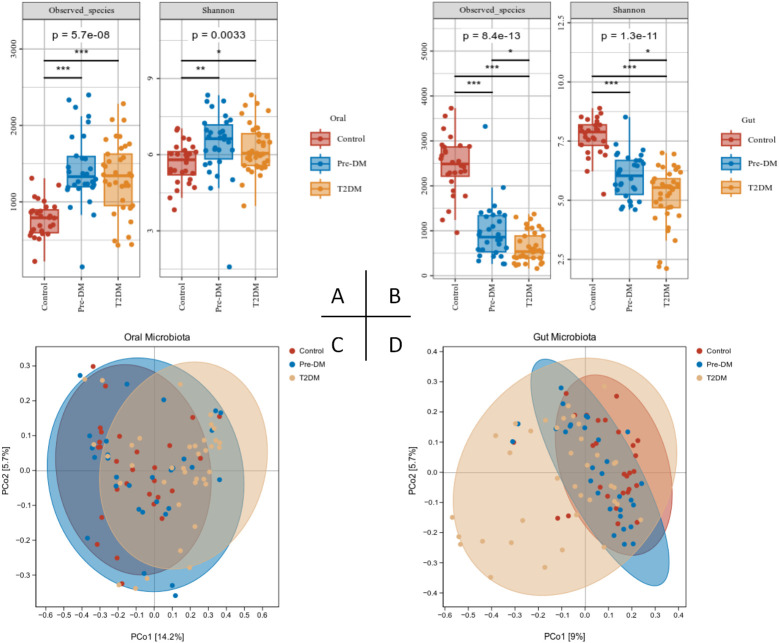
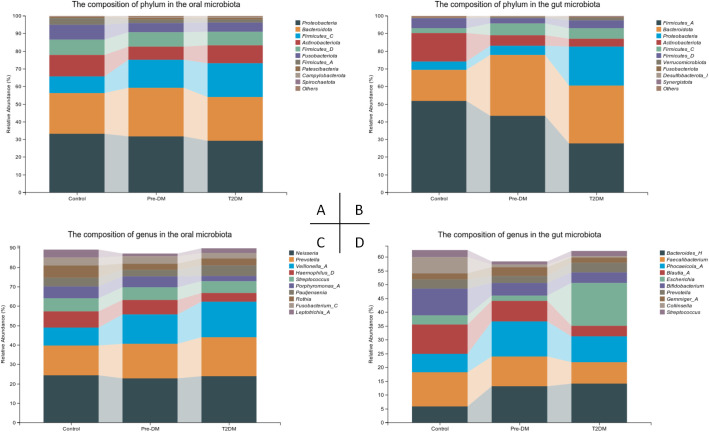
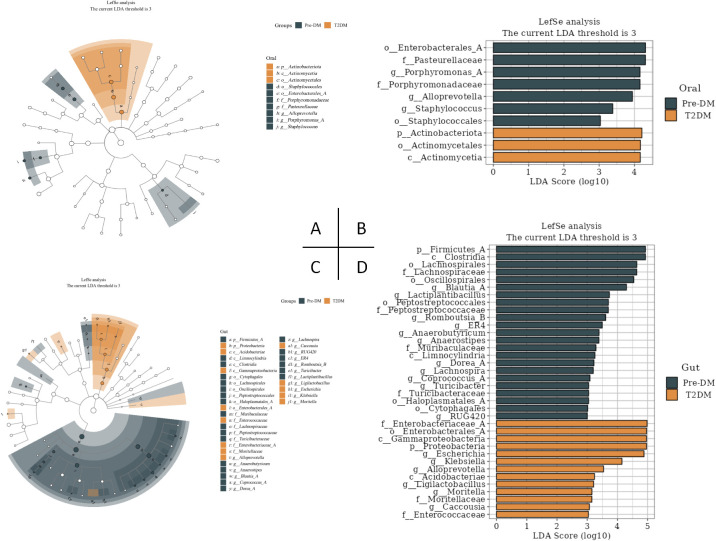
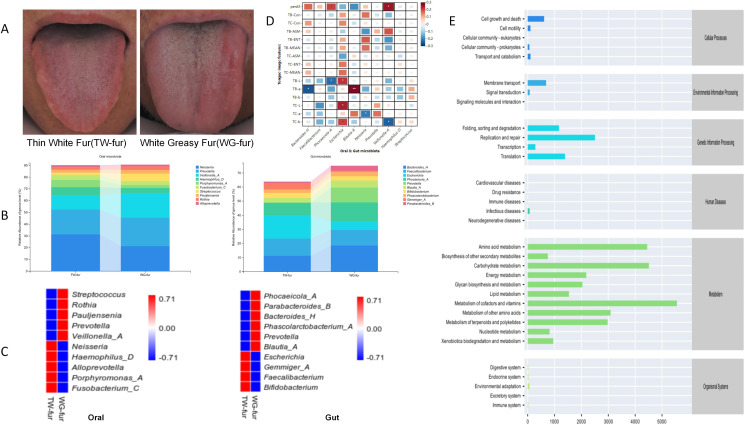
This study aimed to characterize the oral and gut microbiota in prediabetes mellitus (Pre-DM) and type 2 diabetes mellitus (T2DM) patients while exploring the association between tongue manifestations and the oral-gut microbiota axis in diabetes progression.
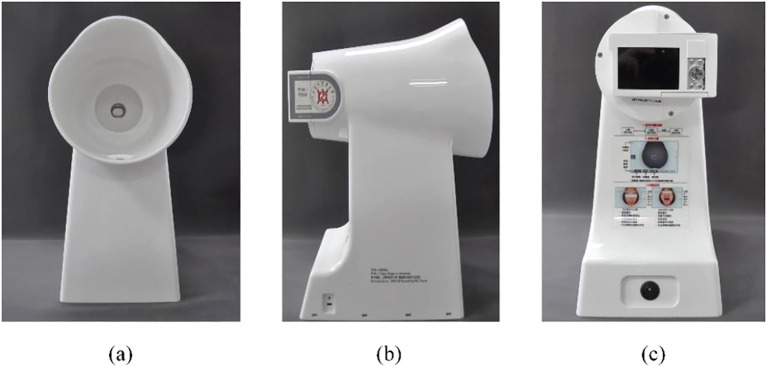
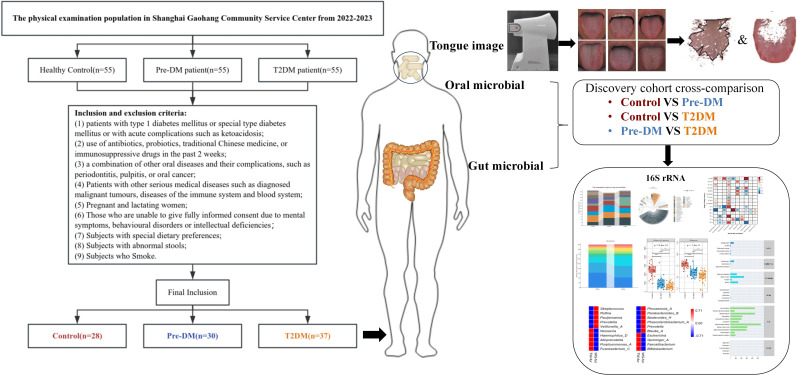
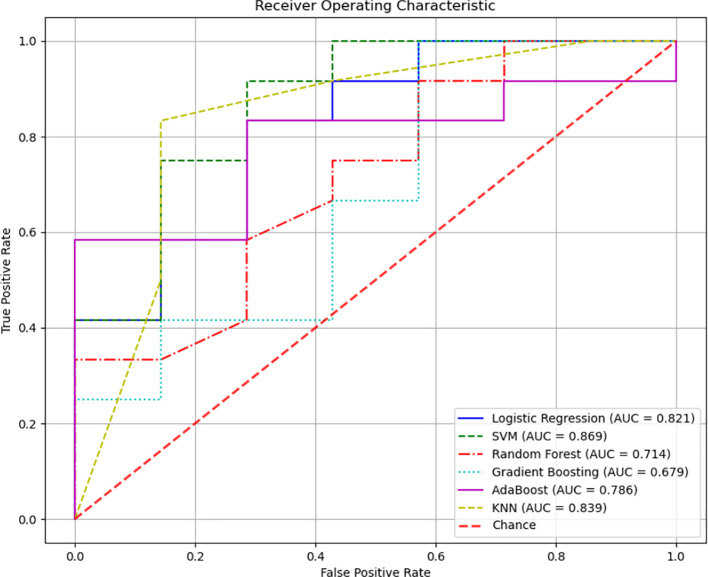
Participants included 30 Pre-DM patients, 37 individuals with T2DM, and 28 healthy controls. Tongue images and oral/fecal samples were analyzed using image processing and 16S rRNA sequencing. Machine learning techniques, including support vector machine (SVM), random forest, gradient boosting, adaptive boosting, and K-nearest neighbors, were applied to integrate tongue image data with microbiota profiles to construct predictive models for Pre-DM and T2DM classification.
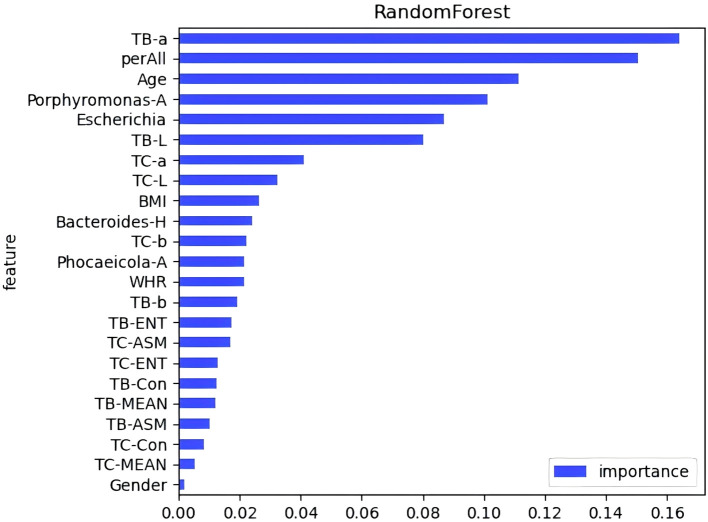
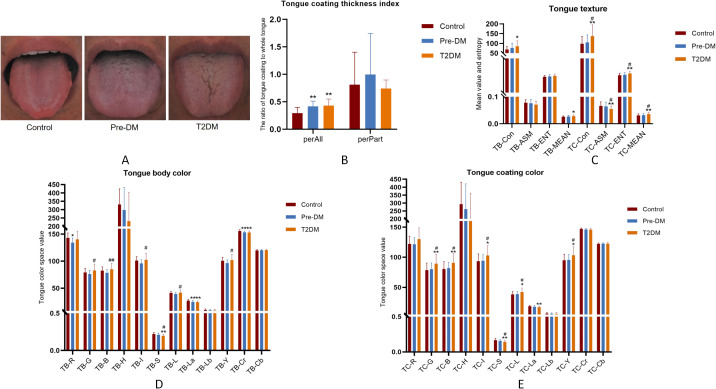
Significant shifts in tongue characteristics were identified during the progression from Pre-DM to T2DM. Elevated Firmicutes levels along the oral-gut axis were associated with white greasy fur, indicative of underlying metabolic changes. An SVM-based predictive model demonstrated an accuracy of 78.9%, with an AUC of 86.9%. Notably, tongue image parameters (TB-a, perALL) and specific microbiota (, ) emerged as prominent diagnostic markers for Pre-DM and T2DM.
The integration of tongue diagnosis with microbiome analysis reveals distinct tongue features and microbial markers. This approach significantly improves the diagnostic capability for Pre-DM and T2DM.
本研究旨在描述糖尿病前期(Pre-DM)和 2 型糖尿病(T2DM)患者的口腔和肠道微生物群,并探索舌象与糖尿病进展中口腔-肠道微生物群轴之间的关系。
参与者包括 30 名 Pre-DM 患者、37 名 T2DM 患者和 28 名健康对照者。采用图像处理和 16S rRNA 测序分析舌象和口腔/粪便样本。应用支持向量机(SVM)、随机森林、梯度提升、自适应提升和 K-最近邻等机器学习技术,将舌象数据与微生物群谱整合,构建 Pre-DM 和 T2DM 分类的预测模型。
从 Pre-DM 到 T2DM 的进展过程中,舌特征发生了显著变化。口腔-肠道轴上厚壁菌门水平的升高与白腻苔有关,表明存在潜在的代谢变化。基于 SVM 的预测模型的准确率为 78.9%,AUC 为 86.9%。值得注意的是,舌象参数(TB-a、perALL)和特定微生物(、)是 Pre-DM 和 T2DM 的显著诊断标志物。
将舌诊断与微生物组分析相结合,揭示了不同的舌特征和微生物标志物。这种方法显著提高了 Pre-DM 和 T2DM 的诊断能力。