Zhang Jiale, Li Aoli, Liu Li, Chang Bo, Luo Wenting, Sun Baoqing
Department of Clinical Laboratory, National Center for Respiratory Medicine, National Clinical Research Center for Respiratory Disease, State Key Laboratory of Respiratory Disease, Guangzhou Institute of Respiratory Health, The First Affiliated Hospital of Guangzhou Medical University, Guangzhou, Guangdong 510120, China.
Guangzhou Laboratory, Guangzhou, China.
World Allergy Organ J. 2025 May 7;18(5):101057. doi: 10.1016/j.waojou.2025.101057. eCollection 2025 May.
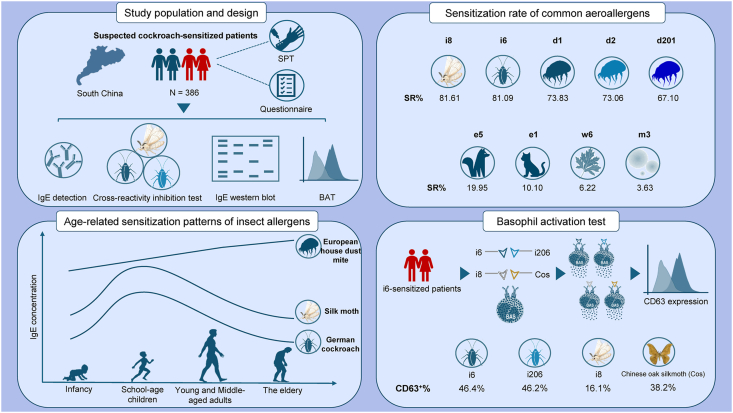
Inhalant insect allergens are widely implicated as common triggers of respiratory allergies, but little is known about cross-reactivity between cockroaches and other insect allergens. This study mainly investigates sensitization profiles and cross-reactivity between cockroach allergens and moth allergens to provide insights into the clinical management of cockroach-allergic patients.
A total of 386 suspected cockroach-sensitized patients were enrolled. Sensitization rates were determined using IgE testing for common airborne allergens. Cross-reactivity was evaluated using IgE inhibition assays, immunoblotting, and basophil activation tests. Age-related sensitization patterns were analyzed to assess variability in immune response across different demographics.
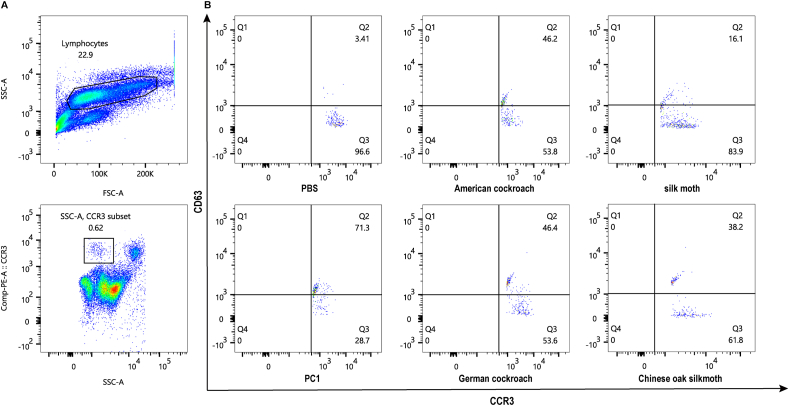
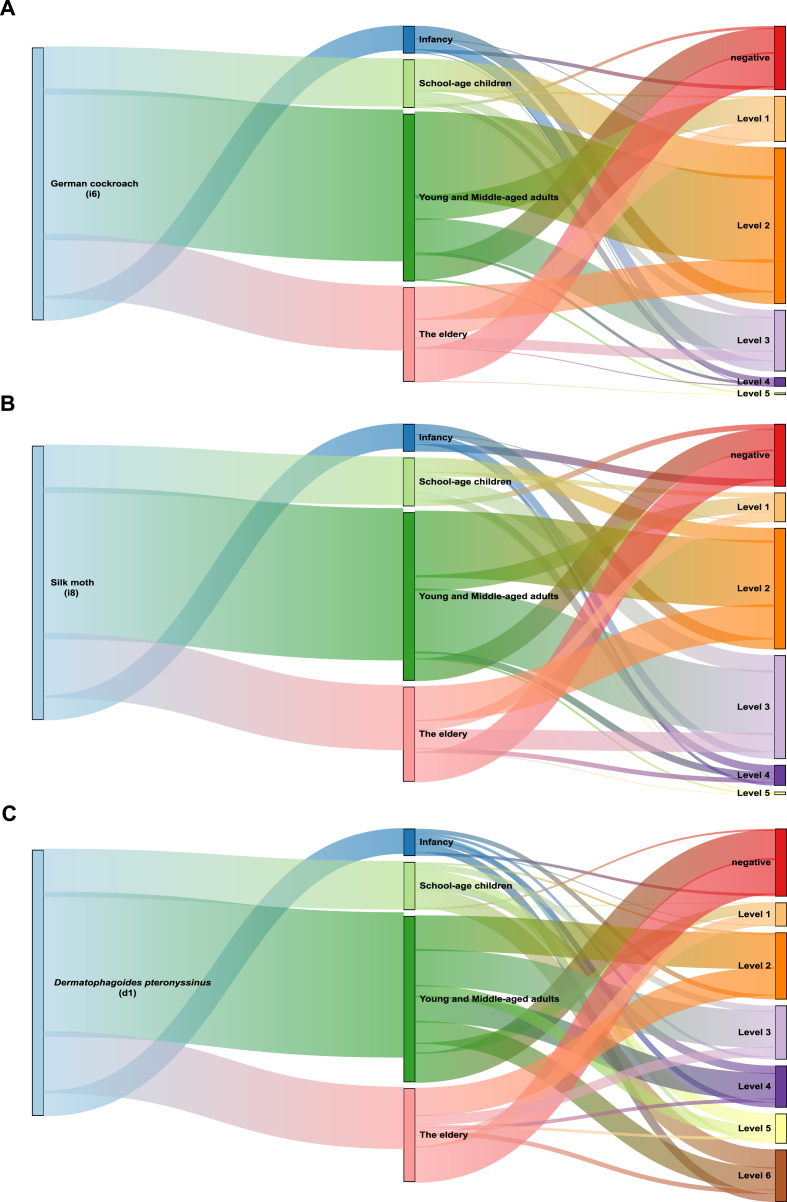
A high frequency of silk moth was observed in cockroach-sensitized patients, with sensitization rates to German cockroach and silk moth allergens at 81.09% and 81.61%, respectively, and a high co-sensitization rate (54.66%). Age analysis revealed similar peak sensitization of German cockroach and silk moth in school-age children and young adults, with a lower prevalence in the elderly. Additionally, cockroach crude extract can inhibit the IgE-binding of cockroach-sensitized patients' sera and silk moth crude extract, while various moths can activate basophils as well.
This study highlights the similar age-related sensitization patterns between German cockroach and silk moth, differing from those observed with house dust mites. Besides, cross-reactivity between different cockroach and moth allergens was confirmed through significant IgE inhibition, multiple sequences alignment of shared epitopes and basophil activation tests. These findings highlight the need to consider cross-reactivity between cockroach and moth allergens in clinical evaluations.
吸入性昆虫过敏原被广泛认为是呼吸道过敏的常见诱因,但对于蟑螂与其他昆虫过敏原之间的交叉反应知之甚少。本研究主要调查蟑螂过敏原与蛾类过敏原之间的致敏情况及交叉反应,为蟑螂过敏患者的临床管理提供见解。
共纳入386名疑似蟑螂致敏患者。使用针对常见空气传播过敏原的IgE检测确定致敏率。通过IgE抑制试验、免疫印迹和嗜碱性粒细胞活化试验评估交叉反应。分析与年龄相关的致敏模式,以评估不同人群免疫反应的变异性。
在蟑螂致敏患者中观察到较高频率的家蚕蛾致敏,对德国小蠊和家蚕蛾过敏原的致敏率分别为81.09%和81.61%,且共致敏率较高(54.66%)。年龄分析显示,德国小蠊和家蚕蛾在学龄儿童和年轻人中的致敏高峰相似,老年人中的患病率较低。此外,蟑螂粗提物可抑制蟑螂致敏患者血清与家蚕蛾粗提物的IgE结合,而各种蛾类也可激活嗜碱性粒细胞。
本研究强调了德国小蠊和家蚕蛾之间与年龄相关的致敏模式相似,这与屋尘螨不同。此外,通过显著的IgE抑制、共享表位的多序列比对和嗜碱性粒细胞活化试验,证实了不同蟑螂和蛾类过敏原之间的交叉反应。这些发现突出了在临床评估中考虑蟑螂和蛾类过敏原交叉反应的必要性。