Spranger Julia, Niederberger Marlen
Forschungsmethoden in der Gesundheitsförderung und Prävention, Pädagogische Hochschule Schwäbisch Gmünd, Oberbettringer Straße 200, 73525 Schwäbisch Gmünd, Deutschland.
Pravent Gesundh. 2022;17(2):156-162. doi: 10.1007/s11553-021-00871-8. Epub 2021 Jul 1.
The use of large and diverse amounts of data (Big Data) can lead to the gaining of health-related insights. The relevance is underlined by current challenges, for example in connection with digitization, health care in exceptional situations and the increasing importance of personalization processes in health research. The potential of Big Data for research on vulnerable groups is controversial, but particularly relevant against the background of relatively persistent socially determined health inequalities.
The study examines how experts in the field of health data analysis assess the potential of Big Data in health promotion and prevention, especially for research on vulnerable groups.
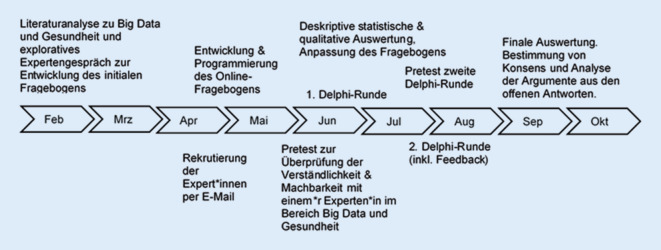
In a Delphi study, experts were surveyed in two rounds using an online questionnaire to identify consensus and dissent on the potential of Big Data.
From the experts' point of view, Big Data holds potential for health promotion and prevention, especially in the clinical setting and in the personalization of health-related measures. People with rare diseases and older people could benefit from Big Data analyses, for example through faster diagnostic processes or personalized digital health applications. The experts disagreed on the extent to which research institutions, health insurers or companies should be allowed to use or share such data.
使用大量多样的数据(大数据)能够带来与健康相关的深刻见解。当前的挑战凸显了其相关性,例如与数字化、特殊情况下的医疗保健以及健康研究中个性化过程日益重要性相关的挑战。大数据在弱势群体研究中的潜力存在争议,但在相对持续存在的社会决定的健康不平等背景下尤其相关。
该研究考察了健康数据分析领域的专家如何评估大数据在健康促进和预防方面的潜力,特别是对弱势群体的研究潜力。
在一项德尔菲研究中,通过在线问卷对专家进行了两轮调查,以确定对大数据潜力的共识和分歧。
从专家的角度来看,大数据在健康促进和预防方面具有潜力,尤其是在临床环境以及与健康相关措施的个性化方面。罕见病患者和老年人可能会从大数据分析中受益,例如通过更快的诊断过程或个性化数字健康应用。专家们在研究机构、健康保险公司或公司应被允许使用或共享此类数据的程度上存在分歧。