Ye Qing, Sun Yaxin
School of Data Science and Artificial Intelligence, Wenzhou University of Technology, Wenzhou, China.
School of Computer Science and Technology (School of Artificial Intelligence), Zhejiang Normal University, Jinhua, China.
Front Pharmacol. 2025 May 30;16:1578140. doi: 10.3389/fphar.2025.1578140. eCollection 2025.
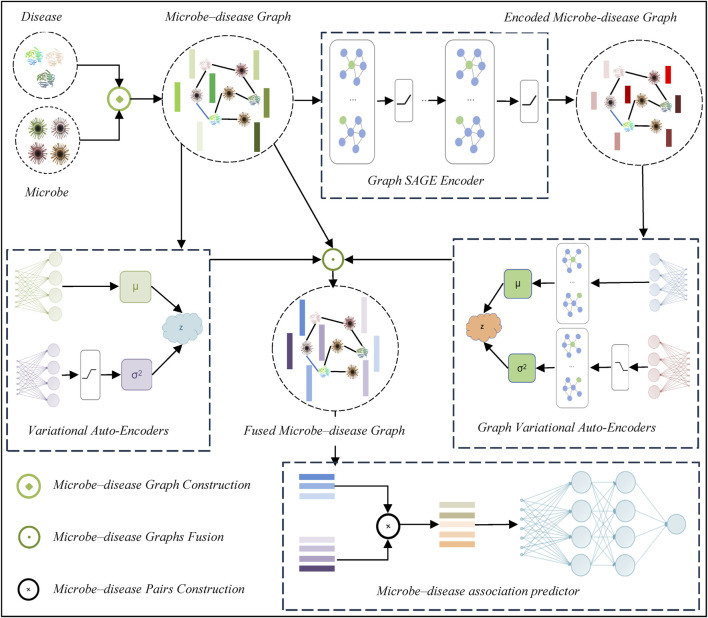
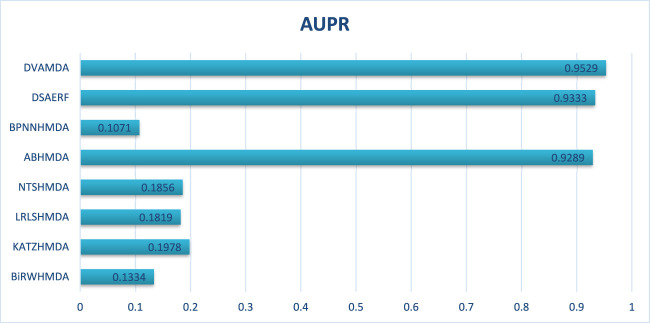
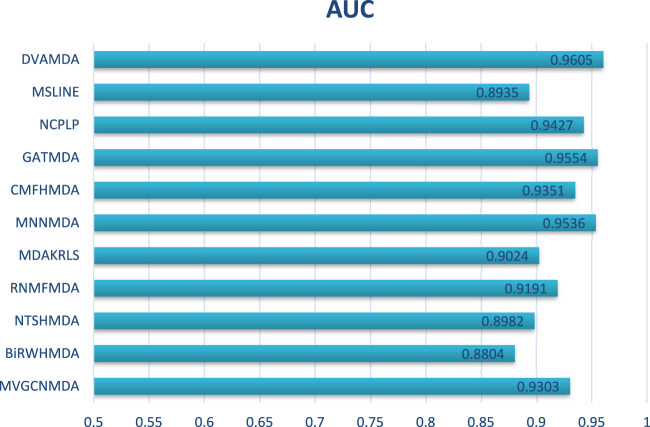
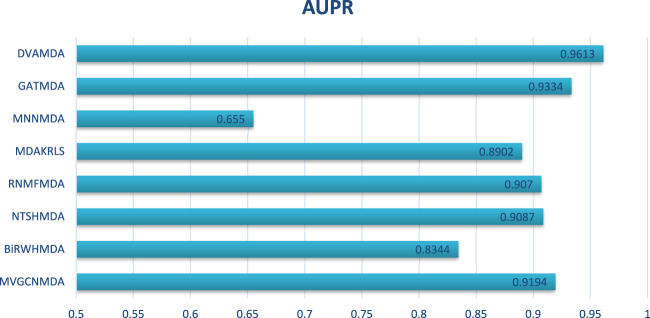
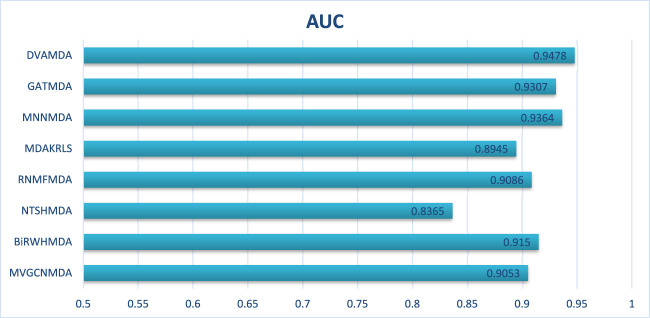
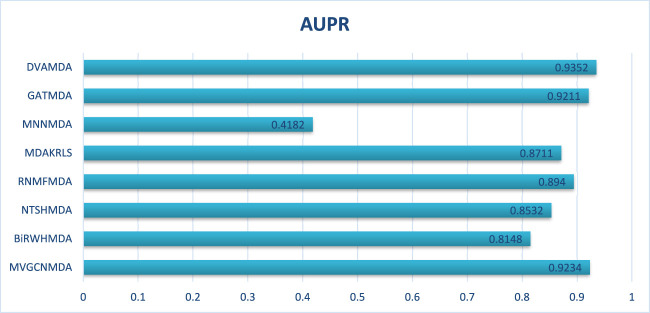
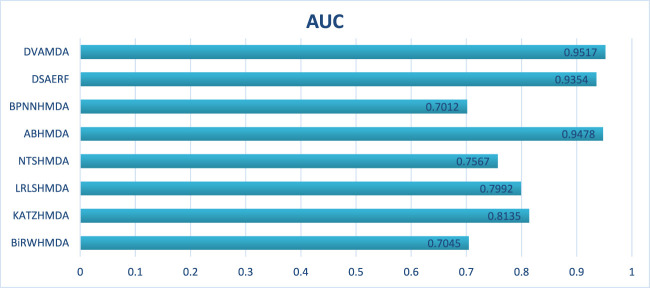
Traditional medicine encompasses a rich trove of knowledge and practices for disease prevention, diagnosis, and treatment. However, it faces challenges such as poorly defined compositions of preparations and limited high-quality efficacy data. The development of artificial intelligence presents new opportunities for traditional medicine research and applications, especially in predicting MDAs (MDAs), which is of great significance for understanding disease mechanisms and developing new treatments. This study proposes a MDAs prediction method based on double variational autoencoders (DVAMDA). This method innovatively integrates double variational autoencoders and multi-information fusion techniques. Firstly, the graph SAGE encoder is utilized to preliminarily extract the local and global structural information of nodes. Subsequently, the double variational autoencoders are employed to separately extract the latent probability distribution information of the initial input data and the graph-specific property information from the output of the graph SAGE encoder. Then, these different sources of information are fused to provide rich and powerful feature support for subsequent prediction tasks. Finally, the Hadamard product operation and a deep neural network are used to predict MDAs. Experimental results on the HMDAD and Disbiome datasets show that the DVAMDA model performs outstandingly in multiple evaluation metrics. The findings of this research contribute to a deeper understanding of microbe-disease relationships and provide strong support for drug development in traditional medicine based on MDAs. The relevant data and code are publicly accessible at: https://github.com/yxsun25/DVAMDA.
传统医学包含了丰富的疾病预防、诊断和治疗知识及实践方法。然而,它面临着诸如制剂成分定义不明确以及高质量疗效数据有限等挑战。人工智能的发展为传统医学研究与应用带来了新机遇,尤其是在预测微生物-疾病关联(MDAs)方面,这对于理解疾病机制和开发新疗法具有重要意义。本研究提出了一种基于双变分自编码器(DVAMDA)的MDAs预测方法。该方法创新性地融合了双变分自编码器和多信息融合技术。首先,利用图SAGE编码器初步提取节点的局部和全局结构信息。随后,使用双变分自编码器分别从图SAGE编码器的输出中提取初始输入数据的潜在概率分布信息和特定于图的属性信息。然后,融合这些不同来源的信息,为后续预测任务提供丰富而强大的特征支持。最后,使用哈达玛积运算和深度神经网络来预测MDAs。在HMDAD和Disbiome数据集上的实验结果表明,DVAMDA模型在多个评估指标上表现出色。本研究结果有助于更深入地理解微生物-疾病关系,并为基于MDAs的传统医学药物开发提供有力支持。相关数据和代码可在以下网址公开获取:https://github.com/yxsun25/DVAMDA 。