Tu Weiyan, Xu Rongdi, Wang Dan, Luo Na, Wu Meijing, Zhou Yong, Ning Jing
Shanghai Key Laboratory of Maternal-Fetal Medicine, Shanghai Institute of Maternal-Fetal Medicine and Gynecologic Oncology, Shanghai First Maternity and Infant Hospital, School of Medicine, Tongji University, No. 2699, West Gaoke Road, Shanghai, 200092, China.
Clinical Research Institute, Shanghai General Hospital, Shanghai Jiao Tong University School of Medicine, No.85 Wujin Road, Shanghai, 200080, China.
Lipids Health Dis. 2025 Jun 19;24(1):218. doi: 10.1186/s12944-025-02643-1.
This study investigated and compared the abilities of the triglyceride glucose index (TyG) and its correlated factors involving TyG-body mass index (TyG-BMI), TyG-waist-to-height ratio (TyG-WHtR), and TyG-waist circumference (TyG-WC) to predict cardiovascular disease (CVD) among Chinese postmenopausal women. This topic has not been adequately explored in the existing literature.
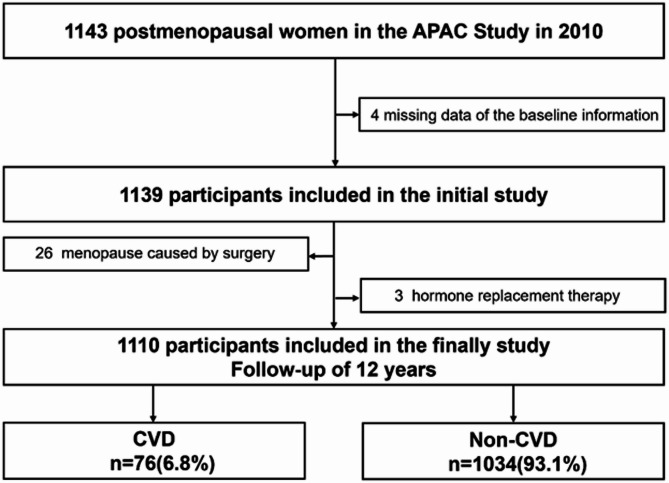
This prospective study included 1110 Chinese postmenopausal women, stratified into the CVD group and the non-CVD group. The TyG index and its correlated components (TyG, TyG-BMI, TyG-WHtR, and TyG-WC) were calculated. The primary endpoint was CVD.
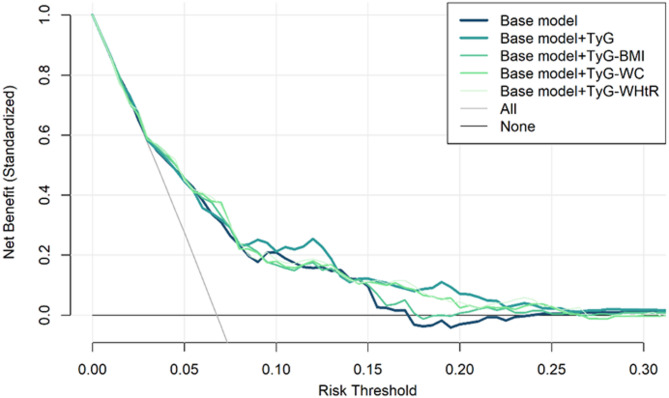
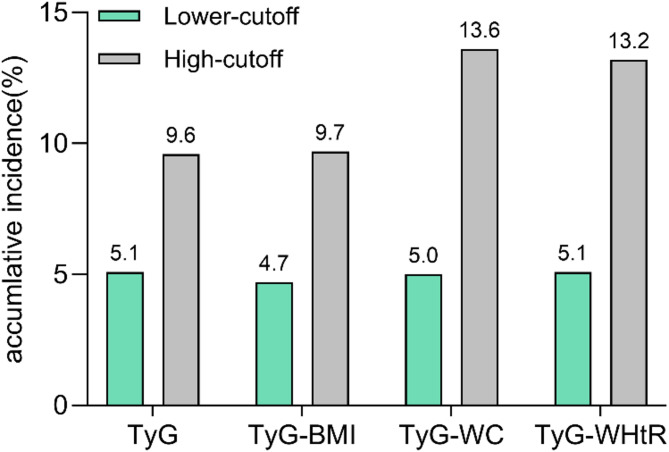
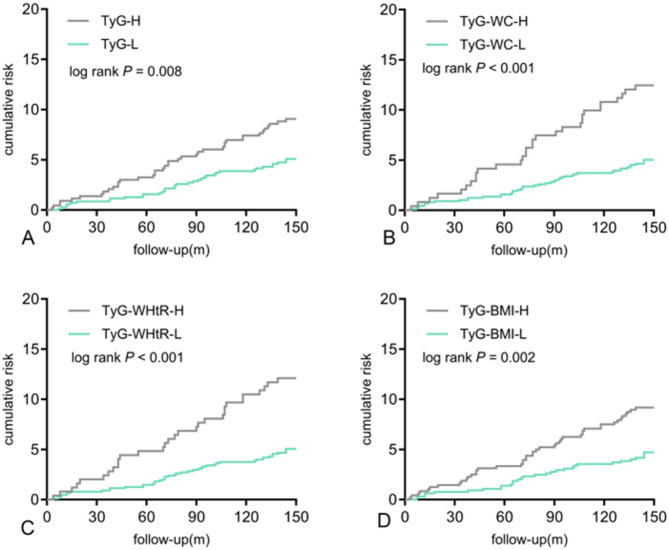
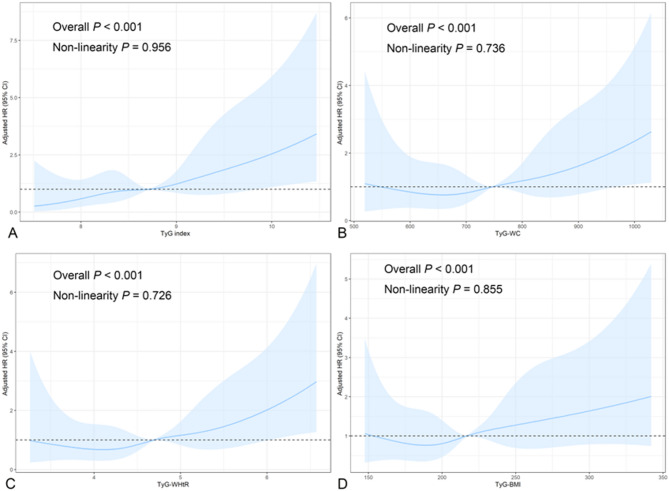
Across a 12-year follow-up period, 76 (6.84%) CVDs were documented. The TyG index, in collaboration with various indicators of obesity, demonstrated a robust positive correlation with the risk of CVD. In comparison to other TyG indices, TyG-WC was the strongest predictor for CVD (HR: 2.61, 95%CI:1.64-4.14; P < 0.001), and the TyG-WHtR index exhibited the strongest diagnostic value in identifying CVD (AUC: 0.632, 95%CI: 0.603-0.660; P < 0.001). Incorporating TyG-WHtR into the base model significantly enhanced incremental risk stratification for CVD (NRI: 0.115, 95%CI: 0.040-0.190, P < 0.05; AIC: 996; BIC: 1041; Harrell's C-index: 0.73). Decision curve analysis (DCA) suggested that TyG, TyG-WHtR, and TyG-WC can provide significant clinical benefits for Chinese postmenopausal women. The sensitivity analyses have demonstrated the robustness of these results.
The TyG index and its correlated factors can effectively predict CVD in Chinese postmenopausal women. TyG-WHtR has the most potent ability to predict CVD among postmenopausal women.
本研究调查并比较了甘油三酯葡萄糖指数(TyG)及其相关因素,包括TyG-体重指数(TyG-BMI)、TyG-腰高比(TyG-WHtR)和TyG-腰围(TyG-WC)预测中国绝经后女性心血管疾病(CVD)的能力。现有文献尚未充分探讨这一主题。
这项前瞻性研究纳入了1110名中国绝经后女性,分为CVD组和非CVD组。计算TyG指数及其相关成分(TyG、TyG-BMI、TyG-WHtR和TyG-WC)。主要终点是CVD。
在12年的随访期内,记录了76例(6.84%)CVD病例。TyG指数与各种肥胖指标共同显示出与CVD风险呈强正相关。与其他TyG指数相比,TyG-WC是CVD最强的预测指标(HR:2.61,95%CI:1.64-4.14;P<0.001),TyG-WHtR指数在识别CVD方面具有最强的诊断价值(AUC:0.632,95%CI:0.603-0.660;P<0.001)。将TyG-WHtR纳入基础模型显著增强了CVD的增量风险分层(NRI:0.115,95%CI:0.040-0.190,P<0.05;AIC:996;BIC:1041;Harrell氏C指数:0.73)。决策曲线分析(DCA)表明,TyG、TyG-WHtR和TyG-WC可为中国绝经后女性提供显著的临床益处。敏感性分析证明了这些结果的稳健性。
TyG指数及其相关因素可有效预测中国绝经后女性的CVD。TyG-WHtR在绝经后女性中预测CVD的能力最强。