Gezici Harun
Electronics and Automation Department, Kırklareli University, 39010 Kırklareli, Turkey.
Biomimetics (Basel). 2025 Jun 19;10(6):411. doi: 10.3390/biomimetics10060411.
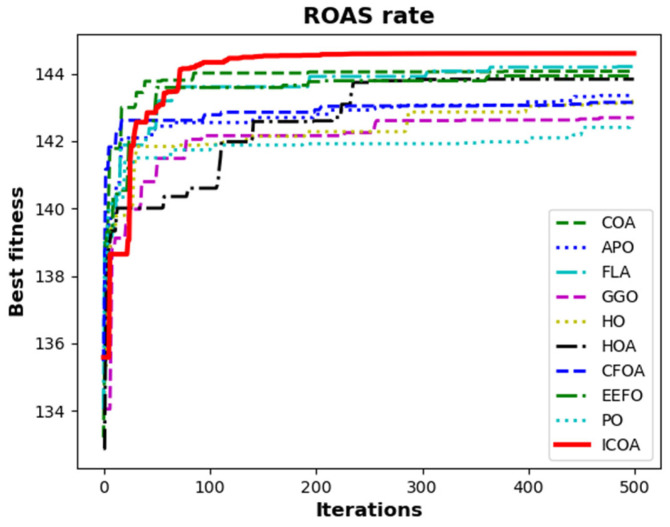
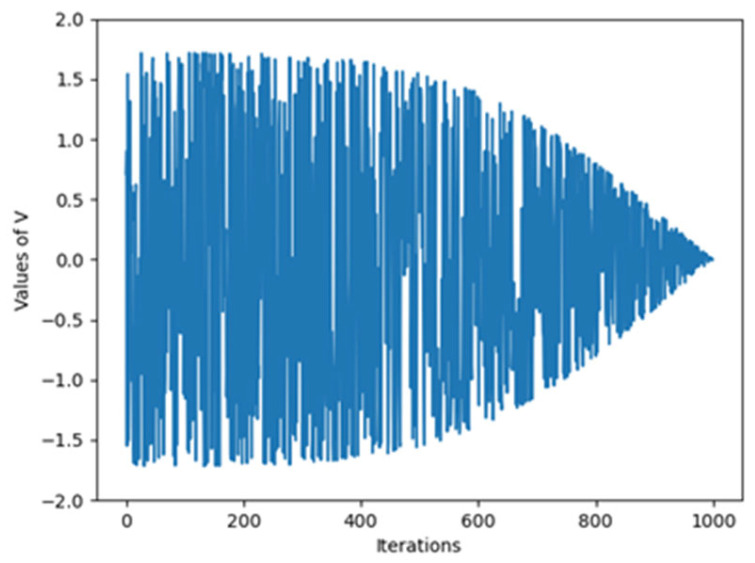
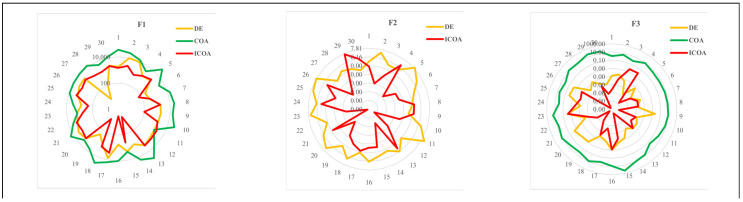
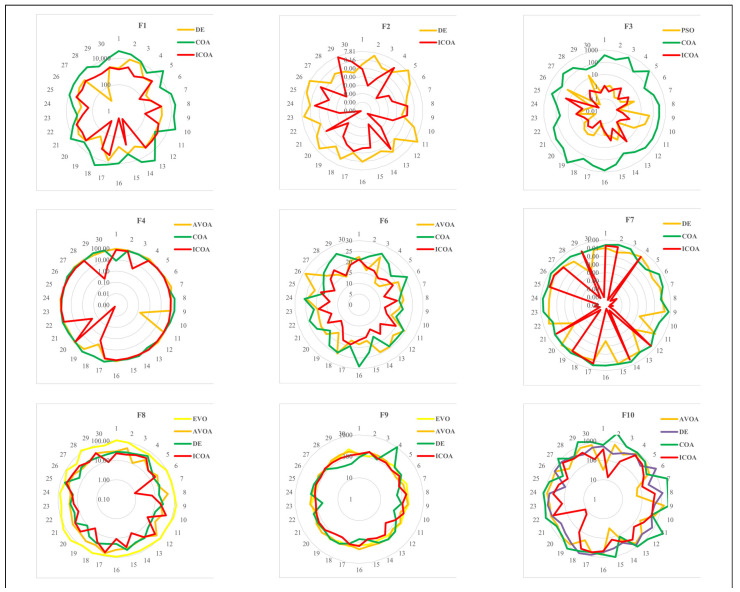
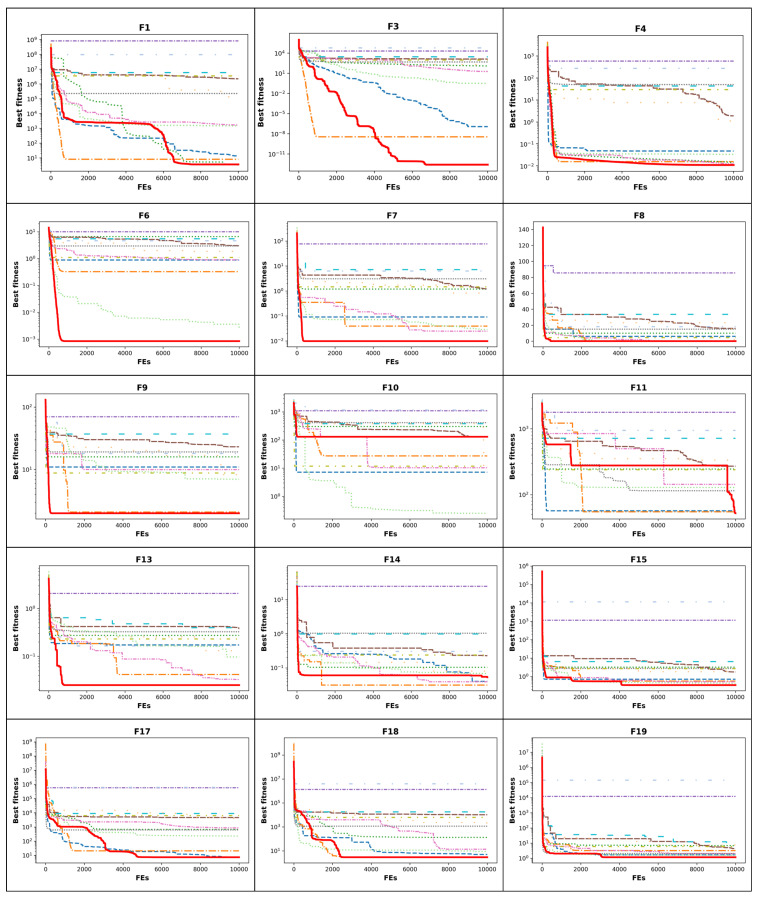
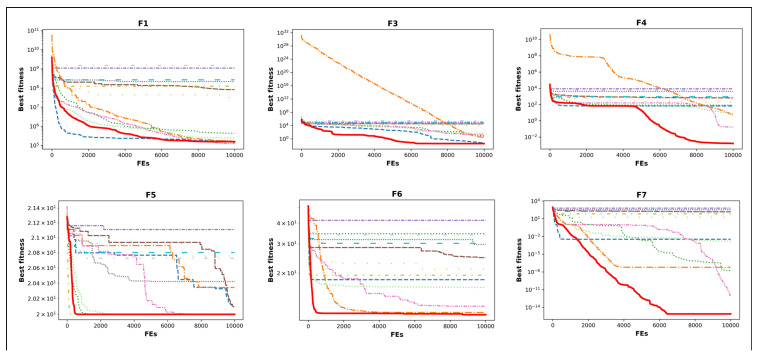
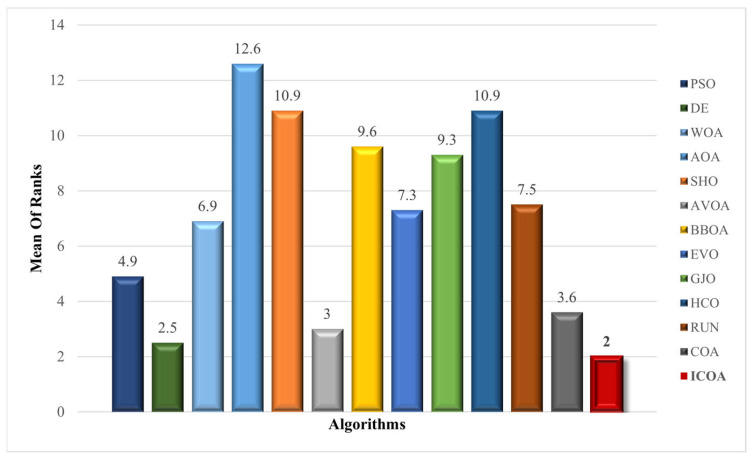
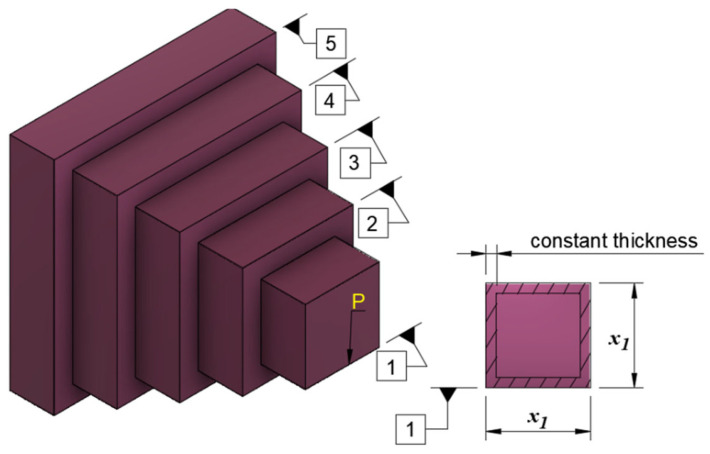
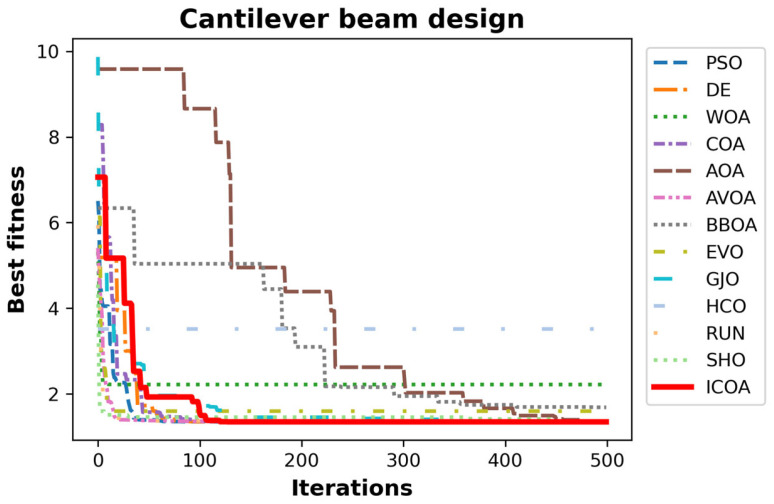
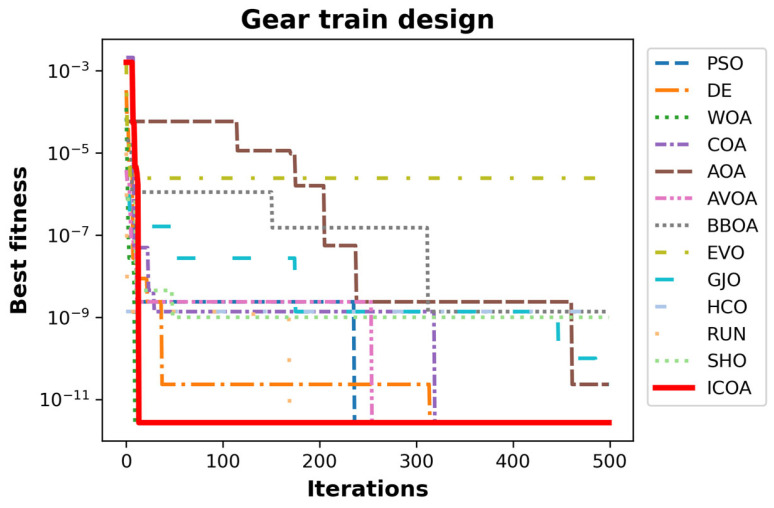
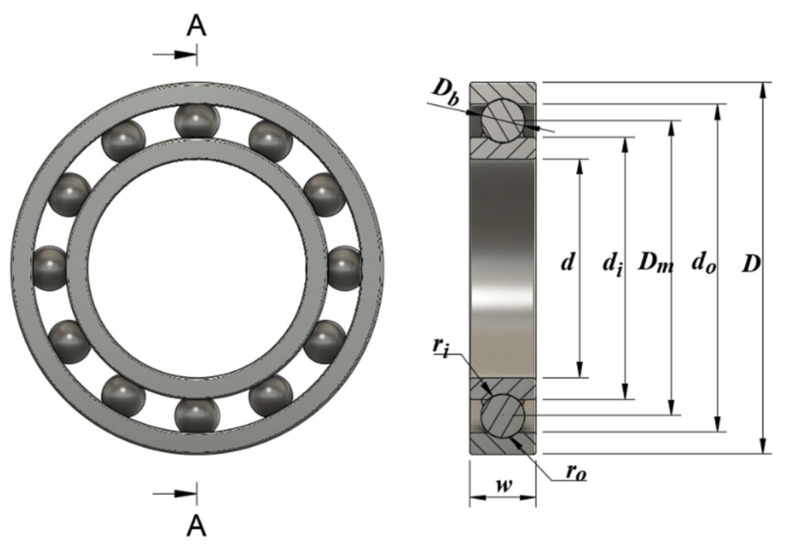
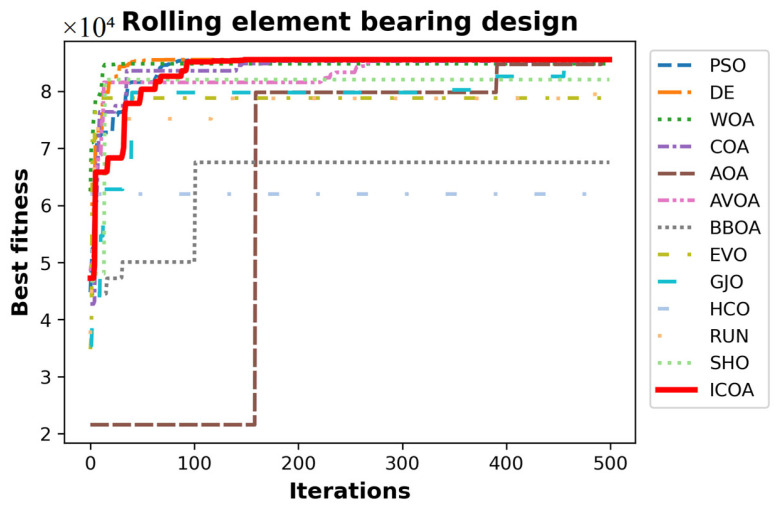
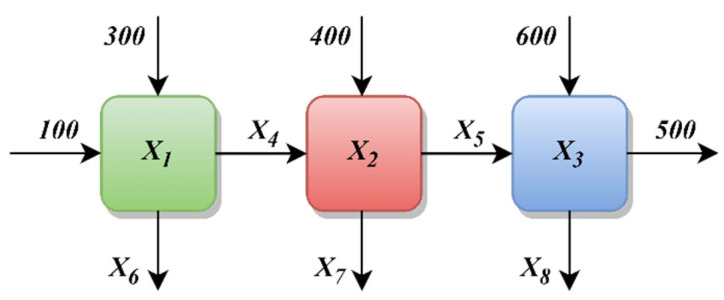
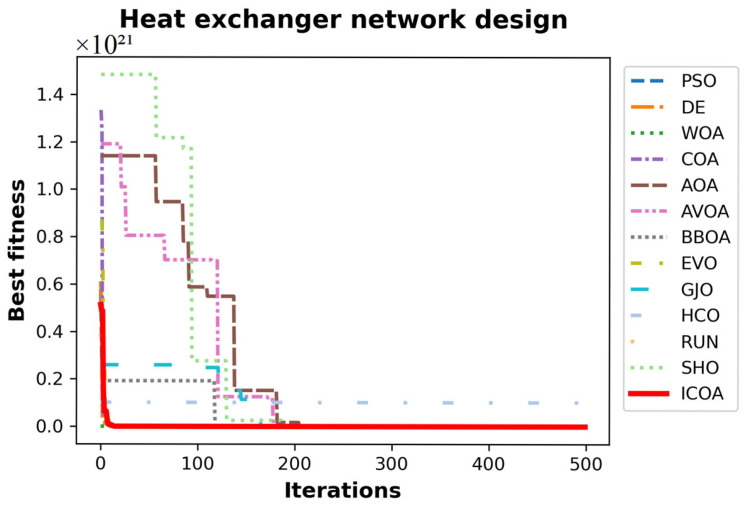
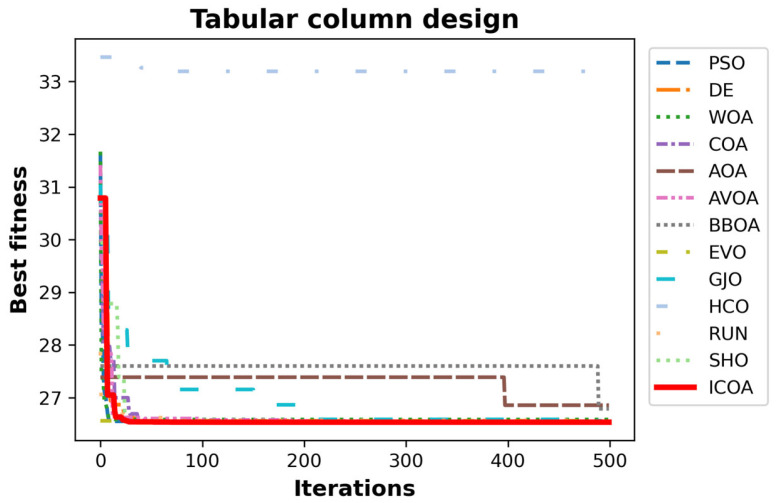
The Crayfish Optimization Algorithm (COA) has limitations that affect its optimization performance seriously. The competition stage of the COA uses a simplified mathematical model that concentrates on relations of distance between crayfish only. It is deprived of a stochastic variable and is not able to generate an applicable balance between exploration and exploitation. Such a case causes the COA to have early convergence, to perform poorly in high-dimensional problems, and to be trapped by local minima. Moreover, the low activation probability of the summer resort stage decreases the exploration ability more and slows down the speed of convergence. In order to compensate these shortcomings, this study proposes an Improved Crayfish Optimization Algorithm (ICOA) that designs the competition stage with three modifications: (1) adaptive step length mechanism inversely proportional to the number of iterations, which enables exploration in early iterations and exploitation in later stages, (2) vector mapping that increases stochastic behavior and improves efficiency in high-dimensional spaces, (3) removing the X parameter in order to abstain from early convergence. The proposed ICOA is compared to 12 recent meta-heuristic algorithms by using the CEC-2014 benchmark set (30 functions, 10 and 30 dimensions), five engineering design problems, and a real-world ROAS optimization case. Wilcoxon Signed-Rank Test, -test, and Friedman rank indicate the high performance of the ICOA as it solves 24 of the 30 benchmark functions successfully. In engineering applications, the ICOA achieved an optimal weight (1.339965 kg) in cantilever beam design, a maximum load capacity (85,547.81 N) in rolling element bearing design, and the highest performance (144.601) in ROAS optimization. The superior performance of the ICOA compared to the COA is proven by the following quantitative data: 0.0007% weight reduction in cantilevers design (from 1.339974 kg to 1.339965 kg), 0.09% load capacity increase in bearing design (COA: 84,196.96 N, ICOA: 85,498.38 N average), 0.27% performance improvement in ROAS problem (COA: 144.072, ICOA: 144.601), and most importantly, there seems to be an overall performance improvement as the COA has a 4.13 average rank while the ICOA has 1.70 on CEC-2014 benchmark tests. Results indicate that the improved COA enhances exploration and successfully solves challenging problems, demonstrating its effectiveness in various optimization scenarios.
小龙虾优化算法(COA)存在严重影响其优化性能的局限性。COA的竞争阶段使用了一个简化的数学模型,该模型仅关注小龙虾之间的距离关系。它缺少一个随机变量,无法在探索和利用之间产生适用的平衡。这种情况导致COA出现早熟收敛,在高维问题中表现不佳,并陷入局部最小值。此外,避暑阶段的低激活概率进一步降低了探索能力,减缓了收敛速度。为了弥补这些缺点,本研究提出了一种改进的小龙虾优化算法(ICOA),该算法对竞争阶段进行了三处修改设计:(1)与迭代次数成反比的自适应步长机制,这使得在早期迭代中进行探索,在后期阶段进行利用;(2)向量映射,增加随机行为并提高在高维空间中的效率;(3)去除X参数以避免早熟收敛。通过使用CEC - 2014基准集(30个函数,10维和30维)、五个工程设计问题以及一个实际的ROAS优化案例,将所提出的ICOA与12种近期的元启发式算法进行了比较。威尔科克森符号秩检验、t检验和弗里德曼秩检验表明,ICOA在成功解决30个基准函数中的24个时具有高性能。在工程应用中,ICOA在悬臂梁设计中实现了最优重量(1.339965千克),在滚动轴承设计中实现了最大承载能力(85,547.81牛),在ROAS优化中实现了最高性能(144.601)。与COA相比,ICOA的优越性能由以下定量数据证明:悬臂梁设计中重量减轻0.0007%(从1.339974千克降至1.339965千克),轴承设计中承载能力提高0.09%(COA:84,196.96牛,ICOA:平均85,498.38牛),ROAS问题中性能提高0.27%(COA:144.072,ICOA:144.601),最重要的是,在CEC - 2014基准测试中,COA的平均排名为4.13,而ICOA为1.70,似乎存在整体性能提升。结果表明,改进后的COA增强了探索能力,并成功解决了具有挑战性的问题,证明了其在各种优化场景中的有效性。