Tomuța Ramona Alina, Moldovan Andrada Florina, Matiș Loredana, Maris Lavinia, Ghitea Timea Claudia, Banica Florin
Doctoral School of Biological and Biomedical Sciences, University of Oradea, 1 University Street, 410087 Oradea, Romania.
Medicine Department, Faculty of Medicine and Pharmacy, University of Oradea, 1 University Street, 410087 Oradea, Romania.
Toxics. 2025 Jun 15;13(6):504. doi: 10.3390/toxics13060504.
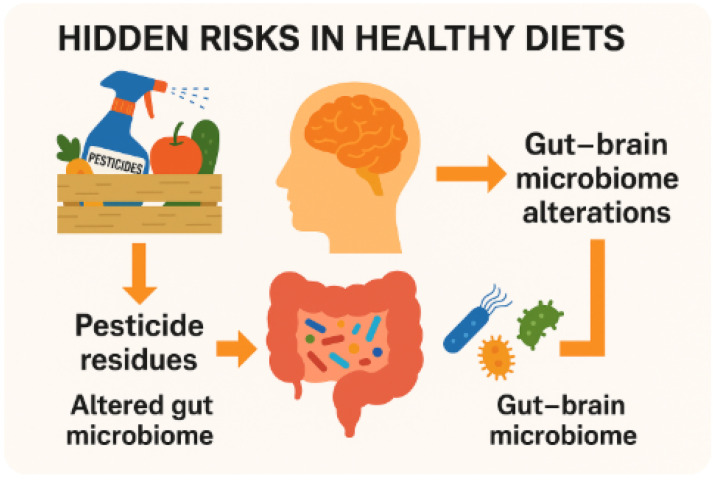
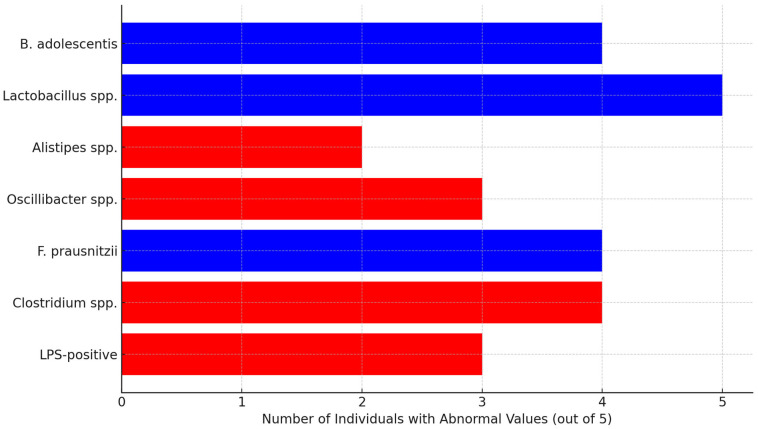
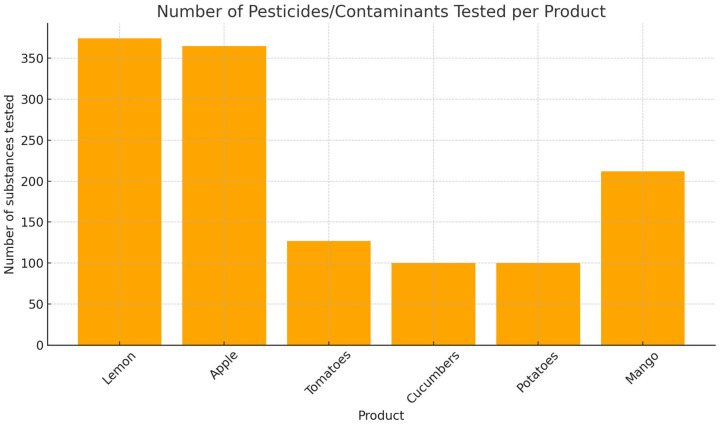
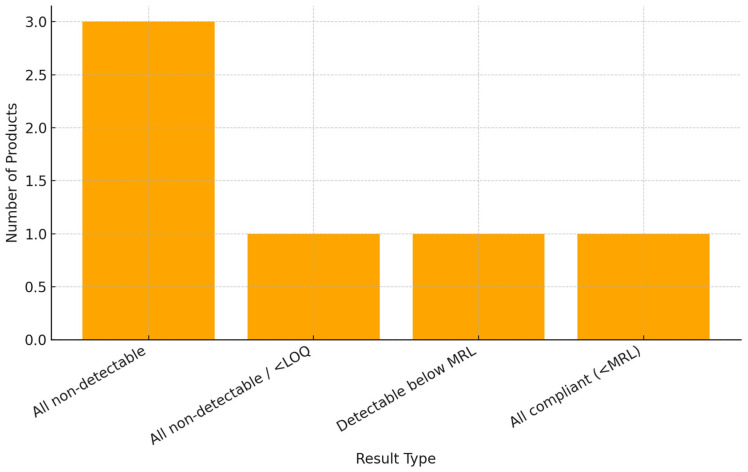
(1) Background: Exposure to pesticide residues through food remains a critical issue in public health, especially given their potential cumulative neurotoxic effects. (2) Methods: This study investigated the presence of pesticide residues in commonly consumed vegetables, fruits, and cereals based on official laboratory reports and evaluated the intestinal microbiome profiles of individuals whose diets consisted of over 50% plant-based foods. (3) Results: Analytical results from accredited laboratories in Romania demonstrated that all tested food samples were compliant with European regulations (Regulation (EC) 396/2005), with either undetectable or below-quantification-limit pesticide residues. However, organophosphates such as chlorpyrifos and diazinon were frequently tested, indicating persistent regulatory concern due to their known neurotoxic potential. A parallel analysis of stool samples revealed significant imbalances in neuroactive gut bacteria, including consistently low levels of and species, and elevated levels of and , which are implicated in modulating GABA and serotonin pathways. Markers of proinflammatory activity, such as LPS-positive bacteria and histamine producers, were also elevated. (4) Conclusions: These findings suggest that even in diets rich in plant-based foods, microbial dysbiosis with neuroactive relevance can occur, potentially linked to environmental or dietary factors. The study underscores the need for a comprehensive evaluation of food safety and microbiome function as interconnected determinants of neurological health.
(1) 背景:通过食物接触农药残留仍是公共卫生领域的一个关键问题,尤其是考虑到其潜在的累积神经毒性作用。(2) 方法:本研究基于官方实验室报告调查了常见食用蔬菜、水果和谷物中农药残留的存在情况,并评估了饮食中植物性食物占比超过50%的个体的肠道微生物群谱。(3) 结果:罗马尼亚认可实验室的分析结果表明,所有测试食品样本均符合欧洲法规((EC) 396/2005号法规),农药残留检测不到或低于定量限。然而,经常检测到毒死蜱和二嗪农等有机磷农药,由于其已知的神经毒性潜力,持续受到监管关注。对粪便样本的平行分析显示,神经活性肠道细菌存在显著失衡,包括 和 物种的水平持续较低,以及 和 的水平升高,这些与调节γ-氨基丁酸和血清素途径有关。促炎活性标志物,如脂多糖阳性细菌和组胺产生菌,也有所升高。(4) 结论:这些发现表明,即使在富含植物性食物的饮食中,也可能发生与神经活性相关的微生物失调,这可能与环境或饮食因素有关。该研究强调需要对食品安全和微生物群功能进行全面评估,将其作为神经健康的相互关联的决定因素。