Imlach Fiona, Garrett Susan
Department of Public Health, University of Otago Wellington, Wellington 6242, New Zealand.
Department of Primary Health Care and General Practice, University of Otago Wellington, Wellington 6242, New Zealand.
J Clin Med. 2025 Jun 6;14(12):4023. doi: 10.3390/jcm14124023.
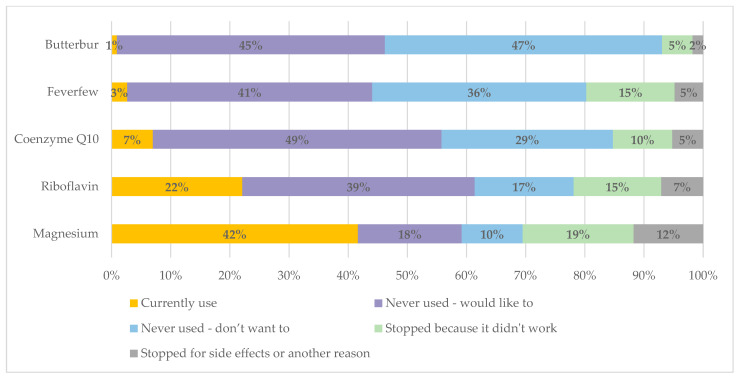
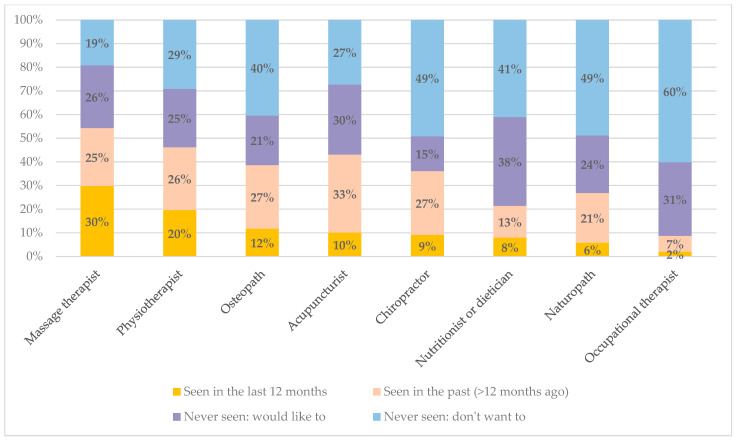
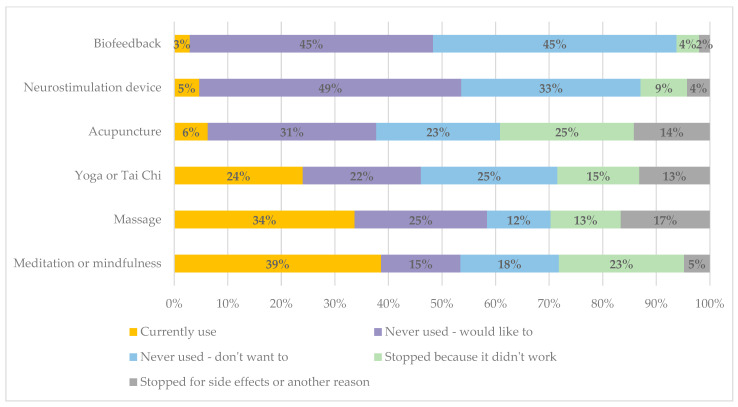
Migraine is a common neurological disease with a high disability burden. Despite this, many people with migraine do not take medication to prevent attacks, even when this is indicated. Many non-pharmacological approaches to migraine treatment exist, but little is known about how people with migraine use these options. The online Migraine in Aotearoa New Zealand (NZ) Survey collected responses from 530 people with migraine from August to October 2022. Questions included current and previous use of preventive medications, supplements (e.g., magnesium, riboflavin, coenzyme Q10) and complementary therapies (e.g., meditation, biofeedback, yoga, acupuncture). Around half of the respondents were currently using a supplement, 58% were currently using complementary therapy and half were taking preventive medication. One in five were using all three approaches for migraine prevention. Of those not taking preventive medication, 44% were taking a supplement, and 53% were using complementary therapy. For commonly used non-pharmacological approaches, 20-30% of people had tried them in the past but stopped due to lack of efficacy or other reasons. A high proportion of people would like to try approaches that are not readily available or expensive in NZ (e.g., neurostimulation devices and biofeedback). The use of supplements and complementary therapies for migraine prevention is common, often in combination with medication. There are high levels of discontinuation due to ineffectiveness and cost prohibits use for many. Improved access to non-pharmacological therapies, particularly as an adjunct, has the potential to improve outcomes for people with migraine, but more and better migraine treatment options are also needed.
偏头痛是一种常见的神经系统疾病,致残负担很高。尽管如此,许多偏头痛患者即使在有指征的情况下也不服用预防发作的药物。偏头痛治疗有许多非药物方法,但对于偏头痛患者如何使用这些方法却知之甚少。新西兰奥塔哥偏头痛在线调查在2022年8月至10月期间收集了530名偏头痛患者的回复。问题包括当前和以前使用预防性药物、补充剂(如镁、核黄素、辅酶Q10)和辅助疗法(如冥想、生物反馈、瑜伽、针灸)的情况。约一半的受访者目前正在使用补充剂,58%的人目前正在使用辅助疗法,一半的人正在服用预防性药物。五分之一的人使用这三种方法来预防偏头痛。在未服用预防性药物的人中,44%的人正在服用补充剂,53%的人正在使用辅助疗法。对于常用的非药物方法,20%至30%的人过去曾尝试过,但由于缺乏疗效或其他原因而停止使用。很大一部分人希望尝试在新西兰不易获得或价格昂贵的方法(如神经刺激设备和生物反馈)。使用补充剂和辅助疗法预防偏头痛很常见,通常与药物联合使用。由于无效而停药的情况很普遍,而且成本使许多人无法使用。改善非药物疗法的可及性,特别是作为辅助疗法,有可能改善偏头痛患者的治疗效果,但也需要更多更好的偏头痛治疗选择。