Mabire Cedric, Panchaud Sandra, Wey Jessica, Wicht Justine
Institute of Higher Education and Research in Healthcare-IUFRS, Lausanne University Hospital, University of Lausanne, Lausanne, Switzerland.
Pays d'Enhaut Health Network, Château d'Oex, Switzerland.
Front Health Serv. 2025 Jun 17;5:1566997. doi: 10.3389/frhs.2025.1566997. eCollection 2025.
The Swiss healthcare system faces increasing challenges with an aging population and rising prevalence of chronic conditions, necessitating better-coordinated care delivery, particularly in home care settings.
This study aimed to develop (objective 1) and conduct a contextual analysis for implementation (objective 2) of a person-centered professional practice model for home care services in French-speaking Switzerland.
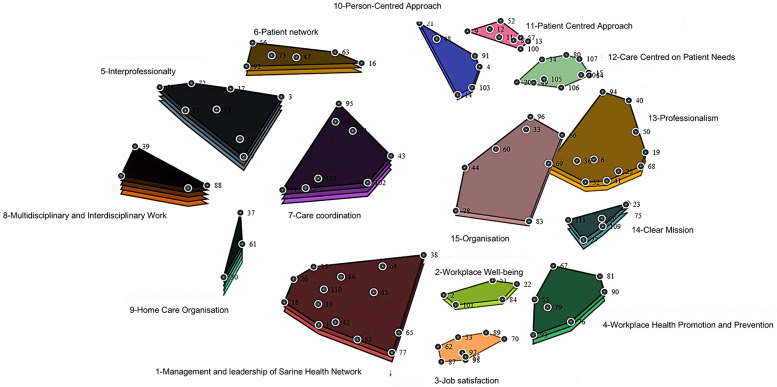
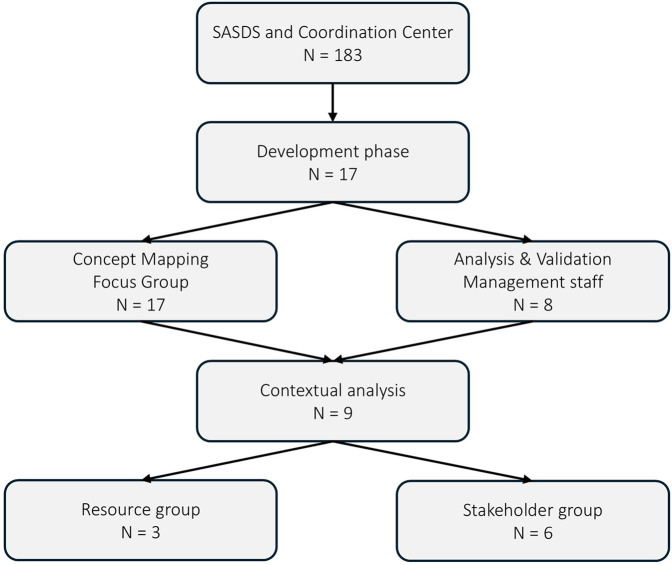
A multi-method approach was used. For objective 1, concept mapping with 157 healthcare professionals (86% response rate) was conducted to develop the model. For objective 2, a contextual analysis was guided by the Intervention Mapping framework, involving focus groups with stakeholders ( = 14) and field validation with frontline staff ( = 6). Data analysis included both quantitative and qualitative methods.
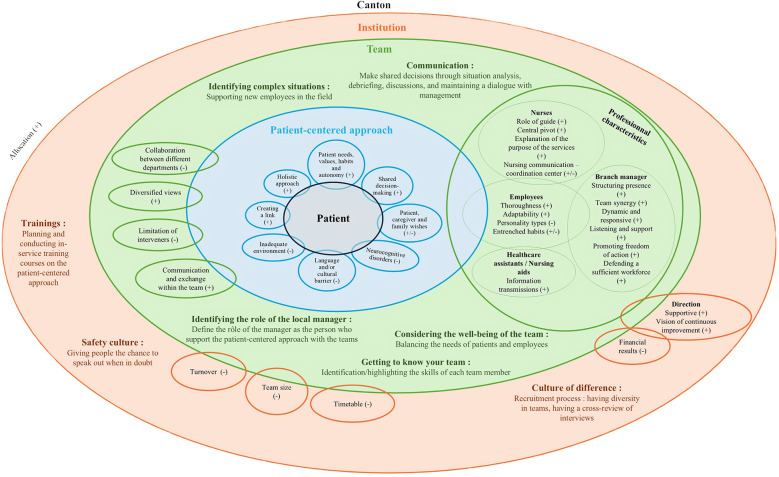
The concept mapping process identified 13 core values rated on importance (scale 1-5), with health promotion scoring highest (4.4) and interprofessionalism lowest (3.7). Implementation analysis revealed key facilitators including leadership support (83% agreement) and barriers such as linguistic/cultural differences. Eight implementation strategies were identified and validated through a Delphi process, including continuous training (67% strong agreement) and safety culture promotion (83% strong agreement).
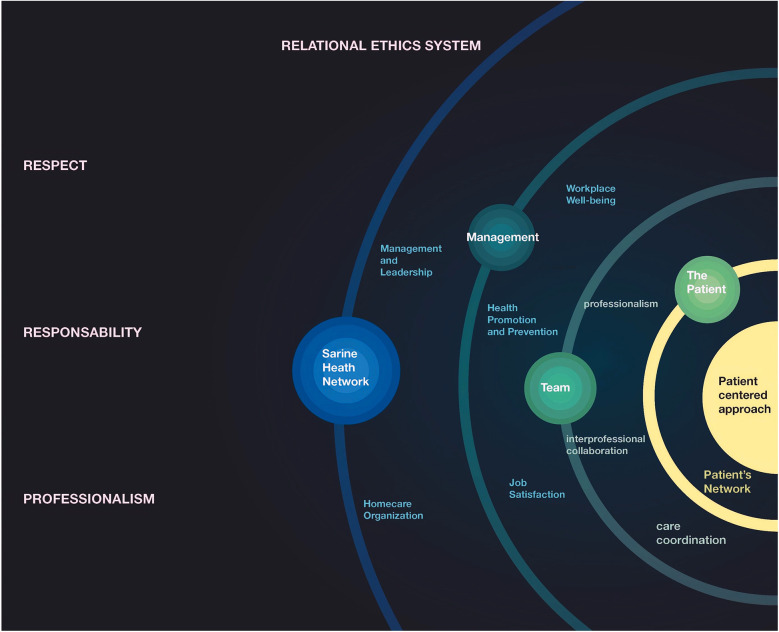
The study demonstrates that developing and implementing a person-centered professional practice model is feasible in home care settings when supported by strong leadership commitment and structured implementation strategies. The model's alignment with the Person-centred Practice Framework of McCance and McCormack provides theoretical validation while offering practical guidance for implementation.
随着人口老龄化和慢性病患病率上升,瑞士医疗保健系统面临着越来越多的挑战,需要更好地协调护理服务,尤其是在家庭护理环境中。
本研究旨在为瑞士法语区的家庭护理服务开发一种以患者为中心的专业实践模式(目标1)并进行实施的情境分析(目标2)。
采用了多方法途径。对于目标1,对157名医疗保健专业人员(回复率86%)进行了概念映射以开发该模式。对于目标2,在干预映射框架的指导下进行了情境分析,包括与利益相关者进行焦点小组讨论(n = 14)以及对一线工作人员进行实地验证(n = 6)。数据分析包括定量和定性方法。
概念映射过程确定了13个按重要性评级的核心价值观(1 - 5分制),其中健康促进得分最高(4.4),跨专业合作得分最低(3.7)。实施分析揭示了关键促进因素,包括领导支持(83%的人认同)以及语言/文化差异等障碍。通过德尔菲法确定并验证了八项实施策略,包括持续培训(67%的人强烈认同)和促进安全文化(83%的人强烈认同)。
该研究表明,在强有力的领导承诺和结构化实施策略的支持下,开发和实施以患者为中心的专业实践模式在家庭护理环境中是可行的。该模式与麦坎斯和麦科马克的以患者为中心的实践框架相一致,既提供了理论验证,又为实施提供了实践指导。