Bai Xiangtian, Zhong Ming, Liu Yonghong, Hu Yafan, Ma Jun
School of Design, Hunan University, Changsha, China.
Innovation Institute of Industrial Design and Machine Intelligence, Hunan University, Quanzhou, China.
PLoS One. 2025 Jul 3;20(7):e0327241. doi: 10.1371/journal.pone.0327241. eCollection 2025.
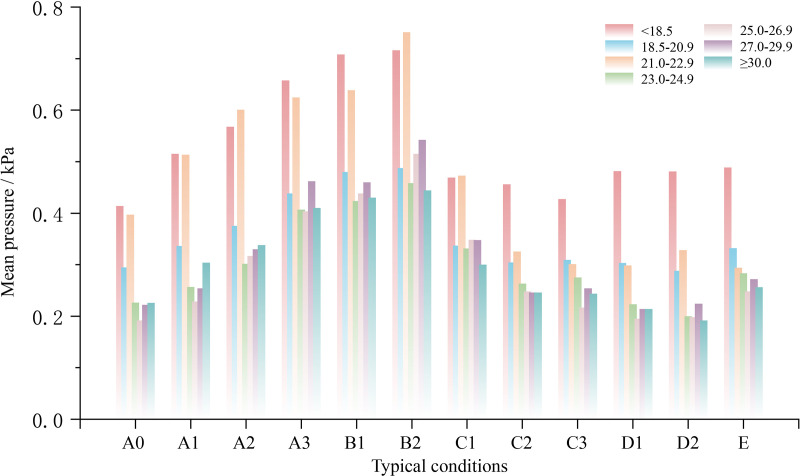
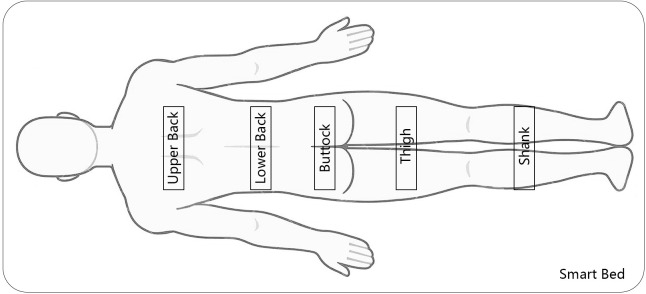
Smart beds have become increasingly accepted, and are concurrently reshaping their lifestyles. Addressing the limited ability of smart beds to cater to health requirements, this study investigated smart bed comfort across diverse typical conditions. Objective body pressure distribution and participant-reported perceived comfort were recorded during typical smart bed usage. Statistical analysis was utilized to investigate overall and local comfort variations across different conditions and the correlation between perceived comfort and body pressure distribution. Statistical analysis highlighted the importance of equalizing forces and minimizing peak pressures. Alongside mean pressure, peak pressure-particularly in the buttock, thigh, and shank areas-played a pivotal role in comfort evaluation. Optimal bed board partitioning and interlinked mechanisms between adjacent boards enhance body curve fit and overall comfort. Balancing body forces and preventing feelings of weightlessness significantly improve user comfort and health. This analysis has been used to develop a comfort prediction model for smart bed design.
智能床已越来越被人们所接受,同时也在重塑着人们的生活方式。鉴于智能床满足健康需求的能力有限,本研究调查了不同典型条件下智能床的舒适度。在智能床的典型使用过程中,记录了客观的身体压力分布以及参与者报告的感知舒适度。采用统计分析来研究不同条件下的整体和局部舒适度变化,以及感知舒适度与身体压力分布之间的相关性。统计分析突出了均衡压力和最小化峰值压力的重要性。除平均压力外,峰值压力——尤其是在臀部、大腿和小腿区域——在舒适度评估中起着关键作用。优化床板分区以及相邻床板之间的联动机制可增强身体曲线贴合度和整体舒适度。平衡身体压力并防止失重感可显著提高用户的舒适度和健康水平。该分析已被用于开发智能床设计的舒适度预测模型。