Hascher Tina, Held Tanja, Schnell Jakob, Banholzer Nicolas, Zürcher Kathrin, Fenner Lukas, Bittel Pascal, Jent Philipp
Department of Research in School and Instruction, Institute of Educational Science, University of Bern, Bern, Switzerland.
Multidisciplinary Center for Infectious Diseases, University of Bern, Bern, Switzerland.
J Sch Health. 2025 Sep;95(9):686-698. doi: 10.1111/josh.70039. Epub 2025 Jul 3.
In our research, we investigated student state and habitual well-being in school during and in the aftermath of the COVID-19 pandemic (after schools reopened) and analyzed their associations to measures in schools aimed at preventing ongoing infectious diseases.
We conducted two interventional field studies in Swiss lower secondary education (Grades 8 and 9, students aged 13-15 years) to compare trait and state well-being during three different study conditions: no infection control measure, facial mask mandates, and the temporary installation of portable air cleaners in classrooms.
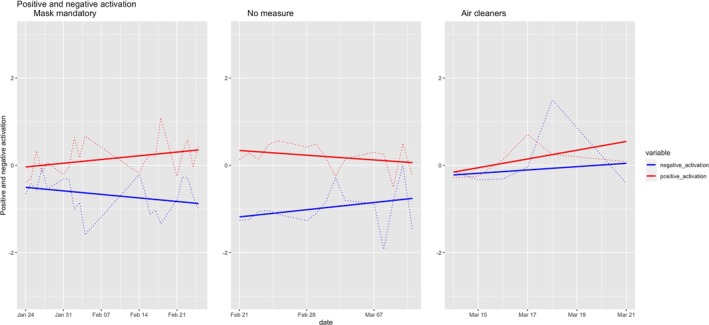
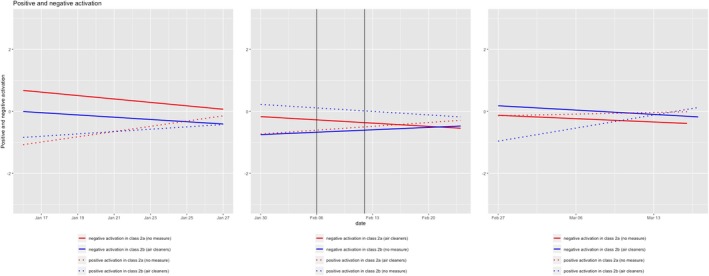
In Study 1, student enjoyment in school significantly decreased over time and their physical complaints increased. Students reported significantly higher negative activation with masks and air filters when compared to no infectious control measures. However, their negative activation significantly decreased over time with the mask, whereas it increased without measures. In Study 2, student worries in school significantly decreased over time. In one class, students reported an increase in positive activation and valence without air cleaners. In the other class, positive activation and concentration increased with air cleaners and negative activation decreased without air filters.
Results suggest that infection control measures in school can have short term positive and negative effects on students' self-reported state well-being while not significantly impeding student's habitual well-being. For school health, students might benefit psychologically in times of crisis when they understand the implementation of measures as actions of care and safety.
在我们的研究中,我们调查了新冠疫情期间及之后(学校重新开学后)学生在学校的状态和习惯性幸福感,并分析了它们与学校预防持续性传染病措施之间的关联。
我们在瑞士初中教育阶段(八年级和九年级,13 - 15岁的学生)开展了两项干预性实地研究,以比较三种不同研究条件下的特质幸福感和状态幸福感:无感染控制措施、强制佩戴口罩以及在教室临时安装便携式空气净化器。
在研究1中,学生在学校的愉悦感随时间显著下降,身体不适增加。与无感染控制措施相比,学生报告称佩戴口罩和使用空气过滤器时的消极激活情绪显著更高。然而,随着时间推移,佩戴口罩时他们的消极激活情绪显著下降,而无措施时则上升。在研究2中,学生在学校的担忧随时间显著减少。在一个班级中,学生报告称没有空气净化器时积极激活情绪和效价有所增加。在另一个班级中,有空气净化器时积极激活情绪和注意力增加,没有空气过滤器时消极激活情绪减少。
结果表明,学校的感染控制措施可能会对学生自我报告的状态幸福感产生短期的积极和消极影响,同时不会显著阻碍学生的习惯性幸福感。对于学校健康而言,当学生将措施的实施理解为关爱和安全的行动时,他们在危机时期可能会在心理上受益。