Cologna Viktoria, Meiler Simona, Kropf Chahan M, Lüthi Samuel, Mede Niels G, Bresch David N, Lecuona Oscar, Berger Sebastian, Besley John, Brick Cameron, Joubert Marina, Maibach Edward W, Mihelj Sabina, Oreskes Naomi, Schäfer Mike S, Linden Sander van der
Department of Environmental Systems Science, ETH Zurich, Zurich, Switzerland.
Collegium Helveticum, Zurich, Switzerland.
Nat Clim Chang. 2025;15(7):725-735. doi: 10.1038/s41558-025-02372-4. Epub 2025 Jul 1.
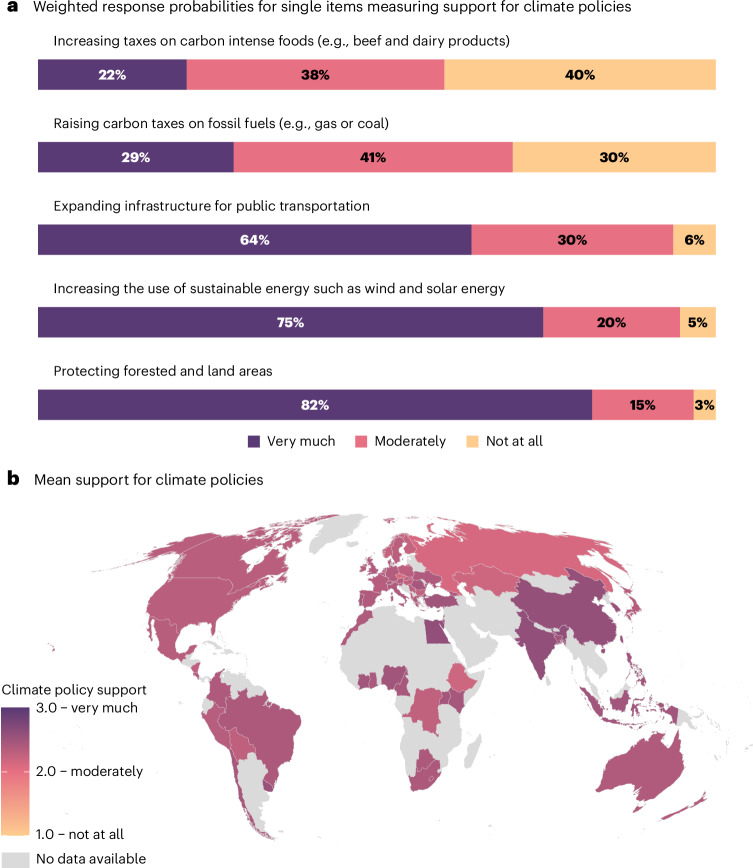
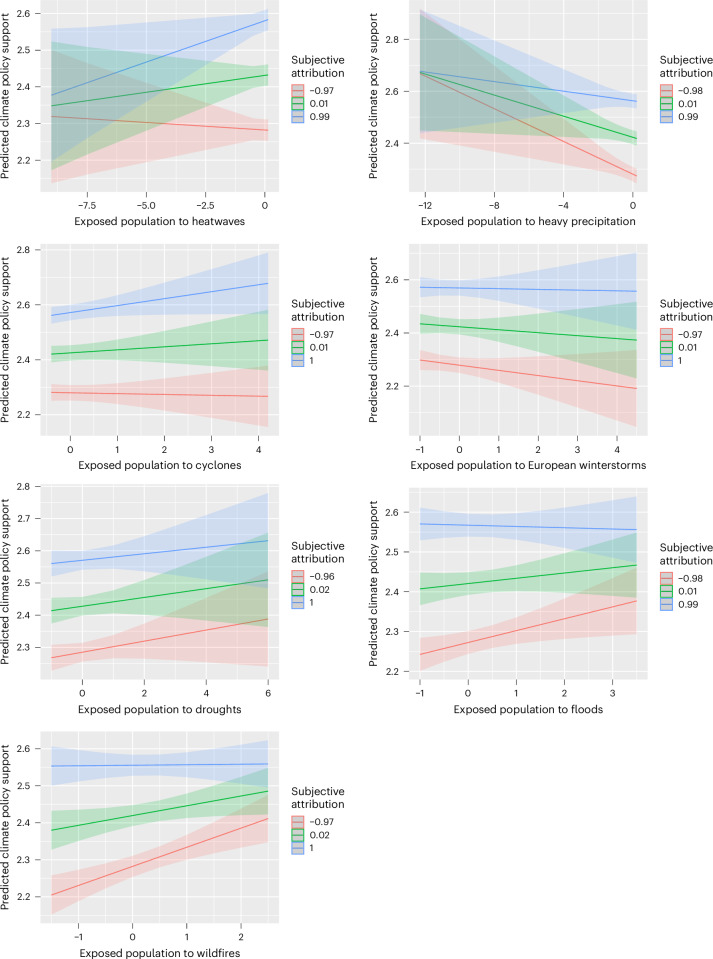
Extreme weather events are becoming more frequent and intense due to climate change. Yet, little is known about the relationship between exposure to extreme events, subjective attribution of these events to climate change, and climate policy support, especially in the Global South. Combining large-scale natural and social science data from 68 countries ( = 71,922), we develop a measure of exposed population to extreme weather events and investigate whether exposure to extreme weather and subjective attribution of extreme weather to climate change predict climate policy support. We find that most people support climate policies and link extreme weather events to climate change. Subjective attribution of extreme weather was positively associated with policy support for five widely discussed climate policies. However, exposure to most types of extreme weather event did not predict policy support. Overall, these results suggest that subjective attribution could facilitate climate policy support.
由于气候变化,极端天气事件正变得愈发频繁和强烈。然而,对于遭受极端事件、将这些事件主观归因于气候变化以及气候政策支持之间的关系,我们知之甚少,尤其是在全球南方地区。结合来自68个国家的大规模自然科学和社会科学数据(n = 71,922),我们制定了一项衡量暴露于极端天气事件人口的指标,并调查暴露于极端天气以及将极端天气主观归因于气候变化是否能预测气候政策支持。我们发现,大多数人支持气候政策,并将极端天气事件与气候变化联系起来。极端天气的主观归因与对五项广泛讨论的气候政策的政策支持呈正相关。然而,遭受大多数类型的极端天气事件并不能预测政策支持。总体而言,这些结果表明,主观归因可能有助于气候政策支持。